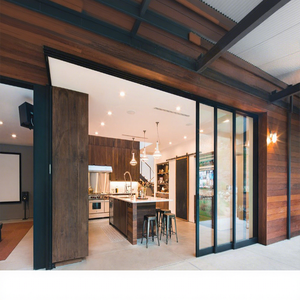
Factory Direct Portfolio
Precision-Engineered Architectural Systems & Kitchen Partitions
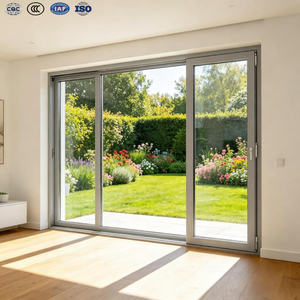
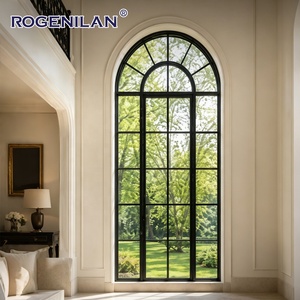
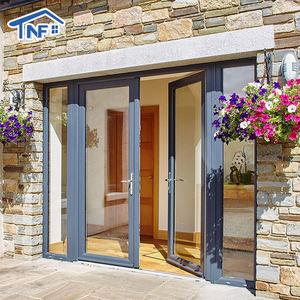
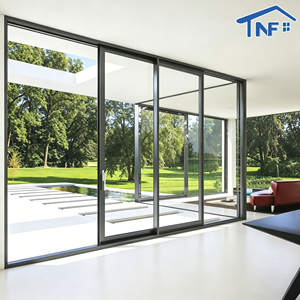
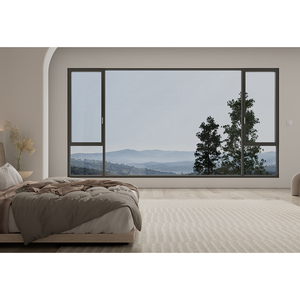
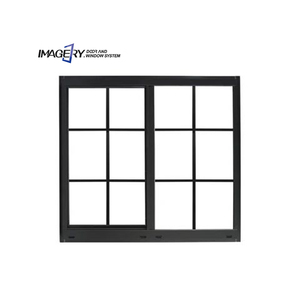
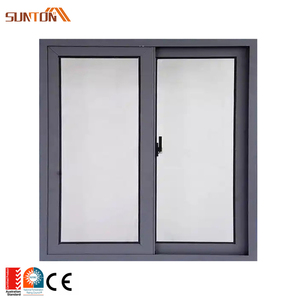
Explore our certified aluminum alloy interior partitions, pocket sliding damper systems, panoramic fixed frames, and exterior thermal-break doors designed for seamless architectural integration.
180,000 m²
Intelligent Production Base
1,000,000+ m²
Annual Delivery Capacity
100+ Patents
Proprietary Inventions & Utilities
18,000+
Completed Global Landmarks
B2B Technical Whitepaper
Engineering Standards for OEM/ODM Aluminium Kitchen Doors
A deep dive into metallurgical formulations, hydraulic damping kinematics, air-tightness barriers, and architectural surface engineering for multi-family developments and custom luxury residences.
Modern kitchen door architecture has evolved far beyond traditional partition panels. In upscale hospitality, residential towers, and custom villas, the kitchen boundary acts as an active physical, acoustic, and environmental threshold. It must balance the conflicting demands of open-concept spatial transparency and strict culinary isolation—containing high-temperature cooking grease, dynamic acoustic noise from kitchen appliances, moisture, and odors. Sourcing from a tier-one OEM/ODM aluminium kitchen doors factory provides specifiers, commercial contractors, and developers with custom extruded alloys that exceed rigorous international durability metrics.
1. Metallurgical Integrity: Primary 6063-T5 vs. 6063-T6 Extrusion Chemistry
At the foundation of industrial door fabrication is raw billet purity. Inferior fabricators frequently utilize recycled scrap aluminum with erratic copper, silicon, and iron contamination, resulting in brittle microstructures, micro-cracking during CNC punching, and structural deflection under dynamic sash weight. Our manufacturing facility in Foshan strictly employs virgin primary aluminum billets alloyed to exact 6063-T5/T6 specifications. With tensile strengths exceeding 215 MPa and yield strengths higher than 170 MPa, our ultra-slim frame profiles maintain structural deflection tolerances within L/300 under forceful cycling, allowing ultra-narrow vertical sightlines down to 16 mm without risking sash twisting or glass cleavage over decades of use.
2. Acoustic Insulation & Fume Containment Hermetic Sealing
Kitchen partitions must suppress both audible decibel transmission (blenders, exhaust hoods, dishwashers) and gaseous grease vapors. Conventional sliding doors rely on rudimentary felt brush seals that degrade rapidly in greasy environments. Our engineered systems utilize co-extruded EPDM (Ethylene Propylene Diene Monomer) gasket matrices paired with cellular silicone elastomer stops. When coupled with acoustic laminated glass (such as 4mm+0.76mm PVB+4mm toughened glass configurations), sound transmission is attenuated by up to 34 dB (Rw), preventing wet-kitchen activity from disturbing surrounding dining and living spaces.
3. Kinetic Hardware: Heavy-Duty Hydraulic Dampers & Dual-Direction Soft-Close Mechanisms
Door failure in heavy-traffic culinary environments typically originates at kinetic pinch-points: track rollers, carriage brackets, and stop catches. Our premium aluminum pocket sliding and barn systems incorporate aerospace-grade dual-direction hydraulic dampers capable of over 100,000 continuous open-close cycles (compliant with EN 1527 standards). As demonstrated in our soft-close glass sliding line, the sash decelerates smoothly within a 65 mm buffer zone regardless of manual push velocity, protecting tempered glazing panels from shock-induced stress fractures while operating below 35 dB sound pressure levels.
Barrier-Free Low Thresholds
Engineered zero-gravity floor guides and recessed stainless steel bottom tracks flush with marble or tile surfaces (under 4mm elevation) eliminate tripping hazards and kitchen cart obstruction while preventing crumb and dirt build-up.
Oleophobic Surface Anodizing
Specialized electrostatic architectural fluorocarbon (PVDF) and Class 2 Qualicoat powder coatings with oleophobic sealants resist continuous hot oil vapor, condensation, and chemical detergents without yellowing or fading.
Flexible Glazing Integration
Accommodates clear low-iron ultra-white glass, fluted Moru architectural glass, obscure frosted safety glass, or wire-embedded safety glazing to achieve custom privacy levels without compromising spatial natural daylight transfer.
Strategic Market Intelligence
Future Procurement Trends in Aluminium Kitchen Door Systems (2026–2030)
Critical forecasting for developers, regional importers, and bulk procurement officers navigating carbon regulations, structural customization, and smart automation.
As international green building codes like LEED v4.1, BREEAM, and Singapore’s BCA Green Mark tighten operational carbon metrics, architectural joinery procurement is undergoing a paradigm shift. Specifiers are moving away from ad-hoc site-assembled profiles in favor of fully prefabricated, factory-glazed modular cassettes that guarantee documented U-factors, verified chain-of-custody for low-carbon aluminum billets, and precision-engineered tolerance matching. For international project managers, the choice of OEM/ODM partner is no longer just about pricing—it requires deep structural capability, verified raw material pedigrees, and digital drawing fidelity.
Trend 1: Low-Carbon "Green" Aluminum & Closed-Loop Extrusion Mandates
European and North American regulatory frameworks increasingly penalize embedded carbon across architectural products. Global procurement managers now evaluate suppliers on their carbon intensity per ton of extruded aluminum. By transitioning toward hydroelectric smelting billets and incorporating certified pre-consumer clean alloy scrap, leading Foshan exporters achieve an embodied carbon footprint below 4.0 kg CO₂e per kg of finished extrusion, allowing developers to meet strict net-zero requirements without sacrificing anodizing luster or structural tensile ratings.
Trend 2: Integrated Concealed Motorization & Touchless Voice Control
The post-pandemic commercial and residential market has driven demand for hands-free kitchen access. When carrying food trays or handling raw food, touching handles creates cross-contamination concerns. Modern high-end procurement now specifies pocket doors equipped with low-noise brushless DC servo motors concealed within upper lintel extrusions. These systems interface directly with Zigbee, KNX, or Matter automation networks, operating via proximity radar sensors, kick-sensors, or wall-mounted touchless optical switches.
Trend 3: Ultra-Narrow Minimalist Sightlines with Maximum Structural Spans
The luxury villa and modern apartment market continues to demand visual continuity. Frameless aesthetics require profile face widths under 20 mm that can still support panel heights exceeding 3,200 mm. Achieving this without excessive flex requires internal stainless-steel corner staking, structural structural glazing silicone adhesive (Dow Corning 995), and multi-chamber reinforcement cavities that resist wind deflection and daily operational fatigue.
| Performance Parameter | Standard Residential Grade | OEM/ODM Heavy-Duty Project Grade | Testing Standard Benchmark |
|---|---|---|---|
| Aluminium Profile Grade | Recycled / Secondary 6063-T5 | Primary 6063-T6 Virgin Billet Extrusion | ASTM B221 / GB/T 5237 |
| Profile Wall Thickness | 1.0 mm – 1.2 mm | 1.6 mm – 2.5 mm Heavy Structural Wall | AAMA 101 / AS2047 Structural |
| Surface Finish Standards | Basic Electrostatic Paint (<40μm) | Fluorocarbon PVDF (>65μm) / Hard Anodize | Qualicoat Class 2 / AAMA 2605 |
| Operating Cycle Durability | 15,000 – 25,000 Cycles | 100,000+ Cycles (Soft-Close & Rollers) | EN 1527 / ANSI/BHMA A156.14 |
| Acoustic Damping Index | Rw 20 – 24 dB | Rw 32 – 36 dB (Laminated Acoustic Glass) | ISO 10142 / ASTM E90 |
| Hermetic Air Permeability | Class 1 (High air leakage) | Class 4 (Full EPDM Co-extruded Seal) | EN 12207 / ASTM E283 |
Manufacturer Credentials
Why Tier-One Contractors Partner with Our Foshan Factory
Combining 25+ years of fabrication mastery, a 180,000 m² smart production base, and international accreditations to guarantee precision across large-scale projects.
180,000 m² Intelligent Hub
Situated in Foshan, China's architectural aluminum core, our facility utilizes multi-axis CNC machining centers, automated corner-crimping cells, and high-speed robotic glass glazing lines yielding 1,000,000+ m² annual throughput.
100+ Patents & Certifications
Backed by over 100 patents, our systems hold international grand-slam certifications including CE (Europe), AS2047 (Australia), NFRC (USA), CSA (Canada), Hurricane Impact approval, and ISO 9001 quality audits.
CAD/BIM & Mockup Support
Our dedicated engineering department of 30+ R&D structural specialists generates shop drawings, extrusion die designs, thermal performance modeling, and 1:1 physical sample mockups before bulk casting.
Rigorous Execution Protocol
Our 8-Step Custom Manufacturing Workflow
Engineered for global B2B procurement to eliminate on-site fitting errors and ensure total compliance with regional building standards.
01
Drawing Audit
Review of architectural plans, rough opening schedules, and structural deflection constraints.
02
R&D System Matching
Selection of profile thickness, thermal breaks, kinetic tracks, and acoustic glass configurations.
03
Itemized Quotation
Comprehensive cost breakdown per opening schedule, hardware pack, and export sea-freight packing.
04
Detail Verification
Final sign-off on RAL color powders, anodizing microns, handle hardware, and glass tints.
05
Tooling & Deposit
Securing production line capacity and extrusion tooling calibration upon deposit allocation.
06
Measurement Confirmation
Field verification and millimetric laser sizing to prevent site installation discrepancies.
07
CNC Production
Automated cutting, multi-point mortising, corner crimping, and integrated inspection.
08
Export Crate Guidance
Plywood crating, corner protective wrapping, container loading plans, and remote installation support.
Direct Answers
Frequently Asked Questions by Global Buyers
Key technical and logistics inquiries addressed for project developers, quantity surveyors, and architectural distributors.
What is the minimum order quantity (MOQ) for custom kitchen door systems?
For standard catalog profiles with stock anodized or black/gray powder coatings, our MOQ is as low as 1 set for project mockups or 20 m² for residential jobs. For custom-designed extrusion profiles requiring dedicated aluminum die tooling, the extrusion run MOQ is typically 500 kg per section, which easily services mid-to-large-scale hotel or condo projects.
How do your coatings prevent deterioration from hot cooking grease?
We use Qualicoat Class 2 verified architectural powder formulations and Kynar 500-based PVDF finishes. These undergo 1,000+ hour continuous salt spray tests (ASTM B117) and cross-cut adhesion tests under exposure to acidic vegetable oils, preventing discoloration, chalking, peeling, or gloss loss caused by steam and vaporized grease.
Can pocket sliding kitchen doors achieve genuine acoustic and smell isolation?
Yes. While entry-level sliding doors have gaps around the frame perimeter, our engineered systems utilize interlocking perimeter labyrinth profiles equipped with Santoprene and vulcanized EPDM gaskets. When closed into the vertical receiver jamb, the seal engages tightly against positive or negative air pressure, blocking cooking smells and reducing sound transmission.
What international architectural standards do your factory products meet?
Our manufacturing and testing facilities comply with CE (EN 14351-1), Australian AS2047 and AS1288 safety glazing standards, North American NFRC thermal performance ratings, CSA guidelines, and ISO 9001 factory quality systems. Test reports and certificates are available alongside formal tenders.
What ocean freight packaging is used to avoid transit damage?
All glass panels and frames are fully protected with peelable protective film, wrapped in heavy pearl-cotton shock absorption wrap, reinforced with hard plastic edge guards, and crated in fully enclosed, IPPC-certified fumigated plywood containers with moisture desiccant bags to prevent corrosion from sea salt during long transit routes.
What is the standard production and shipping lead time?
Standard lead times are 25 to 35 calendar days following receipt of deposit and formal drawing sign-off. For complex projects requiring custom extrusion dies, add 10 to 14 days for die fabrication and profile sample sign-off. Fast-track production lines are available for time-sensitive commercial projects.
Ready to Engineer Your Kitchen Door & Window Project?
Submit your architectural blueprints, schedule of finishes, or tender documents. Our engineering team will return comprehensive shop drawings, structural calculations, and a competitive factory-direct quote within 24 hours.