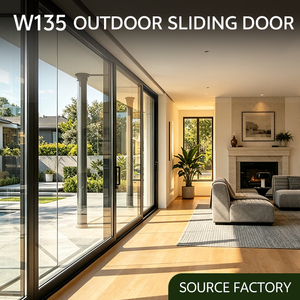
Architectural Catalog
Engineered Aluminium Standard Door Systems for Malaysian Projects
Precision-extruded profiles fabricated with architectural-grade alloys, specialized acoustic seals, and surface finishes resilient against high solar irradiance and tropical humidity.
180,000m²
Modern Manufacturing Base
1,000,000m²+
Annual Production Capacity
100+
National Technical Patents
18,000+
Global Landmark Projects
Technical Whitepaper: Engineering Aluminium Doors for Malaysia's Built Environment
Sourcing aluminium standard doors for Malaysian real estate demands an intimate understanding of microclimatic dynamics and regulatory specifications. Malaysia experiences a classic equatorial climate characterized by uniform temperatures between 24°C and 34°C, year-round relative humidity exceeding 80%, and acute tropical thunderstorm events that generate intense horizontal wind pressures. Standard off-the-shelf fenestration systems often fail prematurely under these sustained environmental stresses.
Our aluminium standard door systems are engineered specifically to overcome equatorial building physics challenges. By pairing high-strength 6063-T5 and 6063-T6 architectural aluminium alloys with multi-chamber internal profiles and engineered thermal break barriers (Polyamide PA66), we eliminate perimeter structural deflection and significantly lower the Solar Heat Gain Coefficient (SHGC). This design directly mitigates thermal conduction into building interiors, helping developers align with the Green Building Index (GBI) of Malaysia.
From luxurious sea-facing developments along Penang’s Gurney Drive and Johor’s Danga Bay to high-density commercial towers within the Klang Valley, door assemblies must resist atmospheric salinity and torrential precipitation. Our systems incorporate dual-barrier, continuous EPDM vulcanized gaskets, isobaric pressure equalization drainage chambers, and marine-grade multi-point locking mechanics. The result is absolute water-tightness under extreme monsoon surges and zero degradation from airborne chlorides.
Application Domains
Targeted Deployments Across Malaysian Real Estate Sectors
Custom-engineered profile configurations addressing specific urban, coastal, and commercial microclimates across Peninsular and East Malaysia.
High-Rise Condominiums & Klang Valley Towers
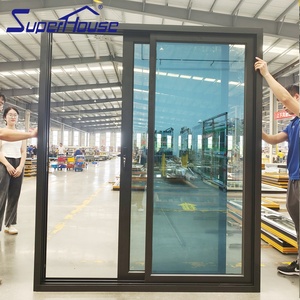
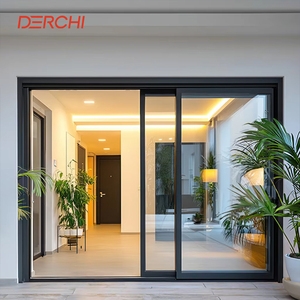
Engineered for high-altitude wind shear exceeding 2500 Pa, our heavy-duty sliding and casement assemblies prevent whistling air leakage, eliminate frame rattle during monsoons, and deliver lab-verified acoustic insulation up to STC 42 dB against dense urban traffic noise.
Coastal Villas & Waterfront Developments
In high-salinity zones like Penang, Langkawi, and Desaru, standard finishes pit and corrode. Our assemblies leverage PVDF fluorocarbon coatings (>30 microns) and 316 stainless-steel tandem rollers to ensure smooth, corrosion-free glide under relentless salt air exposure.
Commercial Hubs, Hospitality & Retail Arenas
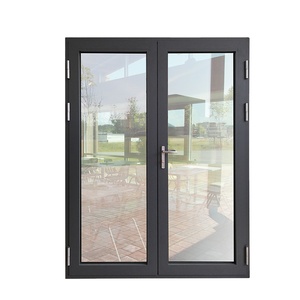
Engineered to withstand millions of continuous operating cycles, our commercial standard swing and pivot systems feature anti-pinch architectural frames, integrated door-closer anchor plates, and universal electronic smart-lock integrations suited for premium hotel ballrooms and grade-A offices.
Compliance & Benchmarks
Technical Specifications & Malaysian Standard (MS 1017) Convergence
Comparing conventional Malaysian commercial market doors with our engineered factory-direct aluminium standard export assemblies.
| Performance Benchmark | Conventional Domestic Market Grade | DERCHI Engineered Standard for Malaysia | Malaysian Standards & Method |
|---|---|---|---|
| Alloy Metallurgy & Temper | Recycled / Mixed Grade 6063-T4 (1.0 - 1.2mm) | Primary Virgin 6063-T5 / T6 (1.4 - 2.5mm Heavy Duty) | MS 1017:2014 & ASTM B221 |
| Surface Protective Finish | Standard Anodizing (10 - 12 microns) | Fluorocarbon PVDF (AkzoNobel / PPG) & Powder Coating (60-80μm) | AAMA 2605 / Qualicoat Class 2 |
| Water Tightness Under Pressure | 150 - 250 Pa (Prone to overflow in monsoon) | 600 - 900 Pa (Patented stepped hidden drainage sill) | MS 1017: Clause 8.2 (Water Resistance) |
| Structural Wind Load Capacity | 1200 - 1500 Pa (Standard low rise) | 2500 - 4500 Pa (High-rise & coastal typhoon certified) | BS 6399 / MS 1017 Deflection Limits |
| Locking Security Architecture | Single-point latch, exposed screw-down fittings | Patented 4-Side 6-Point Multi-Point Concealed Deadbolts | EN 1627 / RC2 Burglar Resistance |
Industry Analysis: Strategic Fenestration Trends Shaping the Malaysian Market
The Malaysian construction sector is undergoing a profound structural transition. Driven by aggressive environmental initiatives including the Green Building Index (GBI), the GreenRE rating tool, and mandatory CIDB structural certifications, speculative builders can no longer rely on unrated local aluminium framing. Today, three defining design shifts dominate architectural specifications:
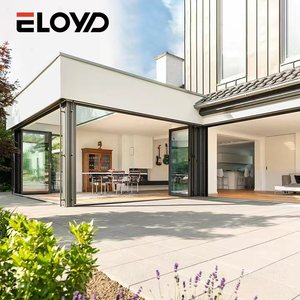
1. Large-Span Transparent Spatial Openings: Modern landed residential projects across Petaling Jaya, Mont Kiara, and Iskandar Puteri increasingly embrace floor-to-ceiling unobstructed views. The trend favors ultra-wide lift-and-slide glass patio systems and accordion bifold systems spanning up to 12 meters. These configurations connect expansive interior living spaces directly with lush tropical outdoor gardens and private infinity pools.
2. Thermal Performance & Carbon-Neutral Architecture: As the Malaysian government tightens National Energy Transition Roadmap (NETR) standards, commercial facilities and high-end residential towers prioritize fenestration with minimal U-values. The adoption of double-glazed Low-E insulated glass units (IGUs) filled with Argon gas—previously rare in tropical climates—has increased substantially to combat ambient radiant heat ingress and reduce central chiller operating loads.
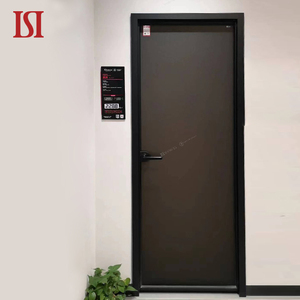
3. Comprehensive Hardware Durability & Minimalist Aesthetics: Malaysian homeowners and commercial facility managers are moving away from bulky framed designs. Current demand focuses on ultra-slim sightline swing doors and concealed hinge doors finished in matte carbon black, deep bronze, or natural wood-grain textures achieved through durable vacuum sublimation.
Enterprise Authority
Why Malaysian Contractors & Developers Partner With Us
World-class manufacturing capability, zero-error dimensional accuracy, and end-to-end direct sea freight support from Foshan directly to Port Klang and Penang Port.
180,000m² Production Super-Base
Equipped with intelligent CNC German cutting, milling, and assembly lines delivering over 1,000,000 m² annual capacity to fulfill commercial contracts on rapid turnaround cycles.
25+ Years of Zero-Error Engineering
A rigorous 360-degree quality audit tracks profile extrusion, 45-degree angle hydraulic crimping, acoustic gasket bonding, and dual-plane bubble tests prior to container staging.
Global Certification Grand Slam
Our complete system line holds international credentials including Australian AS2047, European CE, American NFRC, Canadian CSA, ISO 9001, and specialized Hurricane Impact Certifications.
Direct South China Sea Maritime Logistics
Fast ocean freight lanes directly connect our Pearl River manufacturing center to Port Klang, Penang Port, and Pasir Gudang in as few as 6 to 9 sailing days, guaranteeing reliable on-site schedules.
Purchasing FAQ
Frequently Asked Questions by Malaysian Architects & Buyers
Direct technical and operational answers covering logistics, waterproofing standards, customs, and site execution across Malaysia.
1. Can your aluminium doors meet Malaysian Uniform Building By-Laws (UBBL) and MS 1017 standards?
Yes. Our aluminium door profiles are extruded from high-purity 6063-T5/T6 alloy and comply directly with Malaysian Standard MS 1017 (Specification for aluminium alloy windows and doors). Because our systems hold international certifications including AS2047, European CE, and US NFRC, their mechanical strength, structural deflection limits, and air/water infiltration resistance far exceed typical local minimum thresholds required by professional engineering consultants and municipal councils (PBTs) throughout Malaysia.
2. How do your sliding and folding doors prevent water ingress during intense Malaysian monsoon storms?
Tropical downpours in Malaysia present high water volume combined with strong wind shear. Our systems prevent leaks via three distinct innovations: First, a high-step interior water-stop track that resists hydrostatic head pressure. Second, an isobaric pressure chamber with concealed one-way drainage weep holes that discharge water without letting wind blow it back inside. Third, multi-fin EPDM vulcanized sealing gaskets that maintain airtight compression even under extended storm exposure.
3. What is the typical sea freight lead time from your factory to Malaysian major ports?
Benefiting from our strategic manufacturing base in Foshan, South China, finished assemblies are loaded directly into containers and dispatched via direct sea routes to major Malaysian ports. Typical transit times are approximately 6 to 9 days to Port Klang (Selangor) and Penang Port (Butterworth), and roughly 10 to 14 days to East Malaysian ports such as Kota Kinabalu (Sabah) and Kuching (Sarawak). Total project turnaround—from final shop drawing sign-off to port arrival—ranges from 25 to 35 business days.
4. Which glass configuration is best suited for energy conservation in Malaysia's tropical climate?
For optimum thermal performance and air conditioning load reduction, we recommend a 5mm + 12A/16A (Argon Gas) + 5mm double-glazed configuration utilizing a Low-E coating on Surface #2. This design blocks direct infrared solar radiation while allowing natural visible light transmission. For seaside villas or high-rise penthouse applications in coastal cities like Johor Bahru and Penang, laminated safety glass (e.g., 6mm Low-E + 1.52PVB + 6mm Clear) provides maximum impact resistance, acoustic isolation, and near-total UV protection.
5. Do you support customized structural drawings, hardware matching, and on-site guidance?
Absolutely. Our 8-step engineering protocol begins with thorough CAD/BIM drawing reviews. Our 30+ R&D engineering department produces structural calculations, provides complete installation accessories, and supplies custom cut-out drawings for specialized hardware including smart biometric locks, concealed overhead closers, and flush floor tracks. For major high-rise or villa developments across Malaysia, we offer comprehensive step-by-step video installation guides and remote engineering support to ensure zero installation errors.
6. How do your aluminium surfaces hold up against intense UV radiation and coastal salt air?
All our aluminium extrusions undergo rigorous chemical pretreatment followed by world-class electrostatic finishes. For residential and commercial developments, we apply certified AkzoNobel or PPG architectural powder coatings that resist chalking and UV fading. For coastal and marine environments, we recommend our PVDF fluorocarbon coatings (AAMA 2605 compliant), which undergo a multi-thousand-hour neutral salt spray test to ensure they will not blister, oxidize, or degrade over decades of tropical exposure.
Ready to Source Architectural Aluminium Doors for Your Malaysian Project?
Connect directly with our engineering team for instant technical consultations, structural review of CAD drawings, MS 1017 compliance assistance, and competitive factory-direct quotations.