Engineering Aluminium Flush Casement Windows for Naypyidaw's Capital Enclaves
A comprehensive examination of why coplanar flush casement fenestration has emerged as the architectural benchmark for institutional developments, luxury diplomatic compounds, and high-tier estates across Naypyidaw, Myanmar.
As the planned administrative capital of Myanmar, Naypyidaw represents a distinct urban topography. Characterized by wide boulevards, low-density zoning, and monumental government structures interspersed with private villas in townships like Zabuthiri, Ottarathiri, and Dekkhinathiri, the city presents fenestration engineers with a unique combination of aesthetic and environmental challenges. In this sprawling microclimate, architectural glazing must navigate drastic diurnal temperature swings, extreme solar irradiation during the prolonged dry season, and severe horizontal driving rains during the Southwest Monsoon.
Historically, commercial and residential developments across central Myanmar relied upon timber casements or non-thermally broken commercial aluminium sliders. However, these systems exhibit chronic failures under Naypyidaw's extreme climatic conditions: tropical timber sashes warp and lose airtightness under relentless UV exposure, while generic aluminium profiles lack structural inertia and allow unhindered solar heat gain into interior living spaces. As a premier direct manufacturer and global exporter, Guangdong Dejiyoupin Doors and Windows Co., Ltd. (DERCHI) engineers high-performance Aluminium Flush Casement Window Systems precisely calibrated to resolve these regional pain points.
Technical Fact: A "flush casement" profile is defined by an exterior coplanar design where the window sash sits perfectly flush within the outer structural frame. This eliminates traditional exterior projection lips, dramatically reducing wind turbulence noise and preventing the settling of airborne dust, silt, and moisture during Naypyidaw's dry-season squalls.
Naypyidaw Microclimatic Dynamics: The Engineering Rationale for Thermal Flush Profiles
Mitigating thermal radiation, monsoonal hydrostatic pressure, and airborne particulates in central Myanmar.
Naypyidaw features a Tropical Savanna Climate (Köppen climate classification Aw), transitioning abruptly into a pronounced wet monsoon season. Between March and May, ambient daytime temperatures frequently surpass 40°C (104°F) with intense ultraviolet radiation index (UVI) levels exceeding 11+. When the southwest monsoon arrives, precipitation intensity can exceed 200 mm in single rainfall events, accompanied by high-velocity wind loads sweeping across the open Bago Yoma valley plains.
Polyamide PA66 Thermal Barriers
Uninsulated aluminium profiles act as direct conductors of radiant solar heat, driving interior HVAC cooling loads to unsustainable levels. DERCHI flush casement windows incorporate multi-chamber 24mm to 34mm PA66 GF25 fiberglass-reinforced polyamide thermal breaks. This breaks the conductive bridge, lowering the overall system U-value to under 1.6 W/m²·K and drastically cutting cooling electricity expenditures in Naypyidaw's hot dry zone.
Monsoon Hydrostatic Pressure Defense
Standard sliding windows commonly fail in Naypyidaw because horizontal wind-driven rain forces water up and over bottom track weeps. DERCHI flush casement windows feature an outward-opening sash configured with triple-perimeter continuous vulcanized EPDM compression gaskets. When the multi-point sash hardware is engaged, pressure is exerted evenly across the entire perimeter, creating an impervious barrier rated for 600+ Pa water-tightness.
Particulate Ingress Prevention
During the pre-monsoon transition, the wide agricultural plains and unpaved outskirts of the Naypyidaw Union Territory generate heavy concentrations of airborne dust and sand. The seamless coplanar exterior of our flush casement profiles eliminates horizontal dust ledges. Combined with airtight compression sealing, it ensures fine dust cannot penetrate interior rooms, maintaining superior indoor air quality for luxury residential spaces.
Furthermore, standard untreated surface coatings quickly degrade and chalk when exposed to Naypyidaw's persistent tropical UV rays. To guarantee three-plus decades of aesthetic and functional service life, DERCHI subjects all architectural aluminium extrusions to Qualicoat Class 2 certified architectural powder coating or 25-micron fluorocarbon (PVDF) electrostatic spraying. This treatment provides complete immunity against photo-oxidation, salt-spray corrosion, and tropical humidity.
Engineering Benchmarks: DERCHI Flush Casements vs. Regional Standard Solutions
Direct architectural performance comparisons verified according to international testing criteria (AS2047, CE, NFRC).
| Performance Parameter | DERCHI Architectural Flush Casement | Generic Local Myanmar Aluminium | Traditional Regional Teak Windows |
|---|---|---|---|
| Aluminium Alloy Standard | Virgin 6063-T6 Architectural Grade (1.8mm - 2.0mm wall thickness) | Recycled / Mixed Billet (1.0mm - 1.2mm wall thickness) | N/A (Teak / Local Hardwoods) |
| Thermal Transmittance (U-Value) | 1.4 – 1.8 W/m²·K (Thermally Broken PA66 GF25) | 5.8 – 6.2 W/m²·K (Direct Thermal Conduction) | ~2.2 – 2.8 W/m²·K (Variable with wood density) |
| Water Tightness Under Wind Pressure | Class 9A (≥ 600 Pa) Continuous EPDM Compression | Class 2A – 3A (≤ 150 Pa) Vulnerable to Track Overflow | Variable (< 100 Pa); susceptible to corner capillary leaks |
| Acoustic Attenuation (Soundproofing) | Rw = 38 dB to 44 dB (Double/Laminated Low-E Glass) | Rw = 22 dB to 26 dB (Single 5mm/6mm Float Glass) | Rw = 24 dB to 28 dB (Air gaps compromise perimeter) |
| Locking & Perimeter Security | Four-Side Six-Point Multipoint Locking System (Patented) | Single-point crescent lock or plastic push latch | Manual brass surface bolt or rim lock latch |
| Dimensional Stability & Longevity | Zero deflection / Zero thermal warping; 30+ year lifespan | Profile buckling under wind load; roller groove wear | Severe seasonal expansion, warping, and termite susceptibility |
This comparative data highlights the technical reasons that property developers, foreign embassy infrastructure planners, and private luxury homebuilders in Naypyidaw are progressively replacing outdated timber and generic thin-gauge aluminium with DERCHI’s engineered flush casement systems.
Localized Application Scenarios Across Naypyidaw's Urban Districts
Deploying specialized fenestration solutions across the planned sectors of the capital territory.
Zabuthiri Diplomatic & Ministerial Residences
Zabuthiri Township hosts substantial administrative residences and international diplomatic missions that require uncompromised structural security combined with elegant sightlines. DERCHI flush casement systems feature our patented Four-Side Six-Point Anti-Theft Lock mechanism integrated with multi-layer PVB laminated security glazing. The clean coplanar exterior ensures security without the institutional appearance of external security grilles.
Hotel Zone & Hospitality Resorts
Naypyidaw’s expansive Hotel Zone caters to foreign dignitaries, state banquets, and business delegations. In luxury resort properties, guest comfort hinges on acoustic tranquility and thermal isolation. Our flush casements integrate warm-edge spacer double glazing filled with 95% Argon gas, reducing exterior traffic and landscaping noise by over 40 dB while maintaining low air conditioning loads under the 40°C tropical sun.
Ottarathiri & Pobbathiri Luxury Estates
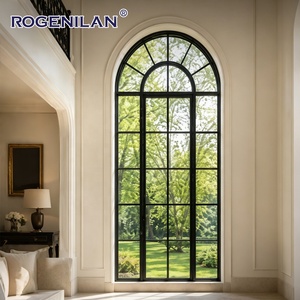
High-net-worth homeowners constructing sprawling modern villas in Ottarathiri demand minimalist architectural sightlines that connect interior spaces with manicured gardens. Our ultra-slim flush profiles feature completely concealed friction hinges, heavy-duty stainless steel components, and integrated stainless steel anti-mosquito diamond mesh screens that preserve external aesthetics without sacrificing airflow.
Emerging Architectural Trends: Naypyidaw's Fenestration Transition (2025–2030)
Market modernization drivers reshaping procurement strategies for institutional and residential projects.
The building sector in Myanmar's capital is currently experiencing an architectural renaissance characterized by three critical market shifts:
1. Strict Thermal Decarbonization and Energy Codes: As electricity tariffs adjust and municipal power efficiency guidelines gain prominence across central Myanmar, property owners are moving away from traditional uninsulated fenestration. Residential structures in Naypyidaw equipped with DERCHI thermal-break flush casements and Low-E glazing achieve up to 35% reductions in cooling electricity consumption compared to standard local installations.
2. Shift from Ornate Traditionalism to Contemporary Minimalism: Architectural tastes among developers and homeowners in Naypyidaw have transitioned toward sleek, minimalist lines. Bulky stepped exterior window frames are being replaced by European-style coplanar flush profiles that visually merge sash and frame into a crisp, unified surface plane. This architectural language pairs naturally with modern concrete, natural stone, and composite facade treatments.
3. Demand for Integrated Insect and Security Screen Solutions: Due to Naypyidaw’s subtropical natural surroundings, protection against insects during evening hours is essential. Traditional window designs rely on unsightly secondary surface-mounted magnetic screens that degrade quickly. Modern specifications demand integrated flush profiles housing hidden 304 marine-grade stainless steel high-transparency mesh, maintaining clear outward visibility while providing robust anti-cut protection.
Guangdong Dejiyoupin (DERCHI): Precision Export Infrastructure for Central Myanmar
A direct, vertically integrated manufacturing powerhouse delivering end-to-end reliability from Foshan to Naypyidaw.
With an intelligent manufacturing footprint spanning over 180,000 m² in Foshan, China—the global epicenter of architectural aluminium engineering—Guangdong Dejiyoupin Doors and Windows Co., Ltd. (DERCHI) represents the pinnacle of commercial window export execution. Backed by over 25 years of manufacturing excellence, 100+ national patents, and an annual production capacity exceeding 1,000,000 m², DERCHI has completed more than 18,000 prestigious architectural projects worldwide.
Drawing Analysis & Structural CAD
Our engineering team verifies architectural elevations, calculates wind load pressures for Naypyidaw's terrain, and optimizes glass configurations for thermal and acoustic performance.
Zero-Error Digital Fabrication
Every profile is cut and processed via CNC automated machining centers with sub-millimeter tolerances, ensuring corner joins, mullion connections, and multi-point lock engagements align precisely.
Export Grade Multi-Layer Crating
Profiles receive protective peel films, high-density edge foam, moisture desiccant bags, and are enclosed within fumigated plywood crates designed for maritime and intermodal transit.
Direct Naypyidaw Logistics Routing
Shipments depart South China ports directly to Yangon (Thilawa Port), clearing bonded customs before transit along the Yangon-Mandalay Expressway directly to project job sites in Naypyidaw.
DERCHI holds an international certification grand slam, including CE (European Union), NFRC (United States), AS2047 (Australia), CSA (Canada), Energy Star, and ISO 9001. Every system shipped to the Naypyidaw market adheres strictly to the same quality control processes applied to our high-wind hurricane-certified export lines worldwide.
Frequently Asked Questions: Procuring Aluminium Flush Windows in Naypyidaw
Clear, direct guidance addressing logistical, structural, and technical considerations for Myanmar buyers.
How are shipping logistics and customs clearance handled from Foshan to Naypyidaw?
We provide full shipping support across all Incoterms (FOB, CIF, or DDU/DDP via verified freight partners). Sea freight containers typically depart Guangzhou or Shenzhen to Yangon Port (Thilawa) within 10 to 14 sailing days. Upon local customs processing, goods transfer onto covered flatbed trucks directly up the Yangon-Mandalay Expressway to Naypyidaw job sites. All crating complies fully with Myanmar import fumigation standards.
Why are flush casements superior to traditional sliding windows for monsoon rains?
Sliding windows glide along bottom tracks containing drain weep holes. Under severe horizontal wind loads in Naypyidaw, dynamic pressure forces rainwater backward through these weep tracks, causing water overflow onto interior sills and floors. Flush casements, by contrast, utilize compression locking against three continuous rows of vulcanized EPDM gaskets, creating an impermeable physical barrier against driving rains.
Which glass configuration is optimal for Naypyidaw's 40°C+ summer heat?
We recommend double-glazed insulated units consisting of 6mm High-Performance Low-E Tempered + 12mm/16mm Argon Gas Spacer + 6mm Clear Tempered glass. This configuration reduces solar heat gain coefficient (SHGC) to below 0.28 and blocks 99% of harmful ultraviolet radiation, preventing interior floor fading and dramatically reducing central chiller and split-unit power loads.
Can DERCHI customize window frame colors to match official architectural guidelines?
Yes. We offer complete custom matching for architectural palettes, including popular Southeast Asian finishes such as deep bronze, charcoal grey, matte black, champagne metallic, and realistic fluorocarbon woodgrain patterns. All finishes use certified exterior-grade architectural coatings that carry a 20-year non-chalking and non-fading performance warranty under high-UV exposure.
Does DERCHI provide on-site installation guidance or shop drawings for local contractors?
Yes. Our engineering department prepares comprehensive 2D/3D shop drawings, anchor schedules, and wall perimeter flashing details for every custom order. For major commercial or luxury residential projects in Naypyidaw, we provide detailed bilingual step-by-step video installation protocols, remote real-time video guidance, and can dispatch installation technical supervisors to Naypyidaw if required.
How does DERCHI ensure zero-error production on custom architectural orders?
Every window opening is digitized into our enterprise ERP manufacturing system. CNC automated saw lines and robotic milling ensure an assembly error rate below 0.1mm. Prior to export packing, 100% of custom window sashes are mounted into outer frames on test assembly walls to inspect smooth handle actuation, multi-point lock alignment, and gasket compression.
Request an Engineered Fenestration Proposal for Your Naypyidaw Project
Whether you are designing a high-security embassy residence in Zabuthiri, a resort property in the Hotel Zone, or a private luxury villa in Ottarathiri, our engineering team provides itemized quotations, window schedules, and system selections within 24 hours.
Send an Inquiry