High-Performance Aluminium Systems for Indonesia
Engineered to withstand tropical monsoons, high salinity, and intense equatorial UV index. Browse factory-certified arch, bi-fold, sliding, and swing systems engineered for Indonesian residential and resort developments.
The State of Aluminium Arch Doors in Indonesia's Architectural Boom
Why property developers, structural consultants, and bespoke architects in Jakarta, Bali, and Surabaya are rapidly replacing timber arches with custom roll-bent structural aluminium profile systems.
Overcoming the Tropical Durability Paradox in the Indonesian Archipelago
The Indonesian architectural landscape has long embraced curved aesthetics—spanning Dutch colonial arches in Menteng (Jakarta) and Darmo (Surabaya) to contemporary Mediterranean-Balinese luxury resorts in Seminyak, Uluwatu, and Canggu. However, specifying traditional timber (such as Teak/Jati or Merbau) for arched openings creates severe long-term lifecycle liabilities. Indonesia's equatorial climate, characterized by relative humidity averaging 75% to 90%, relentless UV radiation, and torrential wet seasons (Musim Hujan), causes natural hardwood to swell, warp, crack, and harbor subterranean termites (rayap).
When timber arch doors warp by merely 2 to 3 millimeters, the perimeter seal fails. This leads directly to air-conditioning thermal bypass, escalated energy costs, and catastrophic moisture seepage during tropical downpours. Consequently, developers and facade engineers across Indonesia have triggered a sweeping structural migration toward extruded aluminium arch door assemblies featuring thermal break barriers and marine-grade surface finishes.
Critical Engineering Metric for Indonesia
Standard architectural aluminium requires strict roll-bending elasticity control. To produce flawless semicircular, segmental, or gothic arch door heads without inner-wall buckling (wrinkling) or cross-sectional flattening, the alloy must undergo multi-axis servo roll-bending at T4 temper before precipitation hardening to T6 temper. DERCHI guarantees radius error tolerances within ±1.0 mm across spans exceeding 3.5 meters.
By partnering directly with a high-capacity Foshan manufacturing base such as Guangdong Dejiyoupin Doors and Windows Co., Ltd. (DERCHI), Indonesian real estate developers secure structural integrity backed by CE, AS2047, and Hurricane Impact test standards, fully tailored for equatorial resilience.
Regional Typologies: Aluminium Arch Doors Across Indonesia
From coastal high-salinity microclimates to high-altitude tropical rainfall zones, our bespoke arched configurations address distinct architectural and climatic demands across Indonesia's major islands.
Bali & Nusa Tenggara Coastal Villas
In locations like Canggu, Uluwatu, and Labuan Bajo, coastal villas face high airborne salt concentrations and intense UV exposure. Arch French doors and arched bi-folding patio systems serve as prime indoor-outdoor transition zones.
- Surface Protection: Qualicoat Class 2 PVDF / Fluorocarbon finishes resistant to saline aerosol pitting.
- Glazing: Low-E double laminated insulating glass (6mm + 1.52PVB + 6mm + 12Ar + 6mm) preventing solar heat gain.
- Hardware: 316 Marine-grade stainless steel multi-point hinges and locking cams.
Jabodetabek Luxury Residential Estates
Upscale urban estates in Pondok Indah, Pantai Indah Kapuk (PIK 1 & PIK 2), and BSD City require monumental grand entrances blending Modern Neo-Classical arch designs with supreme acoustic attenuation.
- Acoustic Isolation: Multi-chamber thermal break profiles reducing external traffic noise up to Rw 42 dB.
- Security: Patented Four-Side Six-Point locking systems to eliminate forced-entry vulnerabilities.
- Aesthetic: Textured electrostatic powder coating simulating fine architectural patinas and deep bronze tones.
Surabaya & East Java Industrialist Mansions
Surabaya endures prolonged high temperatures and severe monsoon wind pressures. Arched sliding and pivot entrance doors are engineered for expansive vertical openings up to 3.8 meters in height.
- Wind Resistance: Reinforced profile inertia (Ixx > 120 cm⁴) handling wind loads up to 3500 Pa (AS2047 compliant).
- Water Tightness: Concealed multi-level weep holes and stepped thresholds resisting monsoon inundation up to 700 Pa.
- Thermal Break: Polyamide PA66 GF25 thermal barriers curbing continuous HVAC cooling demands.
Emerging Trends Driving Arch Door Adoption in Indonesia (2025–2030)
A macroeconomic and architectural shift is transforming window and door specifications across the Indonesian construction sector.
1. Ibu Kota Nusantara (IKN) Green Standards
Indonesia's new capital (IKN Nusantara) enforces stringent green building codes (BGH - Bangunan Gedung Hijau). Arched systems with low U-values (≤ 1.8 W/m²K) and recyclability credentials are replacing uninsulated frames in regional institutional and luxury projects.
2. Organic & Biophilic Curved Facades
Top Indonesian architectural studios (such as those designing in Canggu, Ubud, and Bandung) have pivoted toward soft geometries, arched porticos, and curved fenestrations that soften brutalist concrete and connect with natural tropical greenery.
3. Phase-Out of High-Maintenance Teak
Government forestry protections (Perum Perhutani restrictions) and volatile kiln-drying quality have made large dimension Jati wood scarce and prone to internal checking. Precision engineered 6063-T6 virgin aluminium provides lifetime zero-maintenance stability.
4. Direct Foshan Factory Procurement
Developers increasingly bypass local intermediaries who lack high-tonnage 3D bending equipment. Sourcing factory-direct from Foshan yields exact shop-drawing control, 30–40% cost efficiency, and fast containerized shipping directly to Tanjung Priok or Tanjung Perak.
| Performance Attribute | Local Indonesian Timber Arches | Standard Local Aluminium Fabricators | DERCHI High-End Extruded Arch Systems |
|---|---|---|---|
| Structural Radius Accuracy | Manual hand-planed; variance ±5–10 mm | Crude stretch bending; cross-section distortion | CNC 3-Roll Servo Bending (±1 mm tolerance) |
| Tropical Moisture & Rayap Resistance | Vulnerable to rot, fungus & white ants | Non-thermal break; leaks at corner miter | 100% Termite-Proof, EPDM Dual Compression Gaskets |
| Air Infiltration & Acoustic Barrier | Poor; seasonal air leaks as timber shrinks | Brush seals only; STC 22–26 dB | Continuous Neoprene/EPDM, STC up to 42 dB |
| Surface Finish Longevity | Varnish peels within 12–18 months under sun | Basic 15-micron anodized / local powder coat | Qualicoat Class 2 Fluorocarbon (20+ Yr Warranty) |
| Tested Air & Wind Load Standards | Untested; reliance on carpenter intuition | Uncertified; relies on generic local extrusions | CE, NFRC, AS2047 & Hurricane Impact Certified |
Why Indonesia's Leading Builders Choose DERCHI (Guangdong Dejiyoupin)
With our 180,000 m² smart manufacturing ecosystem in Foshan, China—the global capital of aluminium extrusion—we offer Indonesian partners unmatched engineering scale and zero-defect precision.
Patented Anti-Theft & Sealing
Equipped with DERCHI's proprietary Four-Side Six-Point Locking Invention Patent. Unlike standard doors that lock only at the center jamb, our arch doors engage mechanical transmission rods along the curved perimeter, preventing frame prying and wind-driven water intrusion.
25+ Years of Export Excellence
Operating continuously since 1999 with over 600 full-time technical specialists and an in-house R&D department staffed by 30+ façade engineers. Our production base ships over 1,000,000 m² of certified systems annually to commercial projects worldwide.
International Certification Grand Slam
DERCHI systems are compliant with Australian AS2047, European CE, North American NFRC, Canadian CSA, and severe Hurricane Impact certifications, providing architects and developers total compliance security for tier-one tenders.
The 8-Step Precision Engineering Process
Eliminating installation error across maritime borders through strict digital templating, CAD/BIM shop drawings, and pre-assembly verification.
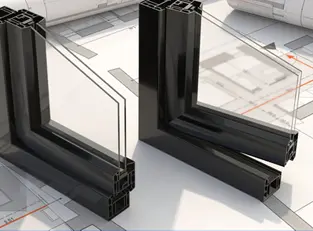
Drawing Review
Analysis of architectural elevation schedules, structural opening tolerances, and arch radius constraints.

R&D Configuration
Calculation of wind load moments, glass thickness, thermal break depth, and hinge load capacities.

Transparent Quotation
Transparent pricing by opening, system specification, surface coating standard, and maritime freight.

Detail Finalization
Approval of 1:1 CAD templates, hardware handle finishes, custom arch transoms, and glass performance coatings.

Production Scheduling
Securing prime raw material extrusions (6063-T6 virgin billets) and locking factory production slots.
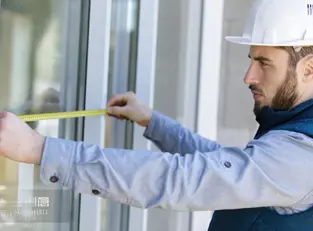
Measurement Verification
Digital verification of as-built wall reveals, finished floor levels (FFL), and threshold recesses.
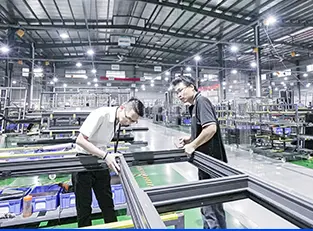
Fabrication & Pre-Hang
Precision CNC roll-bending, corner-crimping, full factory pre-hanging, and leak testing prior to crating.
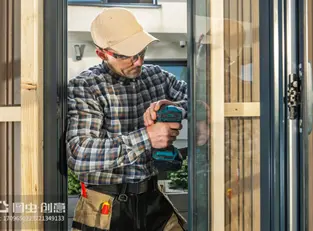
Installation Guidance
Numbered component packaging, steel-reinforced wooden crating, video assembly manuals, and engineering support.
Frequently Asked Questions by Indonesian Buyers
Addressing the technical, customs, logistics, and on-site assembly inquiries of contractors, project developers, and villa owners importing to Indonesia.
1. How are custom curved arch frames accurately measured and fabricated for projects in Indonesia?
Arch door manufacturing requires three non-negotiable geometric variables: the total clear width (Span, S), the height from the spring line to the apex (Rise, R), and the vertical leg height (H). For irregular, multi-radius, or Tudor/Gothic arches, we provide our Indonesian clients with laser-cut digital template guides or receive direct DWG/DXF files.
At our Foshan production facility, profiles are curved using multi-axis servo roll-bending machinery with spring-back compensation software. Every frame undergoes a 100% factory pre-hang test against a calibrated 1:1 CNC-milled jig before packing, ensuring zero dimensional discrepancies on your site in Jakarta, Bali, or Surabaya.
2. What import regulations, customs duties, and SNI standards apply when importing aluminium doors from China?
When importing finished architectural aluminium doors into Indonesian ports (such as Tanjung Priok in Jakarta, Tanjung Perak in Surabaya, or Benoa/Batu Ampar for Bali/Batam), shipments fall under HS Code 7610.10.00 (Doors, windows and their frames and thresholds for doors of aluminium). Under the ASEAN-China Free Trade Agreement (ACFTA), importers presenting a valid Form E can benefit from preferential import duty rates (often 0% to 5%, compared to standard MFN rates of 10%–15%), alongside standard Indonesian Value Added Tax (PPN 11%) and Article 22 Income Tax (PPh 22).
DERCHI routinely issues full Form E documentation, commercial invoices, packing lists, and mill test certificates. For projects requiring specific Indonesian National Standards (SNI), our engineering profiles comply with or exceed SNI 07-0603 specifications for architectural aluminium alloys.
3. How do DERCHI arch doors resist the extreme humidity and coastal air of Bali and northern Jakarta?
Coastal developments within 5 kilometers of the shoreline are exposed to high salt spray concentrations (NaCl) and cyclic condensing moisture. Standard powder coatings will blister and oxidize within 24 to 36 months under these conditions.
For Indonesian coastal projects, we specify AkzoNobel Interpon D2525 super-durable powder coating or high-grade PVDF (Fluorocarbon) 3-coat finishes that surpass the 3,000-hour acetic acid salt spray (AASS) test in accordance with Qualicoat Class 2 standards. Furthermore, all assembly fasteners, internal lock boxes, and bearing rollers are fabricated from SUS316 stainless steel to eliminate galvanic corrosion.
4. What glass configuration is recommended to cut electricity bills under Indonesia's equatorial sun?
In Indonesia, where HVAC air-conditioning accounts for up to 60% of a luxury residence's recurring operational costs, single tempered glass is unsuitable. We engineer our arched door leaves to accommodate double-glazed insulating units (DGU) or laminated insulated glass.
The optimal tropical configuration is 6mm Low-E (solar control coating) + 12mm Argon gas spacer + 6mm Clear Tempered glass. This assembly achieves a Solar Heat Gain Coefficient (SHGC) below 0.32 and a U-value under 1.7 W/m²K, blocking more than 75% of incoming infrared solar radiation while transmitting abundant natural daylight without color distortion.
5. What are the typical ocean freight transit times and packing methods for container shipments to Indonesia?
Our Foshan manufacturing facility is situated within two hours of major South China deepwater ports (Nansha, Shekou, and Yantian). Direct container vessel transit from South China to Jakarta (Tanjung Priok) takes approximately 5 to 8 days, and 7 to 10 days to Surabaya (Tanjung Perak).
Given the irregular dimensions of curved arch door frames, we utilize custom heavy-duty, fumigated A-frame steel/timber export crates with corner cushion blocks, PE protective wrapping, and internal desiccants to prevent maritime moisture condensation. Each crate is loaded via overhead crane to prevent handling shock during transshipment.
6. Does DERCHI provide on-site installation guidance for local Indonesian contractors?
Yes. We provide complete bilingual (English/Indonesian annotated) shop drawings, step-by-step exploded assembly diagrams, and full video walkthroughs illustrating the anchoring, perimeter shimming, and membrane waterproofing sequence. For major commercial resorts or luxury residential compounds, we can deploy senior technical supervisors to Jakarta, Bali, or Surabaya to provide on-site installation training and final perimeter seal auditing.
Initiate Your Indonesian Architectural Project Today
Send us your door schedules, CAD elevations, or opening radius dimensions. Our senior facade engineering team will return a comprehensive structural wind-load calculation, glass thermal analysis, and itemized factory quotation within 24 hours.