Tilt & Turn
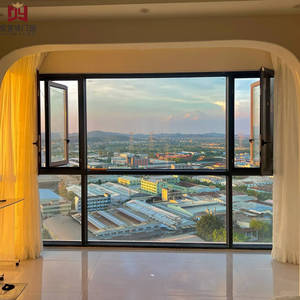
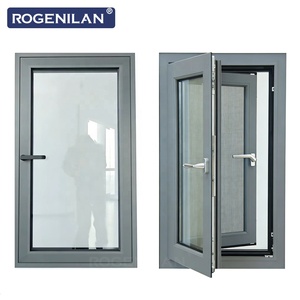
Direct From Factory: Aluminum Casement Windows Tilt-In Option
- Dual-axis tilt & turn German hardware
- Concealed weep drainage architecture
Examine our precision-engineered exterior systems. Calibrated specifically for high-exposure villas, ultra-luxury residential complexes, and demanding commercial projects across global climatic zones.
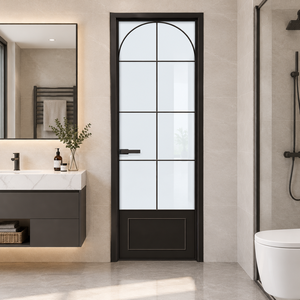
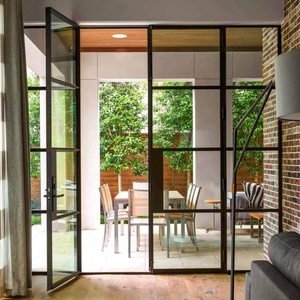
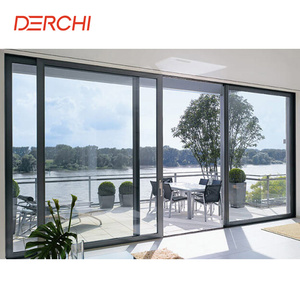
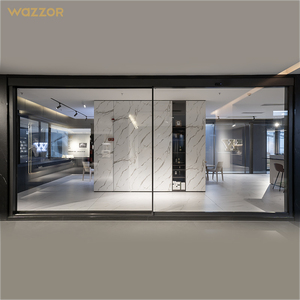
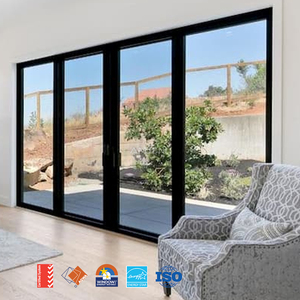
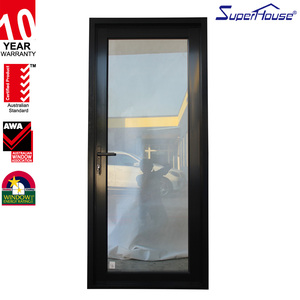
Guangdong Dejiyoupin Doors and Windows Co., Ltd. (DERCHI) represents over 25 years of continuous research, technological disruption, and high-precision fabrication in primary aluminum systems.
Intelligent digitalized production base located in Foshan, China.
Annual fabrication capacity for mega-developments & wholesale exports.
National patents including proprietary four-side six-point security systems.
Landmark projects executed globally, including Hilton & Atour hospitality brands.
In structural building envelopes, the entrance door is not merely an aesthetic statement; it is the critical barrier subjected to relentless thermal expansion, wind shears, and moisture cycles. Sourcing commercial-grade aluminum front doors requires stringent verification of material chemistry, thermal transmittance values (U-factors), and resistance to permanent deflections under cyclonic pressure. Operating out of Nanhai District, Foshan—the global epicenter of high-end aluminum extrusion—DERCHI eliminates common industrial vulnerabilities through zero-error smart automated cutting and high-pressure corner crimping with structural glue injection.
Unlike standard fabricators that assemble extrusions with dry mechanical screw-joints prone to water ingress and frame fatigue, our factory utilizes automated dual-component polyether adhesive crimping. This delivers monolithic frame strength capable of bearing sash weights in excess of 450 kilograms while resisting dynamic water pressures up to 700 Pascals. With international credentials spanning CE (EN 14351-1), NFRC, AS2047, CSA, and ISO 9001, our doors deliver turn-key compliance across high-scrutiny markets such as Australia, North America, the European Union, and tropical Southeast Asian archipelagos.
Exclusive Four-Side Six-Point Locking Invention Patent completely neutralizing hydraulic pry attacks and perimeter air leakage.
Sub-millimeter CNC multi-axis milling ensures zero sash drop and permanent micro-gap elimination across 100,000+ duty cycles.
Direct proximity to major ports (Nansha/Yantian) offering sea freight optimizations to Singapore, Manila, Bangkok, and European ports.
Endorsed under the official brand incubation initiative of Xinhua News Agency, testifying to manufacturing integrity and fiscal health.
Architectural demand is radically moving away from legacy, non-insulated aluminum systems toward decarbonized, technologically integrated building envelopes.
Global building codes (ASHRAE 90.1, Title 24, European EN ISO 10077) increasingly mandate total system U-values under 1.2 W/m²·K. Global procurement has transitioned entirely from uninsulated metal to multi-cavity PA66 GF25 thermal break chambers filled with aerogel or high-density EPS insulation.
Procurement for ultra-luxury residential towers and private estates requires seamless smart-home ecosystem integration (KNX, Zigbee, Control4). The modern aluminium front door integrates concealed motorized multipoint latches, 3D facial recognition, and smartphone-encrypted credentials with zero mechanical disruption.
With intensifying typhoons and hurricanes along coastal regions (Southeast Asia, Florida, Gulf States), specifications demand structural deflection ratings meeting ASTM E330 or AS4055. Simultaneously, seaside environments require Qualicoat Class 2 powders or AAMA 2605 fluorocarbon (PVDF) finishes resisting 4,000+ hours of acetic salt spray.
| Performance Criterion | Legacy Aluminum System | DERCHI High-Performance Engineering Standard | Governing International Test Protocol |
|---|---|---|---|
| Thermal Transmittance (U-Value) | > 3.8 W/m²·K (High thermal bridging) | ≤ 1.1 - 1.4 W/m²·K (Multi-chamber PA66 GF25) | NFRC 100 / EN ISO 10077-2 |
| Air Infiltration Rate | 0.8 to 1.5 m³/(h·m) (Felt brush seals) | ≤ 0.1 m³/(h·m) (Continuous co-extruded EPDM) | ASTM E283 / EN 12207 (Class 4) |
| Structural Wind Load Capacity | 1200 - 1800 Pa (Basic mullions) | 4500 - 5500+ Pa (Titanium-magnesium reinforced) | AS2047 / ASTM E330 / Miami-Dade NOA |
| Acoustic Attenuation (STC/Rw) | 24 - 28 dB (Single/basic double glass) | 40 - 45+ dB (Acoustic PVB laminated + Argon) | ASTM E90 / ISO 10140-2 |
How advanced metallurgy, precision CNC robotics, and rigorous eight-step engineering ensure lifetime reliability without structural distortion.
Secondary scrap aluminum compromises structural density and leads to pitting corrosion under marine environments. DERCHI strictly utilizes 100% virgin 6063-T5/T6 aviation-grade aluminum alloys, optimized with targeted magnesium and silicon chemistry for exceptional tensile yield strength (Rp0.2 ≥ 160 MPa) and impeccable anodizing response.
From shop drawing parametric review and finite element wind-load calculation to on-site laser measurement, CAD/CAM CAM-link production, and pre-shipping trial assemblies. Every door sash and outer sub-frame is test-hung inside the factory to verify perimeter seal compression before international crating.
Incorporating triple-glazed warm edge units filled with 95% pure Argon gas, equipped with soft-coat Low-Emissivity sputter technology. In tropical or extreme desert conditions, this reflects far-infrared solar radiation while maintaining visible light transmittance (VLT > 65%), eliminating the greenhouse effect in expansive residential foyers.
Direct, highly specialized answers addressing customs compliance, structural engineering, finish longevity, and factory-direct procurement mechanics.
Aluminum is naturally highly conductive (thermal conductivity ~205 W/m·K). Without thermal separation, outdoor temperatures rapidly transfer indoors, causing massive HVAC loss and interior condensation that damages finishes. A true thermal break consists of extruded continuous glass-fiber-reinforced polyamide strips (PA66 GF25) mechanically rolled between the exterior and interior extruded aluminum profiles.
This structurally decouples the metal, creating a high-resistance barrier with thermal conductivity below 0.3 W/m·K. Beware of inferior low-cost doors utilizing poured resin (pour-and-debridge) which often shrinks, warps, and causes sash delamination over repeated thermal cycles.
Typhoon resistance relies on dynamic air-water interaction engineering, not profile thickness alone. DERCHI front doors are engineered with multi-chamber structural aluminum mullions reinforced with internal galvanized steel cores where spans exceed 2.8 meters. We utilize a pressurized stepped drainage threshold with integrated non-return drainage valves that prevent water backup under 700+ Pa cyclic wind pressure.
Our doors feature the patented Four-Side Six-Point locking system which pulls the door sash tightly into continuous multi-lip vulcanized EPDM gaskets, distributing wind loads evenly into the subframe. Our hurricane-certified configurations have passed projectile impact and cyclic air pressure tests exceeding 5,000 Pa.
Maritime export damage predominantly arises from container moisture condensation ("container rain") and rough handling vibrations. DERCHI implements a strict five-tier packaging regimen for all international consignments:
Yes. Our engineering division operates a dedicated team of 30+ R&D structural engineers proficient in AutoCAD, Revit, and Rhino. We import your architectural schedules directly into our ERP/CAM software to generate millimeter-precise shop drawings, elevation details, anchoring configurations, and deflection analyses.
Manufacturing commences only after your project director, architect, or general contractor formally signs off on shop drawings and physical powder-coated aluminum swatch samples.
For installations within 3 kilometers of the sea, standard architectural powder coating is inadequate. We recommend either Qualicoat Class 2 / Class 3 Superdurable Polyvinylidene Fluoride (PVDF/Fluorocarbon) coatings (such as AkzoNobel or PPG Duranar) with a minimum 3-coat/3-bake system, or a 25-micron architectural hard-anodized finish.
These coatings provide exceptional resistance to chloride pitting, chalking, and intense UV degradation, supported by empirical salt-spray testing exceeding 4,000 continuous hours.
Because we operate an expansive 180,000 m² smart manufacturing campus, our standard fabrication cycle is 25 to 35 calendar days following shop drawing confirmation and hardware allocation. For custom extrusion profiles or specialized RAL dual-color powder finishes, allow 35 to 45 days.
We accommodate both single-villa custom architectural builds (MOQ from 1 complete entryway set) and large-scale multi-unit commercial developments requiring multiple 40-foot high-cube containers per month.
Direct factory communication. Submit your architectural elevations, opening schedules, or custom specifications. Our senior fenestration engineering team will furnish structural estimates, wind-load assessments, and itemized quotations within 24 hours.
Official Export Division • Guangdong Dejiyoupin Doors and Windows Co., Ltd. • Foshan, China