French Double Entry
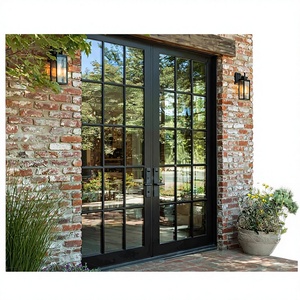
Sunnysky Retro Double Tempered Glass Aluminum Swing Door
Modern French-style profile, dual silicone sealing, acoustic deadening, waterproof baseline.
Precision-milled systems built from virgin 6063-T6 aluminum billet alloy, tested against extreme wind-loading, heavy duty cycles, and tropical humidity cycles.
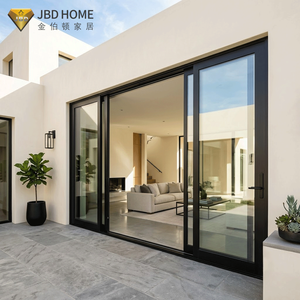
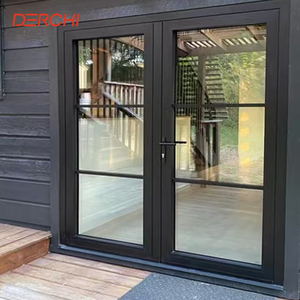
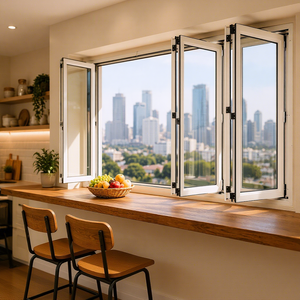
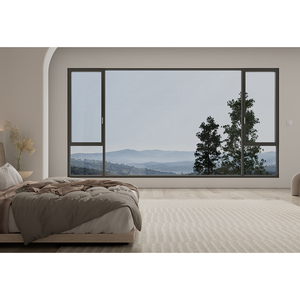
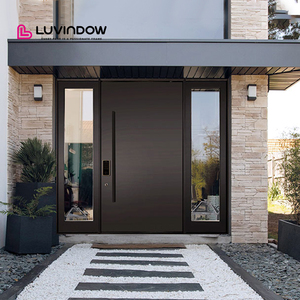
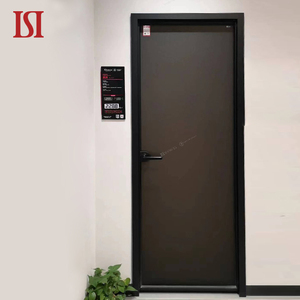
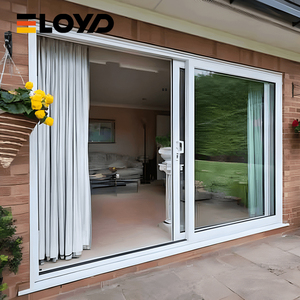
Operating as Guangdong Dejiyoupin Doors and Windows Co., Ltd. (DERCHI), our infrastructure powers world-class developments across 18,000+ completed projects globally.
Automated 5-axis CNC extrusion cutting, laser-assisted mitering, and hydraulic pin-crimping eliminate micro-deviations. Every frame maintains less than 0.2mm tolerance variance across 3-meter spans.
Inventor and patent-holder of the proprietary Four-Side Six-Point Perimeter Lock. Internal doors deliver unyielding shear resistance, anti-jemmy security, and structural rigidity surpassing baseline ISO standards.
Direct manufacturer testing credentials including CE (EU), NFRC (USA), AS2047 (Australia), CSA (Canada), Energy Star, and ISO 9001 ensure zero friction at international port customs.
Proven execution pedigree across marquee global accounts, providing interior systems for Hilton Hotels, Atour Hospitality Group, luxury estates in Beverly Hills, Ruyi Lake residences, and Singapore luxury towers.
The global shift away from traditional timber and uninsulated millwork toward structural aluminum internal systems is propelled by building science demands: acoustic privacy, lifecycle economics, and extreme dimensional stability.
Solid core and engineered wood doors inevitably buckle, swell, or delaminate under coastal humidity and HVAC microclimate temperature deltas. Modern aluminum internal frames leverage high-tensile 6063-T6 aluminum alloys treated through horizontal automated solution heat management. The thermal expansion coefficient of aluminum (23×10⁻⁶ K⁻¹) paired with rigid architectural extrusion cross-sections yields infinite dimensional stability, preventing latch binding and jamb deformation over decades of rigorous service.
Modern commercial and residential interiors mandate high Sound Transmission Class (STC) ratings. Contemporary aluminum interior systems employ dual-wall hollow extrusions filled with high-density polyurethane foams or mineral acoustic battens. Paired with co-extruded EPDM continuous perimeter seals, automatic drop-down mechanical bottom thresholds, and laminated polyvinyl butyral (PVB) acoustic acoustic glass, aluminum systems achieve Rw/STC ratings beyond 42 dB—silencing corporate boardrooms, primary suites, and medical facilities.
Architectural minimalism has rendered surface-mounted hinges, bulky jamb trims, and exposed screws obsolete. The engineering trend centers on frameless flush-to-wall aluminum jamb sub-frames embedded directly within the drywall/render plane. Utilizing concealed 3-way adjustable heavy-duty stainless pivot hinges (bearing up to 150kg without sag) and silent magnetic latch mortise assemblies, the door merges seamlessly into spatial architecture while maintaining whisper-quiet actuation.
How real estate developers, hospitality groups, and top-tier builders are re-architecting their interior millwork supply chains to hedge macro volatility.
Developers are eliminating the traditional multi-tier procurement nightmare where frames, door leaves, glass, hinges, and locksets are sourced from disparate vendors. Direct procurement from vertically integrated Chinese suppliers ensures factory-fitted CNC mortises, precision pre-hung hardware tolerance, and unified surface anodizing warranties across entire developments.
Driven by LEED, BREEAM, and ESG mandates, international specifiers increasingly dictate recycled aluminum alloy content. Sourcing trends prioritize suppliers powered by low-carbon hydroelectric smelting profiles, accompanied by comprehensive Environmental Product Declarations (EPDs), enabling commercial properties to earn green certification credits effortlessly.
Procurement now begins within Autodesk Revit and Archicad environments. Top exporters provide comprehensive parametric BIM/CAD families embedded with exact profile thicknesses, acoustic damping coefficients, and glass thermal parameters. This front-loads engineering verification, shortening project review timelines by weeks.
| Performance Dimension | DERCHI Architectural Aluminum Doors | Standard Commercial Wood / MDF Doors | Hollow Metal Commercial Doors |
|---|---|---|---|
| Dimensional Stability (High Humidity) | Zero Distortion 100% impervious to swelling, mold, rot | Severe vulnerability; warping > 3mm typical | Stable, but susceptible to inner core rust |
| Acoustic Attenuation (STC / Rw) | Up to 42 dB (EPDM drop seals + acoustic glass) | 28 - 34 dB (limited by perimeter leakage) | 32 - 38 dB (metallic resonance requires heavy dampening) |
| Frame Profile Sightline Minimalist Index | 16mm - 25mm Ultra-slim structural sightlines | 60mm - 90mm Heavy visible wood jamb profiles | 50mm - 75mm Industrial bent sheet steel jambs |
| Termite & Insect Vulnerability | 100% Immune Ideal for tropical and resort belts | Requires regular toxic chemical pesticide treatments | Immune to biological attack |
| Surface Finish Lifespan & Care | 25+ Years Qualicoat Class 2 Anodizing / PVDF | Requires re-varnishing and painting every 3–5 years | Paint chips easily; requires touch-ups and primer |
A zero-error, fully documented workflow engineered to eliminate risk for international developers, quantity surveyors, and architects.
Comprehensive review of CAD/BIM floor plans, door schedules, fire-rating guidelines, and wall rough-opening specifications.
Selecting profile extrusions, glass specifications (Low-E, fluted, laminated), and hardware mechanics adapted to local project climates.
Transparent cost breakdown categorized by opening ID, hardware finish, glass thermal performance, and maritime logistics packing.
Fine-tuning finishes: matching custom RAL anodizing hues, powder-coat textures, mortise handles, magnetic latches, and sub-frame jambs.
Securing production slot reservations, raw aluminum billet smelting schedules, and German hardware allocation batches.
Rigorous dimension verification through 3D laser-scan data, laser levels, and structural plumb line checks to ensure zero site fitting errors.
Final sign-off on 1:1 scale shop drawings detailing hinge pockets, jamb profiles, threshold drainage, and glass rebates before CNC cutting.
Comprehensive video assembly documentation, bilingual digital installation schematics, and optional on-site engineering supervision.
Technical guidance addressing the mechanical, structural, and logistics questions asked by developers and procurement directors.