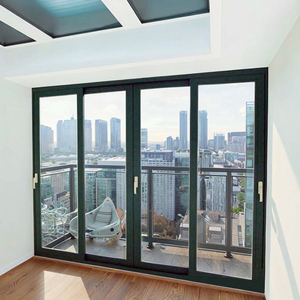
Commercial & Residential Flagship Catalog
Engineered Fenestration Systems: Certified Export Portfolio
Our structural aluminum glass windows and door systems are precision-calibrated to satisfy international standards including AS2047, NFRC, CE, and CSA. Review our precision-machined assemblies engineered for commercial developments, passive villas, and luxury hospitality footprints.
Manufacturing Infrastructure & Technical Superiority
Engineered Precision: The Foshan Industrial Manufacturing Matrix
Operating from our modern manufacturing base in Foshan, Guangdong—the recognized capital of architectural aluminum extrusion—Guangdong Dejiyoupin Doors and Windows Co., Ltd. (DERCHI) represents the pinnacle of Chinese fenestration engineering. Our facility spans over 180,000 m² of digitized fabrication zones, deploying multi-axis CNC profile cutters, automated corner crimping apparatus, continuous insulated glass sealing systems, and structural silicone robotics. With an annual production capacity exceeding 1,000,000 m², our engineering team services tier-one commercial developers, general contractors, and structural design institutes globally.
180,000m²
Integrated Factory Base
1,000,000+m²
Annual Output Capacity
100+
National Invention Patents
18,000+
Completed Global Projects
Our competitive advantage rests on strict tolerance governance under our "Zero-Error" manufacturing mandate. In severe typhoon corridors and harsh thermal environments, an assembly deviation of only 1.0 mm compromises structural integrity, initiates capillary water leakage, and breaches building envelope energy ratings. DERCHI maintains a closed-loop quality assurance matrix certified under ISO 9001, tracing primary alloy billets (6063-T5/T6 architectural grade), multi-cavity PA66GF25 thermal barrier strips, automated Argon-gas purging rigs, and multi-point perimeter compression hardware.
Patented Multi-Point Locking
DERCHI holds proprietary intellectual rights to the Four-Side Six-Point perimeter locking invention, engineered to prevent pry-intrusion while producing complete uniform peripheral compression against driving monsoon storms.
Severe Climate Optimization
Our systems incorporate pressure-equalized rain-screen chambers, concealed step-down cascading drainage slots, and high-resilience EPDM ternary vulcanized rubber gaskets that sustain elasticity across extreme temperature fluctuations (-40°C to +80°C).
25+ Years Export Authority
From supplying luxury hospitality projects such as Hilton Hotels and high-density residential towers to custom architectural sunrooms, our engineering team manages CAD shop drawings, deflection analysis, and structural wind calculations for clients across 60+ countries.
International Certification Grand Slam
Direct compliance verified through third-party laboratories: Australian AS2047 & AS1288 accreditation, North American NFRC thermal performance ratings, CSA certification, European Union CE marking, and strict Hurricane Impact testing certification.
Empirical Specification Benchmark
Structural Engineering Performance Matrix: System Comparison
Specifying high-performance fenestration requires deep alignment between architectural vision, structural wind loads (ULS/SLS), thermal transmittance (U-factor/SHGC), acoustic attenuation (STC/Rw), and atmospheric corrosion indices (C1 to C5-M). Below is an engineering overview of our core window and door configurations built for institutional and residential export contracts.
| System Architecture | Alloy Profile & Wall Depth | Glazing Assembly Options | Structural Wind Load (AS2047 / ASTM) | Thermal U-Factor (W/m²·K) | Target Applications |
|---|---|---|---|---|---|
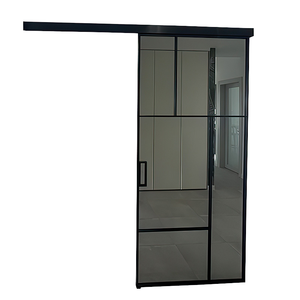
| Heavy-Duty Lift & Slide Doors | 6063-T6 / 2.0 mm – 3.0 mm Web | 6mm + 12Ar + 6mm Low-E Tempered / Laminated | Design Wind Pressure up to 4500 Pa | Uw 1.6 – 2.0 (Thermal Break) | Oceanfront Balconies, Penthouses, Luxury Resorts |
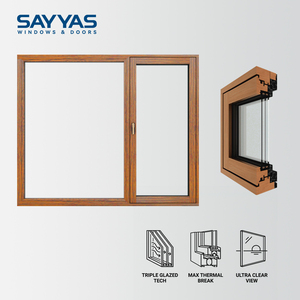
| Sayyas Ultra-Passive Casements | Aluminum-Clad Solid Wood / 135 mm | Quadruple Glazed (4G3A) Warm-Edge + Krypton | Certified Hurricane Resistance Class 4 | Uw ≤ 0.80 (Passive House Certified) | Extreme Cold/Heat Climates, Net-Zero Developments |
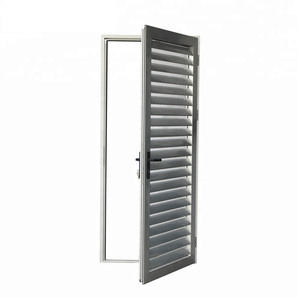
| High-Performance Louver Assemblies | 6063-T5 / Adjustable Airfoil Blades | Tempered Frosted / Double Glazed Insulated | Engineered Deflection Limit L/250 | Natural Ventilation Optimization | High-Humidity Condos, Plant Rooms, Tropical Facades |
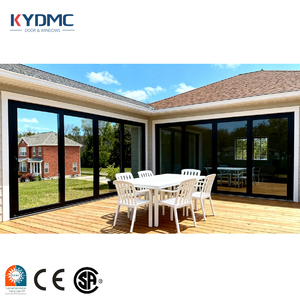
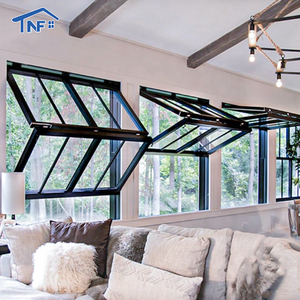
| Vertical Bi-Fold Servery Windows | Reinforced Thermal Break / 2.0 mm | 5mm + 9A + 5mm Dual Low-E Safety Glass | Wind Load Resistance 2500 Pa | Uw 1.8 – 2.2 | Commercial Cafes, Hospitality Bars, Patio Serveries |
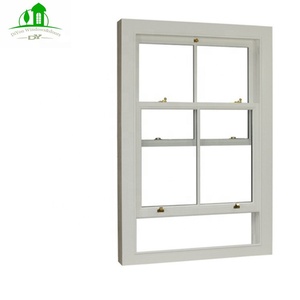
| Acoustic Vertical Double-Hung | Multi-Cavity Acoustic Aluminum / 1.6 mm | Laminated Acoustic PVB (0.76mm / 1.52mm) | Water Tightness: 600 Pa | Sound Attenuation: STC 42 dB | Urban Apartment Infill, Transit-Corridor Hotels |
Strategic Fenestration Outlook
Future Sourcing & Technological Trends in Architectural Windows (2025–2030)
The global facade and fenestration procurement ecosystem is experiencing a profound transition driven by stringent net-zero operational building mandates, climate instability, and smart infrastructure convergence. Sourcing agents, facade consultants, and general contractors who evaluate Chinese manufacturers must navigate key evolutionary shifts shaping window and door design:
Decarbonized & Low-Carbon Aluminum
Global regulatory frameworks such as the European Carbon Border Adjustment Mechanism (CBAM) are redefining metal procurement. Future-ready Chinese factories are actively shifting toward hydropower-smelted primary aluminum billets and recycled scrap ratios (>30%), slashing the embodied carbon profile of architectural curtain walls and window extrusions without compromising ultimate tensile strength.
Vacuum Insulated Glass (VIG) Integration
While triple-glazing has served as the baseline for low U-factor assemblies, it introduces excessive structural deadweight onto hinges, rollers, and wall anchors. Next-generation fenestration integrates tempered Vacuum Insulated Glass (VIG), yielding center-of-glass thermal resistance equivalent to solid masonry walls (U-values below 0.50 W/m²·K) within an ultra-slim 10 mm profile thickness.
Intelligent Mechatronics & Building IoT
Automated building management interfaces demand micro-actuators concealed entirely within the thermal break profile cavities. Modern assemblies feature smart sensors monitoring motorized opening cycles, motorized Venetian blind systems powered by integrated photovoltaic micro-cells, and automated purge-ventilation loops synced with indoor VOC and CO₂ detectors.
Procurement Risk Mitigation: Total Cost of Ownership (TCO)
For international real estate developers and general contractors, upfront product costs account for less than 40% of the lifecycle window expenditure. Low-tier window packages characterized by low-grade EPDM seals, thin anodized coatings (<15 μm), or sub-standard non-structural corner joints lead to seal failures, air leakage, and catastrophic glass rupture under wind load. Our engineering approach prioritizes Total Cost of Ownership (TCO) optimization:
- Structural Rigidity via Corner-Crimping & Pin-Glue Infiltration: Rather than basic mechanical screw-fastened corners, DERCHI deploys cast aluminum corner keys combined with automated dual-component polyurethane glue injection. This guarantees structural joints withstand severe cyclical racking during seismic and hurricane forces.
- Fluorocarbon (PVDF) vs. Standard Powder Coating: Coastal salt spray degradation demands AAMA 2605 compliant finishes. DERCHI provides three-coat PPG fluorocarbon (PVDF) surface treatments offering over 20 years of barrier defense against ultra-violet degradation, chalking, and marine salt corrosion.
- Direct Container Seaworthy Packaging Protocols: Shipping delicate glass assemblies across oceans carries substantial logistics risks. DERCHI utilizes customized fumigation-free A-frame steel crates, corner rubber guards, desiccant moisture packs, and vacuum shrink-wrapping, ensuring zero damage across intermodal transport.
Strict Project Execution
Full-Cycle Project Execution: The DERCHI 8-Step Engineering Protocol
To ensure zero errors on overseas projects, every custom order follows our end-to-end quality control roadmap, standardizing communication between architectural design, factory fabrication, and final site commissioning.
01
Architectural Review
Deep-dive review of architectural elevations, structural wall sections, wind load schedules, and opening tolerances.
02
R&D System Matching
Thermal calculations, inertia moment (Ix/Iy) profile sizing, and customized extrusion die engineering if required.
03
Itemized BOM Quotation
Completely transparent pricing detailing glass makeups, alloy wall thicknesses, surface finishes, and hardware origins.
04
Sample & Mockup Finalized
Physical corner cuts, color chips, and 1:1 operational mockups prepared for client testing and architectural sign-off.
05
Deposit & Scheduling
Order locked into ERP-governed smart factory lines, allocating raw billets, certified glass lites, and hardware runs.
06
On-Site Laser Verification
Technical support assisting field teams with laser-scan dimensional confirmations to rectify rough opening deviations.
07
CNC Precision Machining
Multi-axis automated profile milling, corner crimping with glue injection, dual-seal glass assembly, and 100% factory pre-hang.
08
Installation Guidance
Detailed bilingual technical installation manuals, video walkthroughs, and optional on-site engineering team supervision.
Contractor & Importer FAQ
Frequently Asked Questions: Global Window Sourcing & Compliance
Direct technical answers addressing structural certification, custom configurations, lead times, and logistical safeguards for international developers and purchasing managers.
What international fenestration certifications do your windows and doors possess?
Guangdong Dejiyoupin Doors and Windows Co., Ltd. (DERCHI) manufactures systems tested and accredited by accredited global laboratories. Our portfolio carries Australia's AS2047 (air infiltration, water penetration resistance, deflection, and ultimate strength) and AS1288 safety glazing certification; North America's NFRC (thermal U-factor, solar heat gain coefficient SHGC, visible transmittance VT) and CSA credentials; European Union CE EN 14351-1 compliance; ISO 9001 quality management; and verified Hurricane Impact certifications for high-velocity hurricane zones (HVHZ).
How do your thermal break profiles achieve low U-values for energy-efficiency standards?
Our thermal break windows utilize multi-cavity architectural aluminum extrusions separated by high-grade polyamide insulating strips (PA66 reinforced with 25% glass fiber). This barrier decouples the interior aluminum frame from exterior temperature extremes. When combined with double or triple insulated glass units (IGU) featuring Low-Emissivity (Low-E) coatings, Argon gas fills, and warm-edge composite spacers, our systems achieve comprehensive window U-values (Uw) down to 1.4 W/m²·K in standard series, and ≤0.80 W/m²·K in our Sayyas passive house wood-clad series.
Can your engineering team adapt designs to match project-specific wind load and hurricane requirements?
Yes. Our in-house engineering team comprises over 30 structural, mechanical, and fenestration R&D specialists. When receiving architectural elevations and project site geographic data, we calculate the required moment of inertia (Ix/Iy) for transoms and mullions under Serviceability Limit State (SLS) and Ultimate Limit State (ULS). For hurricane-prone coastlines (such as the Caribbean, Florida, the Philippines, or coastal Australia), we configure laminated safety glass with thick SentryGlas (SGP) or acoustic PVB interlayers alongside heavy-duty reinforced steel sub-mullions capable of resisting wind pressures exceeding 4500 Pa.
What hardware brands and surface finish options do you supply?
We supply top-tier international hardware including German-engineered fittings (Siegenia, Roto, Hoppe, GU) alongside our proprietary patented multi-point security hardware. For surface finishes, clients can specify high-durability AkzoNobel powder coatings, anodized treatments conforming to Qualanod standards (up to 25 μm for seaside applications), or 3-coat fluorocarbon PVDF systems backed by a 20+ year anti-fading warranty against intense solar irradiation and coastal humidity.
What is the typical manufacturing lead time, and how is cargo secured against sea transport damage?
Standard custom project lead times range between 25 and 35 business days following final approved shop drawings and deposit confirmation. Logistics security is managed in-house: all completed window and door assemblies undergo protective film taping, corner buffer caps, individual bubble wrapping, and are crated within non-fumigation reinforced solid plywood or heavy-gauge steel A-frames. Containers are packed with internal cargo strapping and heavy desiccant packs to prevent transit shifts and condensation exposure during sea transit.
Ready to Engineer Your Project's Fenestration Package?
Consult with our senior fenestration specialists. Submit your architectural drawings, window schedules, and structural specifications for direct manufacturer pricing, shop drawings, and full certification packages.