High-Performance Certified Architectural Systems
Manufactured from primary 6063-T6 virgin aluminum alloy billets, featuring thermal-break insulation, high-acoustic damping laminated glass, and anti-corrosive multi-point German hardware systems.
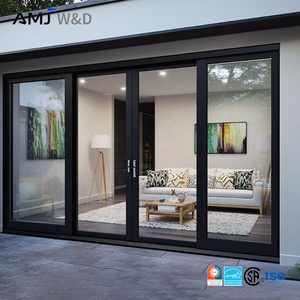
Heavy Duty Energy Efficient Sliding Patio Doors
Glazing: Double Tempered Low-E Argon
U-Factor: ≤ 1.4 W/m²·K | Sound: 42 dB
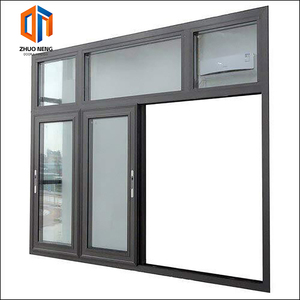
Thermal Break Waterproof Sliding Patio Window
Weathering: Concealed Sub-Sill Drainage
Water Sealing: 600 Pa Pressure Test
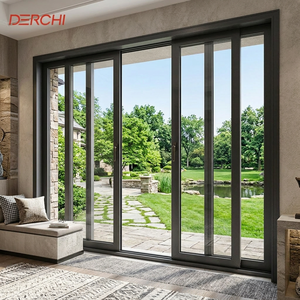
DERCHI Hurricane Proof Multi-Panel Sliding Door
Locking: Multi-Point Hook Deadbolt
Wind Load: Designed for ≥ 5000 Pa Exposure
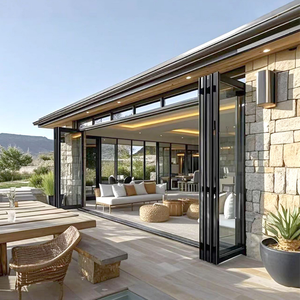
Thermal Break Exterior Large Folding Patio Doors
Screen: Integrated Retractable Mesh
Configuration: 3+1, 5+1 up to 8 Folding Leaves
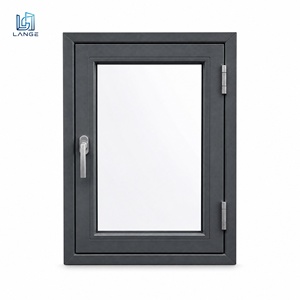
LANGE Slim Thin Profile Casement System
Sealing: Triple Continuous EPDM Gaskets
Hardware: Concealed Friction Stays & Hinges
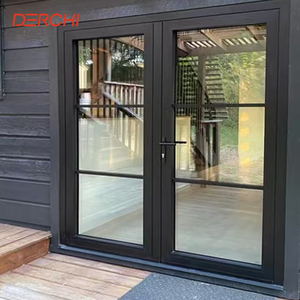
DERCHI French Double Glass Swing Casement Door
Coating: AAMA 2605 Fluorocarbon Coating
Security: Four-Side Six-Point Patent Lock
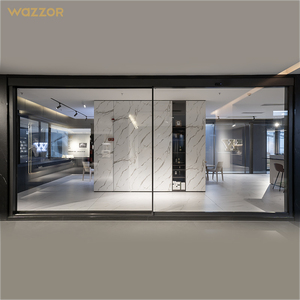
Wazzor Waterproof Villa Sliding-Folding Doors
Glazing: 6mm+12Ar+6mm Laminated Double
Mechanism: Top-Hung Ultra-Quiet Quad Rollers
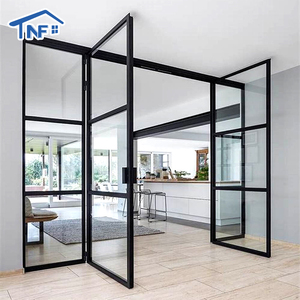
Arched Aluminum Glass French Casement Doors
Finish: AkzoNobel Interpon Electrostatic
Certification: NFRC & CE Structural Validated
Why Tier-1 Global Contractors Source from Guangdong Dejiyoupin (DERCHI)
Headquartered in Foshan—the world's undisputed capital of precision aluminum extrusion—Guangdong Dejiyoupin Doors and Windows Co., Ltd. (DERCHI) operates on a relentless "Zero-Error" manufacturing philosophy. Over the last 25+ years, we have scaled our facility into an industrial benchmark, supplying structural facade systems to over 18,000 landmark developments spanning 100+ countries.
180,000 m² Production Infrastructure
Our intelligent smart facility processes in excess of 1,000,000 m² of architectural fenestration annually. Equipped with fully automated German 5-axis CNC machining centers, automated profile cutting saws, and robotic corner crimpers, we deliver structural dimensional tolerances within ±0.5mm across super-span elevations.
100+ Proprietary Patents & Security
Our in-house R&D team of 30+ senior facade engineers holds more than 100 national invention patents. Notable innovations include our internationally patented Four-Side Six-Point Anti-Intrusion Lock, internal concealed multi-stage siphon drainage chambers, and vibration-damped structural roller tracks.
International Certification Grand Slam
DERCHI systems are pre-tested and fully certified by leading accredited global test bodies: North American NFRC (ANSI/NFRC 100/200) and CSA A440; European CE (EN 14351-1); Australian AS2047 & AS1288; and Florida Building Code TAS-201/202/203 Severe Cyclonic Hurricane Impact protocols.
The 8-Step Zero-Error Engineering Lifecycle
Direct export fenestration requires flawless precision prior to sea-freight packing. A single millimeter discrepancy on an overseas construction site causes catastrophic delay. Here is our rigorous verification workflow:
01. BIM & Drawing Audit
Structural validation of architectural elevations, mullion span dead loads, and regional wind-load requirements (ASCE 7-22, Eurocode 1).
02. Thermodynamic Simulation
Finite element thermal break modelling (LBNL THERM & WINDOW) verifying target U-Factor, SHGC, and dew point suppression.
03. 5-Axis CNC Precision
Milling and miter-cutting on German automation lines to within ±0.2mm, followed by heavy pneumatic corner-crimping.
04. Automotive EPDM Injection
Continuous co-extruded EPDM vulcanized sealing gaskets ensuring air infiltration rates below 0.05 L/s·m².
05. Structural IGU Glazing
Dual-component silicone secondary sealant with automated argon filling (≥95% gas concentration) and warm-edge spacers.
06. Full Mock-Up Chamber Testing
Pre-assembly mock-up in our internal pressure chamber, testing air permeability (ASTM E283) and water ingress (ASTM E331).
07. Ocean Armor Packaging
Desiccant moisture pack insertion, protective PE filming, shock-absorbent corner caps, and non-fumigation plywood crate crating.
08. On-Site Installation Guidance
Comprehensive 3D animated video tutorials, sequenced barcode tagging, and direct engineer-to-site digital technical support.
Emerging Procurement Trends in Architectural Fenestration (2025–2030)
Global commercial procurement has transitioned from simple unit-price purchasing to sophisticated whole-life cycle assessment (LCA) and climate-specific resilience. Developers and specifiers face tighter carbon mandates and harsher weather patterns.
1. Decarbonization & Circular Aluminum
Global institutional developers (LEED, BREEAM, and Singapore Green Mark) now require Environmental Product Declarations (EPDs). Sourcing is shifting toward low-carbon certified smelters utilizing hydropower and high-recycled content billets (minimum 40% post-consumer 6063 alloy) to reduce embodied carbon by up to 65%.
2. Severe Cyclonic & Hurricane Adaptation
Due to intensifying Pacific typhoons and Atlantic hurricanes, high-wind load specifications (>4.5 kPa) are becoming mandatory not only in Florida and the Caribbean, but across coastal Southeast Asia and Oceania. Importers are abandoning non-tested assemblies in favor of factory-certified monolithic laminated multi-point impact units.
3. Building Management System (BMS) Integration
Fenestration is moving from passive thermal envelopes to active building elements. Sourcing briefs increasingly specify concealed brushless electric actuators, embedded magnetic reed security contacts, and motorized auto-sliding bifold systems compatible with KNX, BACnet, and Crestron automated control networks.
Engineering Frontiers: How Chinese Exporters Are Reshaping Facades
Chinese fenestration manufacturers have transitioned away from standard low-cost fabrication to cutting-edge metallurgical innovation, precision multi-cavity extrusion, and nano-coating technologies.
Minimalist Sightlines vs. Structural Integrity
Architects demand oversized panoramic glass openings with near-invisible aluminum perimeters. DERCHI engineers have solved this historic engineering paradox by integrating carbon-fiber composite reinforcement inside internal profile chambers and employing heavy-wall structural mullions with moments of inertia (Ix) exceeding 350 cm&sup4;. This enables interlock sightlines as narrow as 20mm to resist positive and negative dynamic wind pressures exceeding 4,500 Pascals across spans up to 6 meters in height.
Advanced Thermal Cavities & Aerogel Infusion
Meeting European Passive House (Passivhaus) standards (Uw ≤ 0.8 W/m²·K) requires eliminating all conductive paths. Our latest generation systems utilize multi-chambered 34mm–45mm Polyamide (PA66 GF25) thermal struts infused with micro-cellular polyurethane foam or silica aerogel insulation. Paired with triple-glazed units containing warm-edge composite spacers and double vacuum-magnetron sputtered Low-E coatings, solar heat gain is cut by up to 74%.
Extreme Marine & Coastal Surface Finishes
Salt-spray degradation represents the primary failure mechanism of seaside resort developments across the Caribbean, Mediterranean, and Southeast Asia. DERCHI utilizes automated horizontal powder coating and vertical fluorocarbon lines certified under Qualicoat Seaside Class and AAMA 2605 standards. Employing 70% Kynar 500 polyvinylidene fluoride (PVDF) resins, our finishes withstand 4,000+ hours of continuous salt-spray testing with zero chalking or corrosion pitting.
Sub-Sill Integrated Siphon Drainage Systems
Traditional sliding door tracks suffer from water back-flow during monsoon downpours. Our multi-chamber drainage engineering utilizes step-down differential pressure chambers and unidirectional silicone check valves. Driven by gravitational and siphonic principles, water discharge capacity exceeds 120 liters/minute per linear meter, completely preventing threshold overflow even under 900 Pa hurricane wind-driven rain.
| Performance Parameter | Generic Commodity Doors | DERCHI Export-Grade Architectural System | Standard Compliance |
|---|---|---|---|
| Aluminum Billet Chemistry | Secondary scrap remelted aluminum | Primary 6063-T6 virgin billet (≥2.0mm wall) | GB 5237 / ASTM B221 |
| Thermal Transmittance (U-Value) | Uw 3.2 - 4.8 W/m²·K (Uninsulated) | Uw 0.8 - 1.4 W/m²·K (Multi-chamber PA66) | NFRC 100 / EN ISO 10077 |
| Wind Pressure Resistance | 1,200 - 1,800 Pa (Standard low-rise) | Up to 5,000 Pa (Cyclonic / High-rise certified) | ASTM E330 / AS2047 / EN 12210 |
| Water Penetration Resistance | 150 - 250 Pa (Prone to monsoon leaks) | 600 - 900 Pa (Siphonic sub-drainage) | ASTM E331 / AAMA 501.1 |
| Hardware Cycle Longevity | 15,000 - 25,000 operational cycles | 100,000+ continuous cycles (304/316 SS) | EN 13126 / AAMA 902 |
| Surface Coating Warranty | Standard polyester (3-5 years) | AAMA 2605 70% PVDF / Qualicoat (15-25 years) | AAMA 2605 / ISO 2810 |
Frequently Asked Questions by Global Importers & Engineers
Straightforward technical, logistical, and commercial answers for developers, architects, and procurement officers sourcing fenestration from China.
What documentation and certifications are supplied with ocean freight shipments?
How does Guangdong Dejiyoupin protect large-format glass systems against ocean transit damage?
Can your engineering team adapt systems to meet specific local building codes (e.g., Florida FBC, Australia BCA, UK Part L)?
What are your minimum order quantities (MOQ) and standard production lead times?
Do you supply Knock-Down (KD) unassembled framing or pre-glazed unitized systems?
How does your patented "Four-Side Six-Point Lock" enhance anti-theft and wind resistance?
Ready to Specify or Procure Direct-from-Factory?
Submit your architectural drawings, window/door schedules, or preliminary opening dimensions. Our senior facade engineering team will deliver a comprehensive project quotation, complete with structural load assessments, thermal U-value simulations, and custom profile optimization within 24 hours.