Engineered Aluminum Double Glazed Fenestration Systems
Direct from smart manufacturing bases: precision thermal-break profiles, AS2047 and NFRC certified impact configurations, and acoustic insulation solutions.
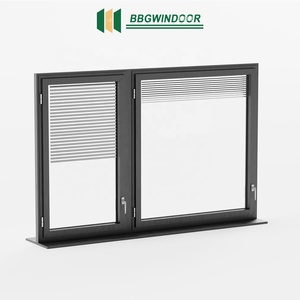
Lukliving Aluminium Glass Casement Windows With Inserted Blinds
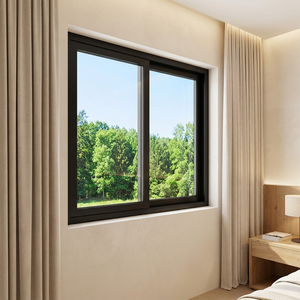
CHANGYI Burglar Proof Hurricane Impact Sliding Window & Doors
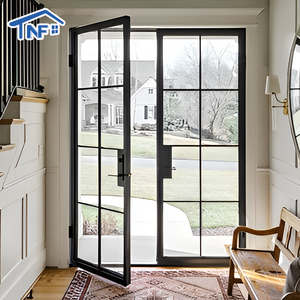
Crittall Interior French Grilles Double Tempered Casement Doors
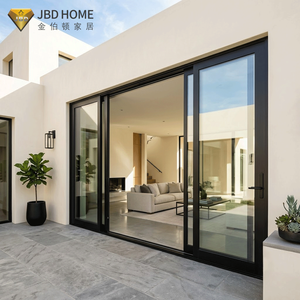
AS2047 Hurricane Impact Sliding Glass Door For Luxury Villas
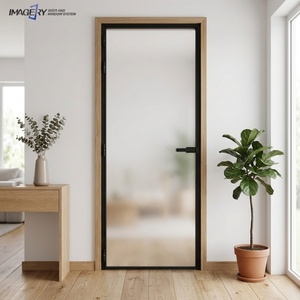
Minimalist Style Extremely Narrow Frame Casement Soundproof Door
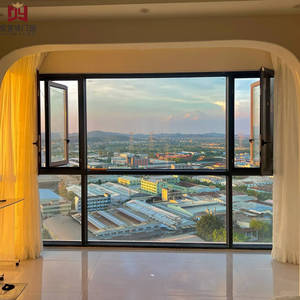
Factory Direct Aluminum Casement Windows With Tilt-In Option
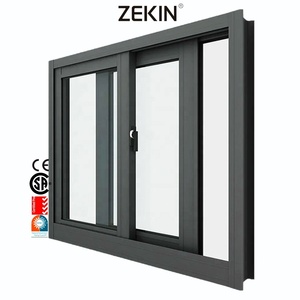
Energy Efficient AS2047 Tempered Glass Sliding Windows
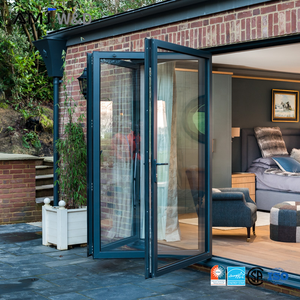
Insulated Waterproof Patio Double Tempered Bi-Folding Doors
Structural Analysis of Modern Architectural Aluminum Double Glazing
Deciphering thermal transmittance (U-factor), solar heat gain coefficients (SHGC), and mechanical structural tolerances in commercial building envelopes.
In contemporary high-performance architecture, specifying aluminum double glazed windows is no longer a matter of simple aesthetic preference; it represents a critical engineering calculation balancing thermal barrier integrity, dynamic wind-load resistance, and lifecycle operational stability. Aluminum profiles formulated from primary metallurgical 6063-T5 or 6063-T6 virgin billets provide exceptional structural rigidity, yet their inherent metallic conductivity requires state-of-the-art thermal break technology. The integration of precision-extruded Polyamide PA66 GF25 (reinforced with 25% transverse glass fibers) effectively decouples the exterior and interior architectural frames, mitigating conductive thermal bridging and reducing whole-window U-values down to ≤ 1.4 W/(m²·K).
Core Procurement Metric: When evaluating commercial-grade fenestration suppliers, professional specifiers must balance the fenestration assembly's total structural resistance (ASTM E330 / AS 2047 design pressures reaching up to 4500 Pa) against atmospheric air infiltration rates (ASTM E283) and cyclonic cyclic water penetration limits (AAMA 501.1 / EN 12208 up to 600 Pa).
Insulated Glass Units (IGUs) constitute over 75% of the total window aperture area. Leading global manufacturers deploy automated robotic secondary sealing utilizing dual-barrier structural polysulfide or silicone, enclosing dry inert argon gas cavities (purity ≥ 90%) bounded by warm-edge hybrid composite spacers. By incorporating magnetron sputtering Low-E vacuum deposition coatings—such as dual-silver or triple-silver formulations—the fenestration envelope selectively reflects long-wave infrared radiation while admitting optimal visible light transmittance (VLT ≥ 68%), dramatically attenuating heating and air-conditioning HVAC loads in demanding continental and tropical building projects alike.
Top 10 Aluminum Double Glazed Windows Factories & Suppliers
A benchmark evaluation of leading international fenestration system providers assessed across manufacturing footprint, patent moats, certification coverage, and customization lead times.
Selecting an architectural supply partner demands thorough scrutiny of technical accreditations, extrusion precision tolerances, hardware system longevity, and global logistical reliability. The following engineering index outlines the world’s leading ten manufacturers and suppliers currently commanding the aluminum double glazed window landscape.
| Manufacturer / Brand | Primary Production Hub | Core System Specialization | Certified Standard Compliance | Distinct Procurement Advantage |
|---|---|---|---|---|
| DERCHI (Guangdong Dejiyoupin) Global Direct Exporter | Foshan, Guangdong (180,000 m²) | Typhoon-Impact Double Glazing, Heavy Sliding & Bi-folds | AS2047, NFRC, CE, CSA, Hurricane Miami-Dade, ISO 9001 | 100+ Patents, Four-Side Six-Point Anti-Theft Lock, Factory-Direct Cost |
| Schüco International European Premium | Bielefeld, Germany | High-Performance Passivhaus Systems, Smart Facades | CE, DIN EN 14351-1, Passive House Institute, Qualicoat | Unmatched engineering precision, premium architectural prestige |
| Reynaers Aluminium Architectural Systems | Duffel, Belgium | Minimalist Frame Panoramic Doors, Curtain Walling | ISO 14001, CE, Cradle to Cradle Certified, BREEAM compliant | Exceptional aesthetic minimalism and sustainable circular alloy sourcing |
| YKK AP Inc. Global Volume Producer | Tokyo, Japan / Georgia, USA | Commercial Fenestration, Severe Weather Unitized Facades | AAMA, NFRC, ASTM Impact, Florida Building Code | High-volume precision repeatability and comprehensive structural testing |
| Kawneer (Arconic) Commercial Infrastructure | Norcross, GA, United States | Storefront Framing, Blast-Resistant Double Glazed Ribbons | AAMA, LEED v4 Compliant, ASTM E1886/E1996 | Extensive institutional specification across North American commercial hubs |
| Wicona (Hydro Group) Circular Metallurgy | Ulm, Germany | Recycled Hydro CIRCAL Alloy Windows, Acoustical Enclosures | ISO 9001, CE, Minergie, Passive House Certified | Lowest carbon footprint profiles derived from 75%+ end-of-life post-consumer scrap |
| Alumil Systems Mediterranean Leader | Kilkis, Greece | Thermally Insulated Lift-and-Slide, Biospheric Sunrooms | IFT Rosenheim, CE, AAMA, WFRC Fire Rated | Advanced thermal engineering tailored for intense UV and coastal microclimates |
| Xingfa Aluminium Extrusion Conglomerate | Foshan, China | Mass Custom Architectural Profiles, Structural Glazing Casements | ISO 9001, AS2047, DNV Marine Extrusion Class | Colossal billet extrusion throughput for mega high-rise urban developments |
| Technal (Hydro Building) Design Fenestration | Toulouse, France | Concealed Sash Casements, Low-Energy Double Glazed Openers | CE, Qualanod, NF fenêtres, Cradle to Cradle Silver | Sleek European industrial design with superior concealed mechanical integration |
| Internorm International Hybrid Specialist | Traun, Austria | Composite Aluminum-Clad Timber & Pure Aluminum Glazing | RAL Quality Mark, Passive House, CE, Sentinel Haus | Pioneering I-tec glazing, automated integrated shading, supreme acoustic sealing |
Emerging Procurement Trends in Double Glazed Aluminum Windows
How stringent energy building codes, carbon-accounting protocols, and extreme climate fluctuations are reshaping B2B supply contracts.
Ultra-Low Carbon Extrusions & Bio-Polyamides
Tier-1 architectural tenders now routinely mandate certified Environmental Product Declarations (EPDs). Sourcing is shifting toward low-carbon aluminum billets smelted via hydroelectricity (< 4.0 kg CO2/kg Al) paired with bio-circular polyamide structural thermal isolators to meet strict international net-zero building directives.
Dynamic Smart-Glass & Concealed Automation
The convergence of built-in motorized louvers and electrochromic glazing within argon-insulated cavities represents a massive commercial upgrade path. Projects demand concealed concealed-leaf hinges, hidden motorized operators, and IoT building management integration to automate natural nighttime cross-ventilation cycles.
Severe Climate & Cyclonic Hardening
Due to escalating global storm intensities, developers from coastal Asia to the Caribbean and North American coastlines require unified AS2047 and Miami-Dade NOA hurricane impact certifications. Reinforced multi-point interlocking mullions, laminated dual tempered safety glass, and advanced sill water dams are becoming baseline requirements.
Why Enterprise Developers Select DERCHI / Guangdong Dejiyoupin
Combining 25+ years of precision extrusion heritage with world-class smart factory capabilities in Foshan, China's aluminum industrial core.
180,000 m² Intelligent Production Hub
High-volume robotic CNC machining centers deliver over 1,000,000 m² of certified double glazed window assemblies annually, comfortably supporting multi-phase mixed-use and hospitality developments worldwide.
100+ Proprietary R&D Patents
Our engineering laboratory developed the exclusive "Four-Side Six-Point Lock" anti-theft invention patent, transforming standard casement assemblies into reinforced burglar-resistant and high-pressure hermetic barriers.
International Certification Grand Slam
Our products possess direct laboratory testing verification across European CE, American NFRC, Australian AS2047, Canadian CSA, Energy Star, and ISO 9001, assuring seamless regulatory approvals in destination markets.
8-Step Zero-Error Technical Protocol
From CAD drawing optimization, Finite Element Analysis (FEA) wind simulation, and laser profile cutting to on-site digital measuring and turnkey global installation guidance, every millimeter is rigorously verified.
Frequently Asked Questions: Aluminum Double Glazed Windows
Clear, uncompromised engineering and commercial answers to critical questions faced by architects, general contractors, and trade wholesalers.
Q: What is the optimal cavity depth and gas filling for double glazed IGUs?
Thermal and acoustic modeling proves that a 12mm to 16mm airspace filled with 90%+ pure Argon gas yields the optimum thermal insulation curve. Cavities below 10mm increase convective conductive transfer, while spaces exceeding 20mm induce internal circular convective loops that degrade the overall U-factor.
Q: How does a thermal break aluminum profile prevent internal condensation?
By mechanically inserting a non-conductive Polyamide PA66 GF25 strip between the exterior and interior extruded aluminum frame halves, the thermal break raises the indoor surface temperature of the frame above the indoor dew point, completely mitigating frame sweating, moisture buildup, and interior mold risk.
Q: Which glass configuration provides optimal acoustic abatement in urban zones?
To achieve sound insulation exceeding Rw 40 dB, an asymmetric IGU combining dissimilar glass thicknesses (e.g., 6mm exterior tempered + 16A argon + 8.76mm acoustic PVB laminated interior glass) is required. The varying mass of disparate glass panes disrupts identical resonance frequencies, damping road and aviation noise effectively.
Q: What surface coating standard is required for severe coastal environments?
For installations within 5 kilometers of coastlines, standard polyester powder coating is insufficient. Specifications must mandate Qualicoat Class 2 / Class 3 super-durable powders or Fluoropolymer PVDF (Kynar 500) coatings conforming to AAMA 2605, capable of withstanding 4000+ hours of continuous salt-spray testing.
Q: Why are AS2047, NFRC, and CE testing certificates non-interchangeable?
Each regulatory standard utilizes distinct testing physical apparatus and boundary formulas. AS2047 tests against Australian wind loads (AS4055/AS1170) and ultimate air infiltration metrics; NFRC calculates whole-window thermal ratings based on standardized US winter/summer environmental conditions; and CE (EN 14351-1) evaluates European safety in use and air-water-wind classifications. Top suppliers maintain individual accreditations for each market.
Q: How are heavy double glazed aluminum windows secured during container shipping?
Export assemblies are wrapped in 0.2mm protective electrostatic film, protected by high-density closed-cell polyethylene corner caps, and crated in fully enclosed, fumigated, non-coniferous composite plywood cases. Crates are banded with steel strapping, isolated with anti-vibration dunnage, and moisture-buffered with industrial silica desiccants.
Accelerate Your Project Specification With Factory-Direct Engineering
Partner directly with Foshan's premier architectural fenestration manufacturer. Access full BIM files, comprehensive AS2047/NFRC testing certifications, structural wind load analysis, and wholesale factory pricing.