Product Verification Portfolio
Precision Fenestration & Opening Systems
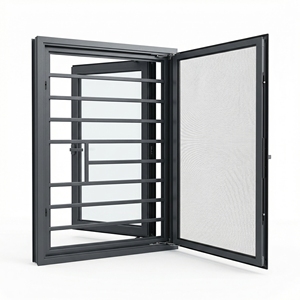
Explore heavy-duty architectural profiles, thermal break multi-fold frames, and impact-rated enclosures engineered to withstand tropical cyclones and sub-zero freeze-thaw cycles.
Procurement Benchmark Analysis
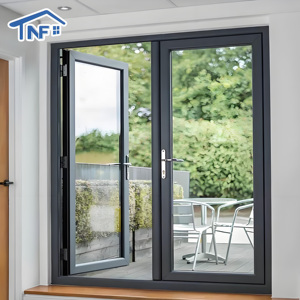
Top 10 Aluminium Bi-Fold Doors Manufacturers: Global Landscape
A technical assessment of leading manufacturing hubs across Western Europe, North America, and East Asia, benchmarked by alloy integrity, thermal values, and hardware load capacity.
1. DERCHI / Dejiyoupin Co.
Headquarters: Foshan, China
Specialization: Large-scale commercial & residential bespoke systems.
Operating a 180,000 m² automated production base, DERCHI integrates heavy-duty polyamide thermal breaks (PA66GF25), multi-point locking mechanisms, and export-compliant certifications (AS2047, CE, NFRC, CSA) with an annual capacity surpassing 1,000,000 m².
2. Reynaers Aluminium
Headquarters: Duffel, Belgium
Specialization: High-insulation architectural fenestration.
Recognized for systems like the CF 77 series, delivering high structural stability, narrow visible widths, and thermal isolation down to low U-values for European low-energy commercial designs.
3. Schüco International
Headquarters: Bielefeld, Germany
Specialization: Precision building envelopes & smart systems.
Offers the ASE bifold platform with seamless mechatronic integration, concealed fittings, and burglar resistance ratings up to RC2/RC3 classifications under EN 1627 testing.
4. Origin Global
Headquarters: High Wycombe, United Kingdom
Specialization: Premium domestic bifolding systems.
Engineered with proprietary safety finger-safe gaskets, slimline 110mm sightlines, and high-grade 6063-T6 primary billet extrusions tailored to the British modern renovation sector.
5. NanaWall Systems
Headquarters: California, United States
Specialization: Large opening glass walls & acoustic thresholds.
An engineering pioneer in foldable glass technology, supplying hurricane-resistant and acoustically buffered folding systems verified under strict AAMA and Miami-Dade protocols.
6. Centor Architectural
Headquarters: Brisbane, Australia
Specialization: Integrated screens & concealed articulation.
Known for developing the world’s first bifold door mechanism with built-in bug screens and blackout shades, balancing Australian thermal requirements with seamless hardware concealment.
7. Cortizo
Headquarters: Padrón, Spain
Specialization: High-efficiency industrial extrusions.
Cortizo's Bifold systems focus on extreme modular scalability, offering bottom-rolling and top-hung track variants that accommodate high glass thicknesses up to 45mm for cold climates.
8. Alumil S.A.
Headquarters: Kilkis, Greece
Specialization: Heavy structural folding patio systems.
The Supreme SF85 range showcases high water tightness and wind resistance metrics specifically targeted at luxury waterfront residences and open-plan resort facilities.
9. Western Window Systems
Headquarters: Arizona, United States
Specialization: Indoor-outdoor expansive living formats.
Engineered for extreme desert thermal shifts and sweeping expanses, integrating low SHGC (Solar Heat Gain Coefficient) glass packages and durable roller carriers.
10. Aluplast Engineering Hubs
Headquarters: Karlsruhe, Germany
Specialization: Hybrid architectural fenestration platforms.
Focusing on high thermal break polymers bonded with structural aluminium capping, Aluplast bridges the gap between commercial rigidity and passive house thermal conservation parameters.
Strategic Market Forecast
Engineering Horizons: Future Procurement Trends
Where architectural expectations meet raw material science: the critical technical developments redefining commercial and residential folding door tenders through 2030.
1. Carbon-Neutral Alloys (Low-Carbon Al)
Procurement mandates across Europe and North America increasingly specify primary extrusions refined using hydroelectric or solar energy. Modern factory audits now verify that billets produce less than 4.0 kg CO₂ per kg of aluminium, directly supporting LEED and BREEAM certifications.
2. Zero-Threshold Hydrological Sealing
Barrier-free living requires flush tracks. Future designs shift away from traditional deep step sills toward concealed submerged drainage channels with built-in unidirectional check-valves and capillary breaks, preventing water ingress under 700 Pa simulated rain loads.
3. Automated Motorized Articulation
As single panel weights exceed 150 kg due to triple-glazed laminated soundproof units, manual operation becomes obsolete. The sector is moving toward concealed in-frame servo drives connected via RS-485 or KNX bus systems to smart building management networks.
4. Multi-Chamber Aerogel Thermal Breaks
Standard polyamide bars are evolving. Leading manufacturers embed aerogel insulation matrices within the thermal barrier chambers to achieve overall door U-values (Uw) lower than 1.1 W/(m²·K), complying with strict Net Zero Building Envelopes.
5. Direct-to-Factory Digital Sourcing
Enterprise buyers bypass traditional export-import intermediaries. Utilizing digital twins, BIM models, and automated ERP scheduling, architectural developers directly contract Tier-1 manufacturing factories for verified drawing-to-crane delivery.
6. Anti-Corrosion Marine Fluorocarbon (PVDF)
With coastal real estate booming in Southeast Asia, Florida, and the Mediterranean, demand has shifted toward 3-coat/4-coat PVDF coatings and 25-micron class anodizing capable of withstanding more than 4,000 hours of continuous salt-spray testing under ASTM B117.
Engineering Specifications
Structural & Operational Performance Benchmark
Key physical attributes required for commercial tenders versus entry-level architectural products.
| Evaluation Parameter | Commercial Grade (DERCHI Level) | Standard Market Grade | Testing & Compliance Method |
|---|---|---|---|
| Aluminium Alloy & Temper | Primary Billet 6063-T5 / 6063-T6 (Wall thickness ≥ 2.0mm) | Recycled blend 6063-T4 (≤ 1.4mm thickness) | ASTM B221 / EN 755-9 |
| Thermal Break Matrix | PA66 GF25 (25% Glass-fibre reinforced polyamide) | PVC or Recycled generic plastic strips | DIN 16941 / ISO 527 |
| Hardware & Roller Load | Heavy-duty 4-wheel / 8-wheel SS304 bearings (Up to 300kg/leaf) | Zinc alloy single-bushing wheels (≤ 80kg/leaf) | BS EN 13126-15: 100,000 cycle testing |
| Locking Integrity | Proprietary Four-Side Six-Point or Continuous Shootbolts | Single-point latch or dual friction locks | PAS 24 / RC2 Burglar Resistance |
| Sealing Gasket Compound | Continuous EPDM (Cellular vulcanized) or Silicone co-extrusion | TPE / PVC brittle weatherstrips | ASTM C864 / DIN 7863 |
| Wind Pressure Rating | Design Wind Pressure (DP) ≥ 4500 Pa (Typhoon-ready) | ≤ 1800 Pa (Moderate inland loads) | AS2047 / ASTM E330 |
The DERCHI Manufacturing Standard
Why Enterprise Developers Select Our Production Hub
Combining 25+ years of fenestration engineering with a fully verified supply chain tailored to extreme climatic envelopes across the globe.
180,000 m² Integrated Manufacturing Infrastructure
Situated in Foshan, China’s industrial capital for aluminium precision engineering, our scale eliminates subcontractor markups and delivery bottlenecks. Equipped with 5-axis CNC machining centers, automated glass cutting, and robotic corner-crimping cells, we guarantee micro-tolerance assembly on orders of any volume.
International Certification Grand Slam
Bypassing regional compliance bottlenecks, our assemblies are factory-certified under CE (EU), NFRC (USA), AS2047 (Australia), CSA (Canada), Energy Star, and ISO 9001. We maintain specific Hurricane Impact testing certifications verified against strict missile-impact and cyclic pressure protocols.
Proprietary Patents & Structural Innovation
Backed by an in-house engineering team of 30+ R&D specialists holding over 100 national patents, DERCHI pioneered the Four-Side Six-Point Lock assembly. This configuration resolves the chronic weakness of multi-fold doors: air and water infiltration at the middle hinge articulators.
Documented 8-Step Engineering Workflow
From CAD drawing verification, structural thermal modeling, and bill-of-materials quotation, to physical corner mockups, production verification, and overseas installation guidance, we bridge communication gaps for international developers, ensuring zero site delays.
Direct Procurement Intelligence
Frequently Asked Questions for Project Specifiers
Clear, direct answers regarding structural engineering, minimum opening parameters, international shipping, and project warranties.
What is the maximum panel width and height achievable for commercial bifold configurations?
Using our heavy-duty architectural 6063-T6 profiles, individual panels can reach heights up to 4,000 mm (approx. 13.1 ft) and widths up to 1,200 mm (approx. 3.9 ft), with weights exceeding 150 kg per leaf. For structural openings beyond these spans, our engineers recommend incorporating reinforced intermediate structural mullions or transitioning to motorized sliding platforms.
Top-hung vs. bottom-rolling: which track design is structurally superior for large openings?
Top-hung systems provide smoother operation as panels hang freely, but they require a structural load-bearing lintel capable of carrying the entire dead load of the glass and frames without deflection. Bottom-rolling systems transfer weight directly to the floor substrate, making them ideal where ceiling load-bearing capacity is limited; however, the floor sill must incorporate active drainage channels to prevent debris accumulation.
How do aluminium bi-fold doors perform under typhoon and high wind load zones?
Our engineered hurricane-rated systems utilize thicker aluminium wall profiles (2.5 mm to 3.0 mm at structural junctions), multi-point shootbolt locking along panel verticals, reinforced stainless-steel hinges, and laminated safety glass (e.g., 6mm + 1.52PVB/SGP + 6mm). They are laboratory-tested to resist dynamic wind pressures above 4500 Pa without frame deformation or water infiltration.
What thermal insulation values (U-factor / SHGC) can be guaranteed for cold or tropical regions?
By pairing 24mm to 34mm wide PA66GF25 polyamide thermal bridge barriers with double- or triple-glazed Low-E argon-filled insulated glass units, our bifold door systems achieve overall thermal transmittance values (Uw) ranging from 1.3 to 1.8 W/(m²·K). Solar Heat Gain Coefficients (SHGC) can be customized from 0.22 (for extreme tropical cooling reduction) to 0.55 (for passive solar heating).
What are the lead times and sea-freight logistics protocols for factory-direct shipping?
Standard custom fabrication requires 25 to 35 calendar days following shop-drawing signoff and deposit verification. Shipments from our Foshan facility leave via deepwater berths at Nansha, Shenzhen, or Hong Kong ports. Products are packaged in steel-crated, moisture-sealed containers with desiccants to ensure safe delivery across transatlantic, transpacific, and Southeast Asian maritime routes.
How does the factory manage quality control and pre-shipment dry runs?
Every commercial custom order undergoes a 100% full dry-run assembly on our factory floor before crating. Technicians confirm operational diagonal tolerances within 1.0 mm, calibrate smooth roller travel across the running track, and verify gasket compression and lock cylinder synchronization.