Precision-Engineered Architectural Systems
Engineered to international structural and thermal standards (NFRC, AS2047, CE EN 14351-1), our factory-direct product range satisfies severe wind-load, water impermeability, and acoustic thresholds.
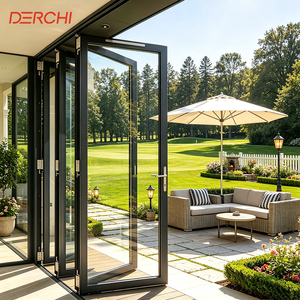
DERCHI NFRC Exterior Hurricane Proof Bi Folding Door Accordion Folding Glass Door Thermal Insulation Aluminum Patio Bifold Doors
Engineered for extreme cyclonic wind loads with reinforced multi-cavity 6063-T6 thermal extrusions and laminated impact glazing.
View Technical Specs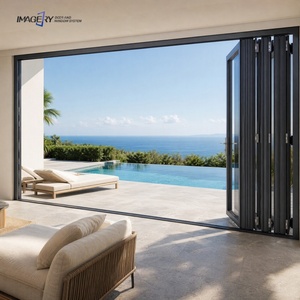
Modern Aluminium Bi Folding Sliding Door Thermal Break Double Tempered Glass for Patio Balcony
Incorporates high-performance Technoform PA66 GF25 thermal barriers, delivering reduced U-values and condensation resistance.
View Technical Specs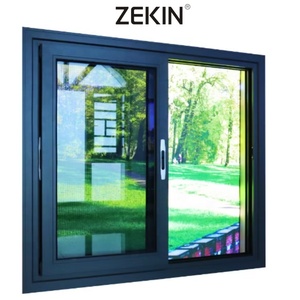
Customized Sliding Windows For Balcony Thermal Break Aluminum Tempered Glass Horizontal Hurricane Proof Aluminum Sliding Windows
Engineered with high-strength stainless steel tandem rollers and reinforced meeting rails to withstand severe coastal pressure deltas.
View Technical Specs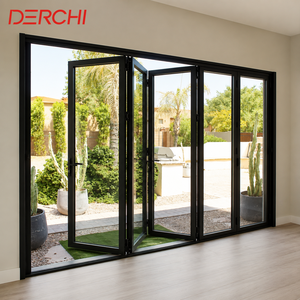
Modern High Aluminum Double Glass Accordion Large Big Bifold Long Bi Fold Sliding Exterior Main Entrance Patio Folding Door
Ultra-wide panel capacities engineered with heavy-duty top-hung tracks and recessed flush thresholds for seamless indoor-outdoor transitions.
View Technical Specs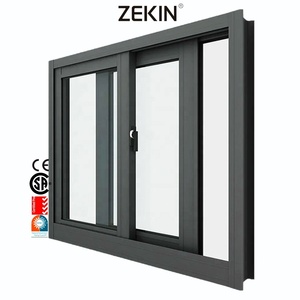
Customized Aluminum Sliding Windows Energy Efficient NFRC AS2047 Tempered Glass Hurricane Certification Aluminum Sliding Window
Full compliance with Oceanic and North American energy standards, utilizing Low-E double glazing with argon gas insulation.
View Technical Specs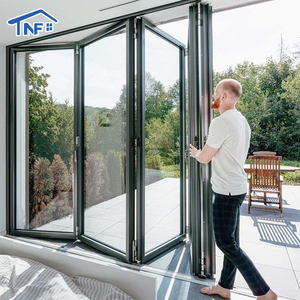
Modern Waterproof Aluminium Exterior Patio Accordion Double Tempered Low-e Glass Bi-Fold Folding Door For Villa Application
Integrated with specialized continuous EPDM gasketing systems and hidden sub-sill weep drainage preventing pressurized water ingress.
View Technical Specs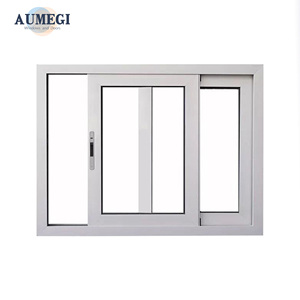
Aumegi Wall Thickness 1.4MM Aluminum Automatic Sliding Window Small Sliding Windows
Designed for smart-home building integration, compatible with motorized linear actuators and synchronized safety sensors.
View Technical Specs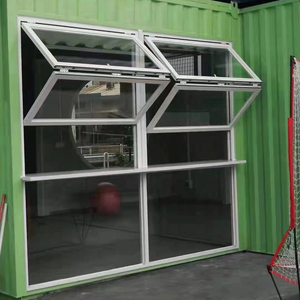
Modern Exterior Vertical Bi-folding Aluminum Alloy Window High Quality Hardware Heat Insulation Powder Coated Finish
Hydraulic/gas-strut assisted vertical articulation creating unobstructed serving bars, cafe fronts, and contemporary architectural facades.
View Technical SpecsOEM Manufacturing Excellence: The Foshan Industrial Advantage
A rigorous examination of primary metallurgical sourcing, robotic extrusion fabrication, and multi-tier quality control.
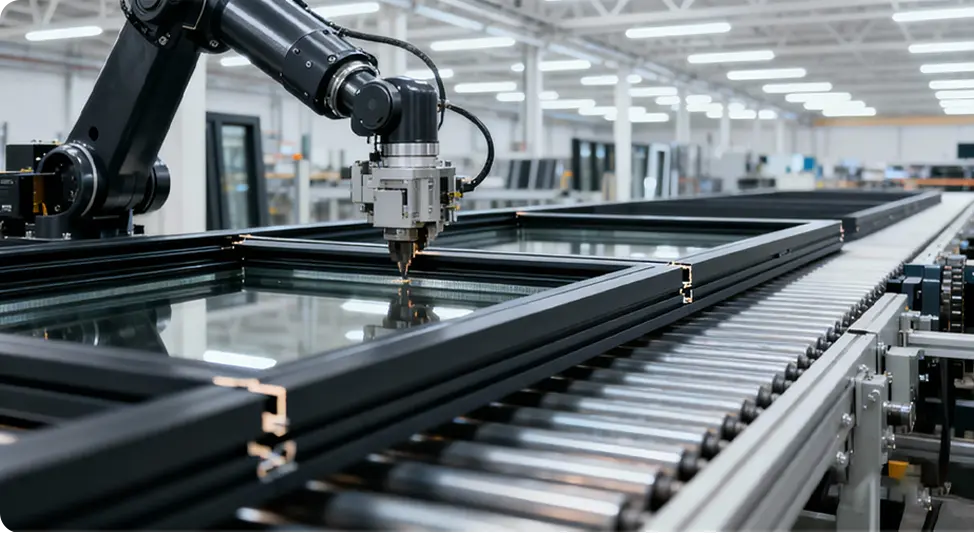
In the global architectural landscape, selecting a tier-one custom OEM aluminium glass door factory requires scrutiny that extends far beyond aesthetics. Based in Foshan, China—the undisputed capital of precision architectural aluminium extrusion—Guangdong Dejiyoupin Doors and Windows Co., Ltd. (DERCHI) has established an advanced 180,000 m² smart manufacturing ecosystem. Over the course of 25+ years, DERCHI has bridged the gap between bespoke architectural detailing and industrial-scale throughput.
Metallurgical Integrity & Structural Extrusions
Unlike secondary recyclers whose profiles suffer from internal crystal porosity and structural brittleness, our manufacturing protocols require virgin 6063-T5 and structural 6063-T6 primary aluminum billets. Extrusions are fabricated to dimensional tolerances that conform to DIN EN 12020-2 and ASTM B221 specifications.
With automated 5-axis CNC machining centers, corner joints are prepared with mechanical cast-aluminum corner keys, chemically secured with two-part polyurethane corner sealants, and hydraulically crimped under 80 kN per corner. This produces joint hermeticity that resists deflection, structural twisting, and water capillary penetration under continuous exposure to dynamic loads.
Proprietary Hardware & Thermal Barrier Architecture
Analyzing the thermal, mechanical, and security enhancements built into DERCHI exterior door systems.
Patented 4-Side 6-Point Multipoint Locking
Traditional sliding and bifold doors are prone to sash prying at intermediate meeting stiles. Our proprietary invention patent deploys multi-axis shoot-bolts along the head, sill, and vertical stiles, achieving RC3 burglar-resistance classification under EN 1627.
Continuous Polyamide PA66 Thermal Bridges
By integrating 24mm to 34mm multi-chamber Technofrom glass-fiber reinforced polyamide strips, we completely decouple exterior and interior alloy faces. This reduces frame thermal bridging to achieve system U-values as low as 1.1 W/(m²·K).
Sub-Sill Pressure-Equalized Drainage
To eliminate tropical storm leakage, sills feature stepped, pressure-equalized weep-hole channels with internal check valves. External wind pressures cannot force water backward into the interior threshold, managing water tightness up to 1050 Pa.
Dual-Sealed EPDM Vulcanized Gaskets
We avoid cheap PVC weatherstripping that shrinks and cracks under intense UV radiation. All profiles utilize automotive-grade continuous EPDM sponge and solid co-extruded gaskets that retain elasticity from -40°C to +120°C for decades.
Future Procurement Trends for Aluminium Glass Doors (2025–2030)
How real estate developers, hospitality groups, and commercial contractors are restructuring their supply chains.
1. Decarbonization & Low-Carbon Aluminium Billets
Global carbon border adjustment mechanisms (such as EU CBAM) are compelling developers to specify low-embodied-carbon aluminium. B2B procurement contracts are shifting heavily toward smelters powered by renewable hydroelectric energy with certified cradle-to-gate Environmental Product Declarations (EPDs).
2. Minimalist Sightlines with Extreme Load Deflection
Architects are demanding sightlines below 30mm for large-span patio sliders, requiring complex structural alloys. Moment of inertia (Ix) calculations must support continuous structural wind-load deflection limits of L/175 and L/240 without binding oversized 600kg insulated glass units.
3. Complete OEM Factory Glazing & Module Pre-Fabrication
To reduce escalating on-site skilled labor costs in North America, Australia, and Europe, commercial buyers are avoiding knocked-down (KD) field assembly. They are requesting fully glazed, pre-shimmed, factory-calibrated door assemblies shipped in custom structural timber steel-banded stillages.
4. Native Mechatronic & Building Automation Integration
The market is rapidly shifting from manual hardware to integrated motorized concealed drives. Modern OEM door frames are pre-milled for concealed power conduits, flush-mounted magnetic contacts, obstacle-sensing laser scanners, and dry-contact building automation interfaces.
Global Certification Testing & Performance Standards
A side-by-side engineering comparison of target specifications across key international export jurisdictions.
| Performance Criterion | North America (NFRC / AAMA) | Australia / Oceania (AS2047 / AS1288) | European Union (EN 14351-1 / CE) | DERCHI Factory-Tested Benchmarks |
|---|---|---|---|---|
| Structural Wind Load | ASTM E330: DP 50 to DP 85+ (psf) | AS 4055 / AS 2047: SLS & ULS (up to 4500 Pa) | EN 12211 / EN 12210: Class 1 to Class 5 | Passes 5500 Pa (Severe Typhoon Equivalent) |
| Water Penetration | ASTM E547 / E331 (up to 15 psf / 720 Pa) | AS 2047: Water test to 450 Pa / 700 Pa | EN 1027 / EN 12208: Class 1A through 9A / E1050 | Zero water leakage at 1050 Pa continuous cycle |
| Air Infiltration Rating | ASTM E283 (< 0.30 cfm/ft² at 1.57 psf) | AS 2047: Air test < 1.0 L/s·m² at 75 Pa | EN 1026 / EN 12207: Class 1 through Class 4 | Class 4 airtightness (< 0.05 cfm/ft²) |
| Impact / Hurricane Resistance | ASTM E1886 / E1996 Missile Level D (Large Missile) | Cyclonic wind codes AS/NZS 1170.2 Region C & D | EN 356 (Glass anti-vandalism drop test P6B) | Miami-Dade / NFRC Hurricane Certified (SGP Laminated) |
| Thermal Transmittance (U-Value) | NFRC 100: U-factor down to 0.22 BTU/(h·ft²·°F) | WERS certified simulations down to Uw 1.4 | EN ISO 10077-1/2: Uw down to 1.0 W/(m²·K) | Uw 1.1 W/(m²·K) with Triple-Glazed Low-E Warm Edge |
DERCHI 8-Step Zero-Error OEM Engineering Process
A systematic manufacturing methodology ensuring risk mitigation from initial CAD review to site commissioning.
01. Architectural CAD/BIM Review
Our 30+ engineering team audits rough opening dimensions, slab deflection limits, and project wind pressure zones (ASCE 7-22 or EN 1991).
02. Structural Engineering & FEA
Finite element analysis of profiles, calculating glass deflection, silicone bite depth, and anchor bolt shear strengths.
03. Transparent Itemized Costing
Granular Bills of Materials (BOM) detailing alloy weights, hardware part numbers, glass specs, and surface coating grades.
04. Sample Submittals & Mockups
Custom corner section cutaways, RAL color powder-coated chips, and full-scale test mockups for architectural signoff.
05. Precision CNC Extrusion Milling
Automated cutting, drain slotting, and hardware mortising on high-speed CNC lines ensuring 0.1mm repeatable tolerance.
06. Glazing & Structural Bonding
Robotic warm-edge IG spacer application, double-sealed secondary structural silicone, and dual-cure corner joint crimping.
07. In-House Quality Verification
Pre-assembly frame leveling, laser plumb line checking, and dynamic cycle testing of all operable rollers and locks.
08. Export Crating & On-Site Support
Fumigated solid-timber A-frame crates with desiccants and moisture-barrier shrink wrap, backed by remote/on-site installation guidance.
Frequently Asked Questions for OEM Door Sourcing
Detailed technical, compliance, and supply chain answers for professional contractors and procurement teams.