Featured OEM Architectural Systems & Configurations
Explore our export-certified heavy-duty black frames, thermal break pocket sliders, hurricane impact entrances, and flush threshold fenestration systems developed for high-tier residential and commercial builds.
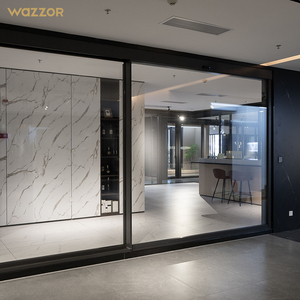 Flush Track
Wazzor Flush Track Concealed Stacking Door
- Profile Alloy: 6063-T6 (2.0mm)
- Threshold: Zero-Barrier Flush
- Finish: Matte Black Anodized
- Roller Rating: 400kg Stainless Tandem
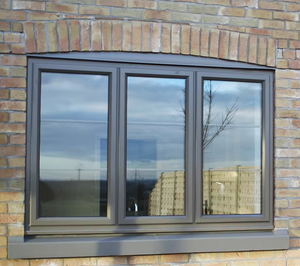 Impact RG65
RG65 Soundproof Hurricane Casement Windows
- Glass Spec: 6mm+1.52PVB+6mm Lami
- Acoustics: STC 42 dB Reduction
- Wind Load: Up to 5000 Pa
- Lock Mechanism: Multi-Point Perimeter
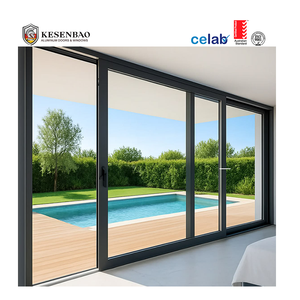 AS2047 Std
AS2047 Double Glazed Commercial Stacking Doors
- Standard: AS2047 / AS1288
- U-Value: 1.7 W/m²·K (Low-E)
- Interlock Stile: Slim 32mm Sightline
- Water Tightness: 450 Pa Test Passed
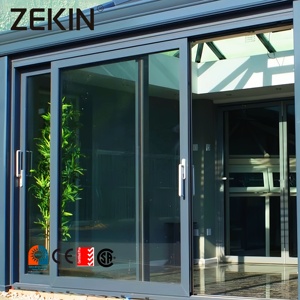 Lift & Slide
Custom Heavy Duty Lift-Sliding Thermal Door
- Gasket System: Seamless Vulcanized EPDM
- Certification: NFRC & AS2047
- Hardware: German Siegenia Lift Kit
- Max Panel: 3300mm x 3000mm
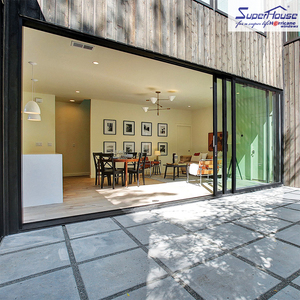 Miami-Dade NOA
Miami-Dade Approved Hurricane Sliding Doors
- Impact Class: Large Missile Level D
- Design Pressure: +80 / -80 PSF
- Interlayer: Kuraray SentryGlas (SGP)
- Finish: PVDF 3-Coat Carbon Black
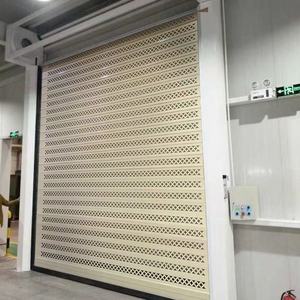 Coastal Grade
Coastal Corrosion-Resistant Garage Door
- Salt Spray Test: ASTM B117 > 3,000 hrs
- Ventilation: Louvered & Micro-Perforated
- Track Hardware: 316 Marine Stainless Steel
- Torsion Spring: 50,000 Cycle Heavy Duty
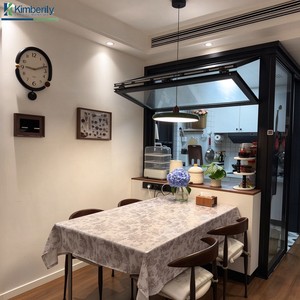 Bi-Fold Servery
Horizontal Gas-Strut Folding Servery System
- Operation: German Gas-Strut Assist
- Application: B2B Hospitality & Penthouses
- Thermal Barrier: 24mm Polyamide Strip
- Safety Lock: Concealed Mortise System
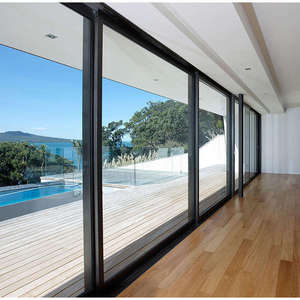 Storefront Heavy
Commercial Impact Big Glass Storefront Entry
- Structural Code: Florida Building Code High Velocity
- Stile Dimension: 120mm Heavy Duty Stile
- Glazing Infill: 12mm+1.52SGP+12mm Insulated
- Panic Hardware: Grade 1 Concealed Rod
Architectural Whitepaper: Metallurgical Composition & Surface Chemistry in Black Anodized & Powder-Coated Aluminium Doors
Architectural black fenestration demands precise mechanical engineering to counteract thermal expansion and solar absorbance. When an aluminium extrusion is finished in deep matte black (RAL 9005 or architectural jet black), surface temperatures can rise to 78°C (172°F) under direct solar radiation. Without engineered metallurgical stabilization and high-performance polymer breaks, standard aluminium door profiles experience transverse frame bowing, binding lock assemblies, and delamination of perimeter weather seals.
As a premier Foshan custom OEM aluminium door manufacturer, our production uses structural 6063-T6 and 6061-T6 prime aluminium billets (silicon 0.2–0.6%, magnesium 0.45–0.9%, iron <0.35%). We reject scrap remelt alloys to eliminate zinc and manganese micro-impurities that produce visual mottling under electrochemical anodizing baths. To resolve differential heat gain, our black profile extrusions integrate 24mm to 34mm fiberglass-reinforced Polyamide 66 (PA66 GF25) thermal barriers. These strips match the linear thermal expansion coefficient of aluminium (2.3 × 10⁻⁵ K⁻¹), preserving structural stability under severe temperature differentials between interior air-conditioned spaces and exterior solar-heated facades.
Our electro-deposition and powder coating systems use licensed fluoropolymer resins complying with AAMA 2605 and Qualicoat Class 2 / Class 3 specifications. Through a triple-stage chromium-free pretreatment process followed by electrostatic deposition of polyvinylidene fluoride (PVDF) liquid resins (70% Kynar 500 / Hylar 5000) or hyper-durable carboxylated polyester powders, we achieve dry film thicknesses of 60 to 90 microns. This delivers exceptional pencil hardness (2H minimum), cross-hatch adhesion (0% peel at DIN EN ISO 2409 Class 0), and salt-spray corrosion resistance exceeding 4,000 hours in continuous ASTM B117 saline fog. This performance makes our black aluminium doors ideal for high-humidity, marine, and coastal island installations.
Surface Engineering Comparison: Anodized vs. PVDF vs. Hyper-Durable Powder
Every commercial specification requires balanced selections across gloss retention, abrasion tolerance, and UV degradation. Use our technical matrix below to align profile finishes with project climate requirements.
| Finishing Technology | Standard Classification | UV Resistance (Florida 5-Year) | Salt Spray Longevity | Gloss Level Range | Best Suited Application Environment |
|---|---|---|---|---|---|
| Matte Black Acid Etched Anodizing | AAMA 611-14 / Qualanod Class 1 (25µm) | Zero chalking, absolute inorganic pigment stability | 3,000+ hours ASTM B117 | Ultra-Matte (<5 GU at 60°) | High-traffic urban storefronts, luxury minimalist villas, architectural public facades |
| 70% PVDF Fluorocarbon Liquid | AAMA 2605 / 3-Coat System (40µm) | ΔE < 5 units colour shift, >50% gloss retention | 4,000+ hours ASTM B117 | Satin / Semi-Gloss (15–30 GU) | Coastal resorts, high-rise residential towers, extreme subtropical UV regions |
| Hyper-Durable TGIC-Free Polyester | Qualicoat Class 2 / AAMA 2604 (60–80µm) | ΔE < 5 units colour shift, >30% gloss retention | 2,500+ hours ASTM B117 | Matte to Gloss (10–80 GU) | Suburban housing developments, interior partition systems, commercial office entries |
| Wood-Grain Sublimation over Black Base | Qualideco Class 2 Certified Thermal Transfer | High UV-shielding clear coat overlay | 2,000+ hours ASTM B117 | Natural Wood Luster (10–15 GU) | Hospitality entrances, eco-resorts, biophilic luxury villa architectural accents |
Why Global Contractors & Importers Partner With Us
Guangdong Dejiyoupin Doors and Windows Co., Ltd. (DERCHI) combines vertically integrated extrusion precision with world-class quality auditing for every export shipment.
Patented 4-Side 6-Point Security
Our proprietary locking mechanism incorporates hardened stainless cams and bi-directional claw deadbolts integrated into the frame perimeter, eliminating pry-point vulnerabilities on oversized multi-slide and bi-fold doors.
Zero-Error Tolerance Extrusion
CNC precision cutting tables and corner crimping machines enforce strict ±0.5mm linear and 90-degree corner squareness tolerances. We inject two-part polyurethane structural adhesive into every mitred corner joint before hydraulic swaging.
Comprehensive International Certifications
Our systems hold CE (EN 14351-1), NFRC (U-factor/SHGC ratings), AS2047 (Australian fenestration testing), CSA (Canadian cold-climate thermal), and Miami-Dade Florida Building Code High-Velocity Hurricane Zone (HVHZ) product approvals.
Short Sea Routes & Export Logistics
Positioned in Foshan near Shenzhen and Guangzhou deep-water container ports, we secure streamlined sea freight departures. Heavy fumigated steel-frame ocean crates prevent panel racking during long-distance multimodal transit.
In-House 30+ Senior R&D Engineers
Our dedicated engineering department conducts Finite Element Analysis (FEA) for structural wind load resistance, thermal simulation according to ISO 10077-2, and acoustic barrier optimization for customized architectural door profiles.
Xinhua "China Famous Brand" Recognition
Endorsed by national industrial media and international trade standard authorities, DERCHI supports over 300 international franchise partners and delivers OEM private-label production for top-tier window systems worldwide.
Future Sourcing Trends for Custom Black Aluminium Doors (2025–2030)
Global procurement teams are shifting how they specify architectural black aluminium systems. Understanding these macroeconomic and structural design shifts helps developers protect asset values and meet evolving regulatory mandates.
1. Ultra-Narrow Sightlines with Concealed Sub-Sill Drainage
Architectural minimalism is driving profile sightlines down to ultra-narrow visual profiles, with interlock stiles narrowing from 55mm to less than 22mm. Achieving structural rigidity with such narrow black profiles requires integrating aerospace-grade carbon fiber internal stiffeners and titanium-alloy corner brackets.
Simultaneously, traditional step-down sliding door tracks are giving way to flat, zero-barrier floor transitions featuring subsurface cascading drain boxes. These hidden troughs manage rainfall drainage rates exceeding 180mm per hour, preventing storm backup while creating uninterrupted continuity between interior hardwoods and exterior stone patios.
2. Embodied Carbon Compliance & Recycled Green Billets
With the implementation of the EU Carbon Border Adjustment Mechanism (CBAM) and LEED v4.1 operational standards, developers increasingly demand audited Environmental Product Declarations (EPDs) for extruded aluminium door assemblies. Traditional primary smelting emits roughly 12 to 16 kg of CO₂ per kg of aluminium produced.
Our manufacturing line leverages green-hydro-powered smelting sources and closed-loop post-industrial billet blending, lowering embodied carbon to less than 4.0 kg CO₂ per kg of finished extrusion. This enables tier-one general contractors to achieve BREEAM "Outstanding" and USGBC LEED Platinum certifications for building envelope packages.
3. Smart Motorization & Concealed Magnetic Levitation (Maglev)
Large multi-panel sliding black doors—often exceeding 400kg per sash with double-laminated Low-E acoustic units—are rapidly moving from manual handling to whisper-quiet brushless DC and linear magnetic levitation drives.
Integrated motors are concealed entirely within the top header extrusion, controllable via RS485 bus protocols, dry contacts, and smart building management systems (BMS). Optical obstacle detection, automatic pressure drop seals, and biometric access handles are becoming standard baseline inclusions for five-star hospitality and luxury penthouses.
4. Passive House Certified Cold & Tropical Thermal Envelopes
Energy performance codes worldwide are adopting aggressive whole-fenestration U-factor targets (Uw ≤ 0.8 W/m²·K). Achieving these values on black metal frame profiles requires multi-cavity polyimide extrusion bars filled with low-density aerogel insulation and expanded polyurethane cores.
When paired with triple-glazed units using warm-edge composite spacers (like Technoform or Swisspacer) and argon gas fills, our black door systems eliminate perimeter thermal bridging and condensation risks, even during extreme -30°C continental winters or +45°C Middle Eastern desert heat waves.
8-Step Turnkey OEM/ODM Engineering Process
Precision execution from rough architectural design to jobsite handover. Every project follows an audited, zero-error milestone methodology.
Architectural Review
Analysis of CAD/Revit opening schedules, structural loads, local building codes, and wind pressures.
Structural Engineering
System profile selection, glass deflection calculations, and FEA simulation of corner joints and mullions.
Itemized B2B Quotation
Transparent factory-direct cost breakdown covering extrusions, hardware systems, finishes, and ocean crating.
Shop Drawing Sign-Off
1:1 detail submittals specifying cut lines, glass make-ups, anchoring perimeter shims, and drainage details.
Precision Manufacturing
CNC profile cutting, automated hydraulic corner crimping, PA66 thermal barrier insertion, and PVDF coating.
Full Unit Pre-Assembly
100% factory dry-fit of sash and frame assemblies to verify operating smoothness, squareness, and seal compression.
Export-Grade Crating
Vapor-barrier wrapping, shock-absorbing corner foams, and fumigated steel-reinforced ocean pallets.
Installation Support
Detailed installation shop manuals, BIM model files, jobsite video coordination, and engineer dispatch options.
Frequently Asked Questions for B2B Importers & Contractors
Technical guidance covering black profile longevity, impact engineering, thermal performance, and global supply logistics.
How do you prevent black aluminium doors from fading, chalking, or blistering in high-UV climates?
Surface degradation on black aluminium doors occurs when standard architectural polyester powders break down under ultraviolet wavelengths (UV-A and UV-B), degrading the polymer chain and oxidizing pigmentation. To eliminate this issue for tropical, desert, and high-altitude locations, we exclusively specify AAMA 2605-compliant 70% PVDF resin coatings or Qualicoat Class 2 hyper-durable powders. These formulations undergo 5-year continuous South Florida exposure tests, showing chalking ratings lower than No. 8 (ASTM D4214) and total color shift ΔE under 5 Hunter units. For absolute fade resistance, our Class 1 inorganic electrolytic black anodizing (25-micron thickness) impregnates metal-salt dyes directly into the unsealed anodic pore structure, creating an inert surface immune to UV degradation.
What structural measures prevent large black aluminium sliding doors from bowing due to solar heat?
Thermal bowing occurs when the exterior wall of an aluminium extrusion reaches 70–80°C while the interior stays air-conditioned at 22°C. The exterior face expands while the interior face remains stable, exerting torsional leverage that can bow sash stiles by 5mm to 12mm. We engineer our black frames using three structural solutions: first, three-chamber extrusions with split polyimide PA66 thermal insulation strips that allow independent expansion; second, internal steel structural reinforcement tubes inserted into the vertical interlock hollows; and third, sliding track roller carriages with self-leveling articulated suspensions that maintain smooth rolling contact along the track even during thermal movement.
What glass configurations are recommended to balance sound isolation, security, and low solar heat gain?
For luxury residential projects, commercial storefronts, and oceanfront resorts, we recommend an insulated-laminated asymmetric glass assembly: an exterior 6mm or 8mm high-performance solar control Low-E tempered pane, a 16mm warm-edge spacer filled with 90% argon gas, and an interior laminated panel composed of 5mm tempered + 1.52mm acoustic PVB or Kuraray SGP + 5mm tempered glass. This configuration delivers an outstanding Solar Heat Gain Coefficient (SHGC ≤ 0.22), a Center-of-Glass U-value of 1.1 W/m²·K (0.19 BTU/hr·ft²·°F), an acoustic sound reduction rating of STC 43 dB, and full hurricane impact resistance against wind-borne debris.
Can your Foshan factory manufacture custom extrusion dies based on proprietary architectural drawings?
Yes. Approximately 45% of our monthly export volume comprises custom-tooled OEM profiles for facade contractors, distributors, and window systems designers. We maintain an in-house tooling workshop that mills H13 hot-work tool steel extrusion dies via wire-EDM cutting. Prototype sample extrusions are typically extruded, surface-treated, and dimensionally inspected via coordinate measuring machine (CMM) within 18 working days of final shop CAD approval. Production dies support minimum batch orders of 1.5 to 3 metric tons, with die tooling costs rebated against cumulative container purchase volumes.
How are heavy black doors packaged to eliminate scratches and moisture damage during 40-day sea transits?
Finished black coatings are sensitive to micro-abrasions and water etching if packaged with moisture-trapping wraps. Every finished extrusion sash is wrapped in low-tack protective PE tape, corner-buffered with high-density EVA foam protectors, and enclosed in heat-sealed waterproof polyethylene film with desiccant packs. Assembled frames are loaded into fully enclosed, fumigated marine plywood cases reinforced with internal steel perimeter cages. No glass-to-metal or metal-to-metal contact is permitted; heavy panels are spaced using non-compressible vulcanized rubber shims and bolted directly to the crate skids, ensuring safe multimodal transit across international sea lanes.
What are your standard production lead times, sample policies, and minimum order quantities (MOQ)?
Standard architectural configurations (e.g., standard matte black RAL 9005 or textured bronze-black) carry a manufacturing lead time of 25 to 32 days from final shop drawing approval. Fully custom extrusion profiles requiring new dies take 38 to 45 days. We support development projects with complete corner cuts, hardware samples, and 1:1 scale operational prototypes. Our standard project MOQ is 50 square meters for standard inventory extrusions, or one 20GP shipping container (roughly 220–280 m² of glazed door assemblies) for custom structural die extrusions.
Launch Your Custom OEM Project with DERCHI
Submit your architectural elevations, window schedules, or custom extrusion CAD profiles. Our structural engineering department will prepare a comprehensive design audit, structural load review, and itemized factory proposal within 24 hours.