Engineered Double Glazed Aluminium Systems
Factory-direct fenestration profiles manufactured under ISO 9001, AS2047, CE, and NFRC certifications. Featuring multi-chamber thermal breaks, dual-sealed IGUs, and architectural-grade 6063-T5/T6 alloys.
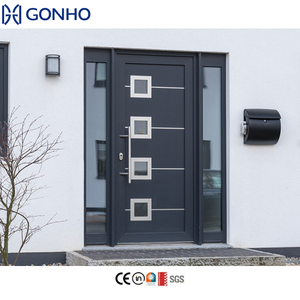
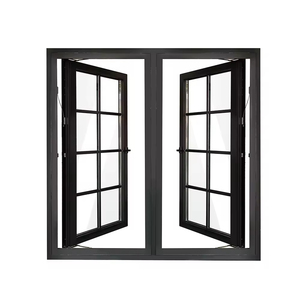
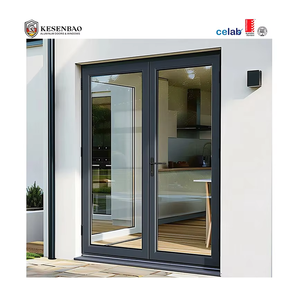
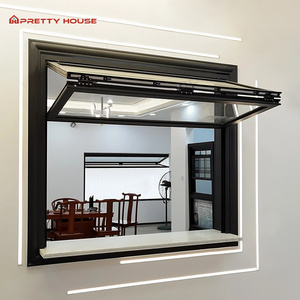
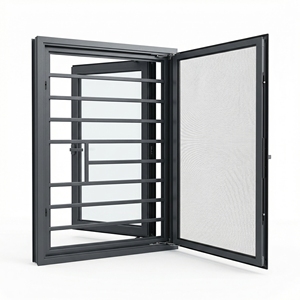
Modern Hurricane Proof Exterior Swing Aluminum Patio Bifold Doors with Glass
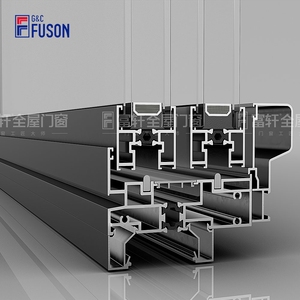
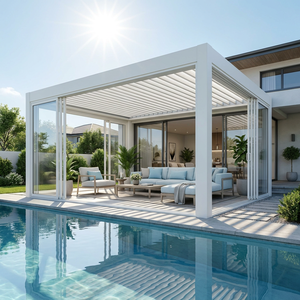
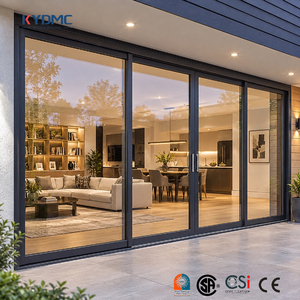
Engineering Principles & Global Procurement Benchmarks
A definitive technical manual for commercial architects, facade engineers, fenestration contractors, and institutional real estate developers sourcing precision aluminum fenestration directly from China.
Modern architectural envelopes require fenestration systems to perform far beyond simple visual daylight apertures. Windows and glazed door assemblies act as the primary thermal barrier, acoustic dampener, pressure-equalization defense, and structural shield of a building envelope. Sourcing wholesale aluminium double glazed windows from China represents an unmatched value-to-performance dynamic when backed by certified metallurgical traceability, automated CNC machining, and stringent thermodynamic testing.
As the world’s leading hub of architectural aluminium extrusion and fenestration fabrication, Foshan, Guangdong commands an integrated industrial cluster accounting for over 70% of high-end export fenestration. However, the technical delta between commodity domestic fabricators and certified export-grade manufacturing plants is extensive. Navigating international regulatory compliance—such as North America’s NFRC (National Fenestration Rating Council), Europe’s CE / EN 14351-1, and Australia’s AS2047 / AS1288 standards—requires an exhaustive understanding of profile wall metallurgy, structural cavity geometry, thermal barrier integrity, and sealed insulating glass unit (IGU) chemistry.
Technical Distinction: Export-grade double-glazed aluminum systems utilize primary 6063-T5 or 6063-T6 billet with a wall thickness strictly equal to or exceeding 1.4 mm for windows and 2.0 mm to 3.0 mm for heavy-duty commercial sliding and bifold doors, eliminating the micro-fracturing and structural flex typical of recycled scrap-extruded alloys.
Procurement Trends & Next-Generation Fenestration Technologies (2025–2030)
The global fenestration landscape is undergoing rapid transformation driven by carbon mitigation mandates, extreme meteorological phenomena, and strict energy-efficiency building codes.
Polyamide Thermal Barriers
The phase-out of cheap PVC pour-and-debridge insulation in favor of fiberglass-reinforced PA66GF25 polyamide thermal struts. Engineered with a linear thermal expansion coefficient matching aluminium (2.3×10⁻⁵ K⁻¹), these multi-cavity thermal struts eliminate structural shear while dropping frame conductivity (Uf) below 1.6 W/m²·K.
Advanced Magnetron Sputter Low-E
Global procurement has transitioned from single pyrolytic hard-coat glass to double- and triple-silver off-line MSVD (Magnetron Sputter Vacuum Deposition) coatings. Paired with warm-edge composite spacers (Technoform/Swisspacer) and 90%+ Argon gas fills, Solar Heat Gain Coefficients (SHGC) are tailored from 0.22 to 0.45 without sacrificing Visible Transmittance (VT).
Typhoon & Impact Hardening
With coastal cyclonic events intensifying, procurement specifications across Florida, the Caribbean, Southeast Asia, and Northern Australia mandate cyclic pressure and missile impact testing (ASTM E1886/E1996, AS1170.2). Structural silicone wet glazing combined with SGP (SentryGlas) structural interlayers withstand wind loads surpassing 5000 Pa.
Low-Carbon & Recycled Metallurgy
Institutional developers increasingly require third-party audited Environmental Product Declarations (EPDs). Chinese primary smelters utilizing renewable hydro-electric power in Yunnan and Sichuan deliver extrusions with embodied carbon profiles as low as 4.0 kg CO₂e/kg Al, compared to the coal-heavy global average of 16.5 kg CO₂e/kg Al.
Concealed Precision Hardware
Minimalist luxury architecture demands flush zero-threshold drainage sills and completely concealed multi-point perimeter locking hardware. Integrated mechatronic actuators allow seamless integration with building automation systems (BACS), operating sashes weighing up to 600 kg with whisper-quiet micro-stepping motors.
Performance Benchmarking of Architectural Glazing Systems
Compare empirical performance metrics across standardized fenestration categories to verify thermal, acoustic, and structural envelope suitability.
| System Category | Overall U-Value (Uw) | Acoustic Insulation (Rw) | Air Infiltration (ASTM E283) | Water Resistance (ASTM E331) | Structural Wind Load (ASTM E330) | Primary Commercial Use |
|---|---|---|---|---|---|---|
| Non-Thermal Break Double Glazed | 3.8 – 4.5 W/m²·K | 28 – 31 dB | < 1.5 m³/(m·h) | 300 Pa | 1800 Pa | Mild interior partitions, unconditioned verandas |
| Standard Thermal Break (14.8mm PA66) | 2.2 – 2.6 W/m²·K | 32 – 35 dB | < 0.8 m³/(m·h) | 450 Pa | 2500 Pa | Low-rise residential developments, mild temperate zones |
| High-Performance System (24-34mm PA66) | 1.3 – 1.8 W/m²·K | 38 – 42 dB | < 0.2 m³/(m·h) | 700 Pa | 4000 Pa | Luxury villas, high-rise condominiums, Energy Star zones |
| Hurricane Impact SGP Double Glazed | 1.5 – 2.0 W/m²·K | 40 – 45 dB | < 0.1 m³/(m·h) | 1000 Pa | 5500+ Pa | Coastal tropical zones, resort suites, cyclonic corridors |
| Passive House Certified (Triple Cavity) | 0.75 – 0.95 W/m²·K | 42 – 48 dB | Class 4 Certified | 900 Pa | 3500 Pa | Net-zero buildings, severe cold / sub-arctic climates |
Guangdong Dejiyoupin (DERCHI): Industrial Scale & Engineering Edge
Headquartered in Shishan Town, Nanhai District, Foshan—the epicenter of China's aluminium profile industry—DERCHI combines over 25 years of engineering mastery with intelligent European CNC automation.
Selecting an aluminium fenestration partner in China requires scrutinizing plant capability, fabrication precision, supply chain resilience, and post-delivery engineering accountability. Operating from a monolithic 180,000 square meter intelligent manufacturing hub with a dedicated workforce of over 600 skilled technicians and 30+ senior fenestration R&D engineers, Guangdong Dejiyoupin Doors and Windows Co., Ltd. (DERCHI) sets the standard for high-performance architectural systems.
Unlike small assembly workshops that rely on outsourced extrusions and manually crimped corner joints, DERCHI maintains end-to-end production control. Our precision facility features automated Italian corner crimping machines with dual-component anaerobic adhesive injection, German CNC four-axis profile machining centers, and climate-controlled robotic IGU sealing lines. With an annual fabrication volume exceeding 1,000,000 m², we reliably execute mega-scale hospitality and multi-family projects across North America, Europe, Australia, and Southeast Asia.
Patented 4-Side 6-Point Multipoint Lock
Our proprietary invention patent revolutionizes fenestration security and air-tightness. Unlike traditional two-point cam locks that leave sashes susceptible to crowbar intrusion and wind-driven water seepage, our interlocking mechanism distributes perimeter compression loads evenly across four profiles, achieving unprecedented burglar resistance and acoustic damping.
International Certification Grand Slam
Every fenestration profile and glazing assembly undergoes rigorous independent laboratory testing. DERCHI proudly holds an international certification grand slam: CE (EN 14351-1) for the European Union, NFRC and Energy Star for North America, AS2047 & AS1288 for Australia, CSA for Canada, ISO 9001 quality management, and stringent Florida Hurricane Certifications.
Zero-Error Precision Quality Protocol
In high-wind and coastal environments, a 1 mm assembly tolerance error results in perimeter water ingress, draft leakage, and premature thermal bridge failure. Our "Zero-Error" standard enforces sub-millimeter tolerances through automated laser dimension scanning, 45-degree hydraulic corner pin reinforcement, and three-stage EPDM vulcanized sealing gaskets.
18,000+ Completed Projects Worldwide
From prestigious international hotel flags including Hilton Hotels and Atour Hotels, to bespoke coastal estates in the Caribbean, resort developments in Phuket, and high-density towers in Melbourne and Vancouver, DERCHI systems deliver proven long-term durability in real-world environments.
8-Stage International Procurement & Engineering Workflow
From structural drawing review to export shipping, our systematized workflow guarantees that custom architectural orders arrive on-site with zero deviations.
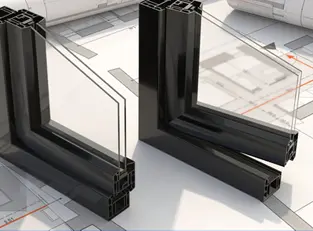
BIM & Shop Drawing Audit
Our facade engineering team reviews your architectural schedules, wind-load zones, and opening elevations, generating 1:1 CAD shop drawings with precise anchor details.

Thermal & Wind Simulation
Using THERM and ANSYS simulation software, we verify U-values, solar heat gain, condensation resistance (CR), and structural deflection under maximum regional wind loads.

Transparent Itemized Costing
Receive transparent, line-by-line B2B pricing breakdown per window opening, specifying alloy thickness, glass bill of materials, hardware brand, and ocean freight logistics.

Finish & Hardware Signoff
Physical sample corner mockups, customized RAL powder-coat / fluorocarbon (PVDF) color swatches, and certified hardware sets (Siegenia, CMECH, Hoppe) are approved.

Raw Material Spectrometry
Upon production scheduling, raw 6063 aluminium billets undergo spark optical emission spectrometry to verify strict elemental composition before profile extrusion.
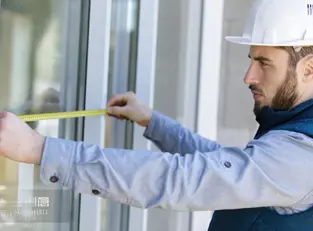
CNC Machining & Injection
Profiles are mitered at 45 degrees, combined with solid cast corner brackets, hydraulically crimped, and injected with German two-part polyurethane adhesive for airtight bonding.
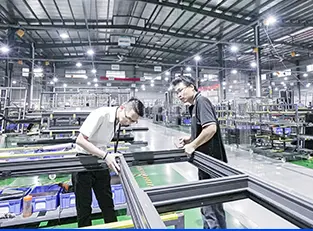
Chamber Mockup & QC
Random sample units undergo static water penetration and cycling tests in our factory pressure chamber. Every individual frame undergoes 100% laser diagonal and squareness checks.
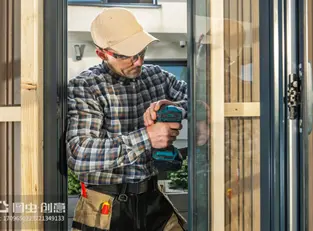
Export Crating & Support
Units are packed with protective film, foam corner protectors, desiccants, and enclosed within IPPC-certified fumigated plywood crates with steel bands for safe sea transit.
Frequently Asked Questions for B2B Importers
Everything contractors, developers, and distributors need to know regarding technical standards, container packing, tariffs, and warranties.
1. What specific alloy composition and wall thickness does DERCHI use for export-grade windows?
2. How do you prevent internal seal failure and condensation inside double glazed IGUs?
3. Can your systems comply with Australian AS2047 and AS1288 building regulations?
4. What is the difference between PA66GF25 thermal breaks and standard PVC insulation strips?
5. How do you protect glazed units and frames from damage during ocean container transport?
6. What are the typical lead times for custom architectural wholesale orders?
7. Do you support OEM, ODM, and distributor branding customization?
8. What warranties are provided on profiles, insulated glass, and hardware?
Accelerate Your Project with Certified Factory-Direct Glazing
Whether you are tendering for a commercial hotel project, developing luxury villas, or expanding your wholesale distribution business, DERCHI's engineering team provides full CAD shop drawings, thermal simulation reports, and mill-direct container pricing.