Precision Architectural Window & Door Solutions
Certified for global export, tested for extreme cyclonic pressures, coastal salinity, and thermal performance according to NFRC, AS2047, CSA, and CE benchmarks.
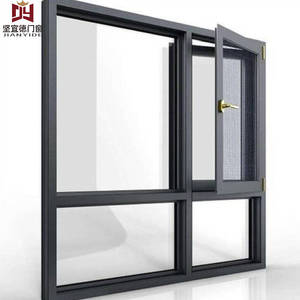
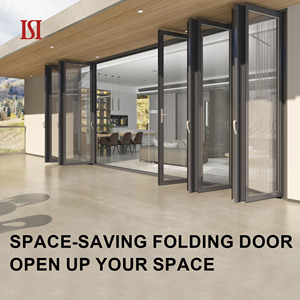
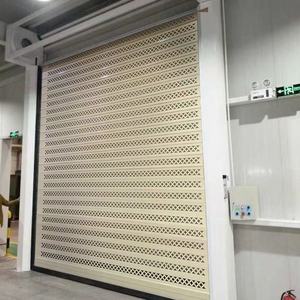
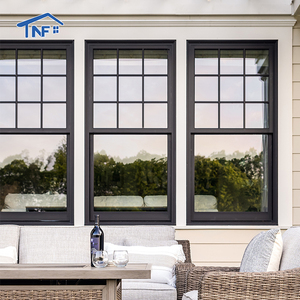
The Global Evolution of China's Architectural Aluminum Window Manufacturing
Over the past three decades, Chinese fenestration engineering has evolved from low-cost extrusion handling into the world’s epicenter of precision, thermal-break facade innovation. Centered in Foshan, Guangdong—the recognized industrial capital of architectural aluminum extrusion—leading fabricators such as Guangdong Dejiyoupin Doors and Windows Co., Ltd. (DERCHI) have pioneered an era of "Zero-Error" manufacturing. Combining automated CNC machining centers, robotic corner crimping, and high-performance structural glazing lines, tier-one Chinese exporters now supply mission-critical facade systems that rival and frequently exceed European and North American engineering benchmarks.
For international property developers, commercial general contractors, and facade consultants, importing architectural aluminum windows directly from certified Chinese manufacturers yields substantial technical and financial dividends. However, navigating cross-border procurement requires rigorous evaluation of metallurgical integrity, glass tempering certifications, polyamide thermal break quality, and strict verification of air, water, and structural performance criteria. This technical paper details the engineering mechanisms, regulatory compliance pathways, and future procurement standards required for modern residential, commercial, and high-density hospitality developments.
Core Enterprise Advantages: Engineering Rigor & Foshan Cluster Synergies
DERCHI's manufacturing matrix leverages the comprehensive supply chain ecosystem of the Pearl River Delta, delivering distinct advantages across six operational axes:
- Primary Billet Metallurgy (Alloy 6063-T5 / 6063-T6): We strictly utilize 100% primary A00 virgin aluminum ingots rather than remelted scrap. Profiles achieve wall thicknesses ranging from 1.4 mm to 3.0 mm, guaranteeing exceptional tensile strength (yield strength ≥ 160 MPa) capable of resisting positive and negative cyclonic pressures exceeding 4500 Pa.
- Proprietary Polyamide Thermal Barriers: By integrating glass-fiber-reinforced PA66 GF25 thermal insulation strips (rather than cheap PVC alternatives), our profiles prevent thermal bridging, withstand continuous operating temperatures from -40°C to 120°C, and maintain structural shear strength under heavy wind loading.
- Patented Hardware Mechanisms: With over 100 proprietary intellectual property patents, DERCHI has engineered the industry-acclaimed "Four-Side Six-Point Lock" multi-point locking system. This mechanism balances compression across all four edges of operable sashes, virtually eliminating perimeter air infiltration and providing RC2/RC3 burglar resistance.
- Global Quality Grand Slam: Our products carry verified laboratory certifications including CE (EN 14351-1), NFRC (ANSI/NFRC 100/200), Australian AS2047 and AS1288, Canadian CSA A440, US Hurricane High Velocity Hurricane Zone (HVHZ / ASTM E1886 & ASTM E1996), and ISO 9001 quality management oversight.
- Integrated Glass Processing Facilities: Fully automated tempering, ceramic frit printing, and robotic dual-seal insulated glass unit (IGU) lines utilizing Dow Corning 983 silicone structural sealants and argon gas fills (≥90% concentration) ensure double and triple glazed units achieve solar heat gain coefficients (SHGC) as low as 0.22 and U-values below 0.18 BTU/hr·ft²·°F (1.0 W/m²K).
Future Sourcing & Procurement Trends in Commercial Fenestration (2025–2030)
The global construction industry is confronting tightened carbon budgets, localized extreme weather patterns, and the accelerated transition toward Net-Zero Energy Buildings (NZEB). International fenestration procurement is rapidly realigning around four transformational paradigms:
1. Embodied Carbon & Green Aluminum
Global procurement manifests strict environmental product declarations (EPDs). Sourcing now mandates hydropower-smelted primary aluminum with certified cradle-to-gate carbon footprints under 4.0 kg CO₂e/kg Al, coupled with non-toxic powder coatings meeting Qualicoat Class 2 standards.
2. Ultra-Slim Structural Sightlines
Architects demand maximum daylight factors with frame sightlines compressed down to 25 mm–35 mm. By shifting structural wind loads into high-modulus laminated glass panes via structural glazing (SSG), profiles achieve panoramic transparency without sacrificing deflection thresholds.
3. Cyclonic & Extreme Weather Hardening
Rising sea levels and intense typhoons/hurricanes across Southeast Asia, North America, and the Caribbean have transformed impact testing. Specifiers increasingly enforce SentryGlas® (SGP) ionoplast interlayers to withstand positive missile impacts and prolonged cyclic pressure regimes.
4. Smart Building Mechatronic Integration
Automated architectural windows now incorporate concealed magnetic contacts, motorized chain actuators tied to SCADA/BMS environmental monitoring, and electrochromic dynamic smart glass that alters shading coefficients via real-time solar tracking.
5. BIM Level of Detail (LOD) 400 Delivery
Tier-1 Chinese suppliers provide verified parametric Revit/BIM family files before cutting metal. This eliminates clashes with facade anchors, rainscreens, and perimeter structural slabs, ensuring error-free installation on overseas job sites.
6. Prefabrication & Unitized Modular Fit
To overcome soaring on-site labor rates in Australia, Singapore, Europe, and the US, developers procure factory-glazed unitized systems pre-fitted with perimeter flashings, sub-sills, and seismic slip-joints ready for direct crane hoisting.
Engineering Benchmark: International Testing Standards Comparison
Directing cross-border procurement requires understanding regional testing equivalence. Below is a comparative engineering reference matrix comparing DERCHI factory testing criteria with American (ASTM/NFRC), European (EN/CE), and Australian (AS) standards:
| Performance Criterion | North American Standard (ASTM/NFRC) | European Standard (EN/CE) | Australian Standard (AS2047) | DERCHI Factory Threshold |
|---|---|---|---|---|
| Structural Wind Load (Serviceability) | ASTM E330: Design Pressure (DP 50–100 psf) | EN 12211 / EN 12210: Class 4 to 5 (1600–2000 Pa) | AS 4055 / AS 2047: N1 to N6 / C1 to C4 (up to 4500 Pa) | Tested to 5000 Pa (Deflection < L/250) |
| Water Penetration Resistance | ASTM E331 / E547: Cyclic test up to 15 psf (720 Pa) | EN 12208: Class 9A / E750 to E1200 (750–1200 Pa) | AS 2047: Water test up to 450 Pa / 600 Pa | Concealed Multi-Chamber Weep System: Up to 900 Pa |
| Air Infiltration Rating | ASTM E283: ≤ 0.30 cfm/ft² at 1.57 psf (75 Pa) | EN 12207: Class 4 (≤ 3 m³/h·m² at 100 Pa) | AS 2047: ≤ 1.0 L/s·m² at 75 Pa / 150 Pa | Coextruded EPDM Triple-Fin Seal: ≤ 0.05 cfm/ft² |
| Thermal Transmittance (U-Factor) | NFRC 100: U ≤ 0.28 BTU/hr·ft²·°F (Residential Energy Star) | EN ISO 10077-1: Uw ≤ 1.2 to 0.8 W/m²K (Passivhaus) | NatHERS / WERS: Uw ≤ 1.8 to 1.4 W/m²K | Triple Glazed + Dual PA66 GF25: Uw = 0.85 W/m²K |
| Impact Resistance (Hurricane / Cyclonic) | ASTM E1886/E1996: Large Missile Level D (9 lb 2x4 at 50 ft/s) | EN 356: P5A to P6B (Vandalism / Ball Drop) | AS/NZS 1170.2: Debris impact screen testing | SGP 1.52mm Laminated Glass: Level E (80 ft/s) Verified |
| Surface Finish Durability | AAMA 2605: 10-year Florida exposure fluoropolymer (PVDF) | Qualicoat Class 3 / Qualanod 25-micron Architectural | AS 3715: Powder coatings on architectural aluminum | AkzoNobel Interpon D3000 / PPG Coraflon 3-Coat PVDF |
The "Zero-Error" Engineering & Export Verification Protocol
A persistent risk in international fenestration sourcing is dimensional drift, finish abrasion during maritime shipping, and incorrect thermal-joint crimping. At Guangdong Dejiyoupin (DERCHI), every project undergoes our rigorous, proprietary 8-stage Zero-Error manufacturing and quality assurance pipeline:
Stage 01: BIM & CAD Review
Parametric analysis of structural openings, wind pressure zoning, mullion moment of inertia (Ix, Iy), and perimeter caulking allowances before extrusion cuts.
Stage 02: Thermal R&D Validation
Finite element thermal simulations (THERM & WINDOW software) to calibrate glass spacer depth, Low-E coating positioning, and PA66 chamber width.
Stage 03: Itemized Engineering BOQ
Transparent bill of quantities detailing alloy grade, hardware cycle endurance ratings, glass unit build-ups, and Sea Freight CBM calculations.
Stage 04: Component Harmonization
Verification of Siegenia, Hoppe, or proprietary four-side multi-point locking mechanisms, ensuring smooth operation across thermal expansion swings.
Stage 05: CNC Robotic Cutting
Double-mitre saw cutting with ±0.1 mm precision, followed by automated corner cleating, epoxy injection, and corner-crimping alignment.
Stage 06: Water Chamber Testing
Randomized batch testing in our in-house test chamber simulating continuous 900 Pa cyclonic driving rain and structural cycling.
Stage 07: Clean Glazing & Argon Fill
Automated insulated glass unit assembly in a class-10,000 cleanroom with 95%+ argon gas fill concentration, sealed with high-modulus silicone.
Stage 08: Protective Crating
Application of low-tack protective film, corner impact armor, vacuum bubble buffering, and ISPM-15 compliant heat-treated timber crates for sea transport.
Frequently Asked Questions: Technical Guidance for Professional Buyers
Essential considerations for architects, structural engineers, developers, and import distributors evaluating Chinese aluminum window suppliers.
How does DERCHI ensure structural integrity under coastal hurricane or typhoon wind-loads?
What is the difference between thermal break PA66 GF25 and low-end PVC insulation strips?
Can your factory provide authentic AS2047, NFRC, and CE testing certificates?
How do you protect aluminum window frames and glass against salt-spray corrosion in coastal projects?
What are typical production lead times, shipping routes, and minimum order quantities (MOQ)?
How does DERCHI resolve on-site measurement discrepancies and ensure installation accuracy?
Ready to Engineer Your Project's Fenestration Envelope?
Submit your architectural CAD drawings, door/window schedules, or project specification manuals. Our senior facade engineering directors will deliver an itemized thermal, structural, and cost optimization proposal within 24 hours.
Send an Inquiry