Engineering Whitepaper: Designing High-Performance Aluminum Fenestration for Modern Wet-Room & Restroom Environments
In high-density commercial developments, luxury residential compounds, and high-traffic hospitality resorts, bathroom windows face an aggressive dual-front thermodynamic challenge. Internally, localized relative humidity frequently approaches 100% paired with hot vapor generation from showers and thermal baths. Externally, building facades must resist severe wind loads, solar ultraviolet radiation, monsoon rainfall, and airborne industrial pollutants or marine chlorides.
Specifying generic residential architectural profiles for wet-room apertures routinely triggers rapid catastrophic failures: galvanic hardware corrosion, condensation runoff damaging drywall interfaces, mildew-rotted caulking, and persistent thermal-bridge heat gain. As China's leading aluminum bathroom window factory, DERCHI implements high-grade extruded 6063-T6 aluminum alloys, precision-fitted multi-chamber polyamide thermal break barriers, and bespoke hydrophobic drainage systems designed to eliminate these challenges completely.
1. Condensation Abatement & Thermal Barrier Dynamics
The primary point of failure in poorly engineered bathroom glazing is cold-bridging. When humid 38°C interior air encounters a chilled aluminum frame during winter or in air-conditioned tropical environments, immediate condensation forms. This condensate pools on sills, corrodes fasteners, and feeds black mold spores. Our thermal-break bathroom window systems incorporate a 24mm to 34mm PA66 reinforced with 25% glass fiber (GF25) strut. This barrier disrupts heat conduction through the aluminum web, driving condensation risk down to near zero while lowering U-factors to as low as 1.2 W/(m²·K).
2. Pressure-Equalized Independent Hydro-Drainage Architecture
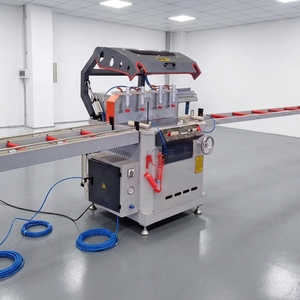
Standard sliding or casement windows often allow water ingress when high wind velocity creates a pressure differential between inside and outside. DERCHI's proprietary engineering utilizes the pressure-equalization chamber principle. High-flow concealed weep channels routed through CNC cutting machines route incidental moisture downward into stepped drainage profiles. Integrated one-way silicone flap valves prevent wind from driving rainwater back through drainage holes, ensuring no indoor water ingress even under dynamic water pressure exceeding 700 Pa (equivalent to Category 3-5 typhoons).
3. High-Security Privacy Glazing & Acoustic Decoupling
Modern luxury developments demand privacy without compromising daylighting. Our glass processing line provides laminated frosted panels, fluted Reeded/Moroccan textures, low-iron obscure acoustic interlayers, and smart switchable Polymer Dispersed Liquid Crystal (PDLC) double-glazed units. By pairing a 6mm toughened outer pane with a 12A Argon-filled warm-edge spacer and a 6mm laminated Low-E frosted inner pane, our systems achieve a weighted sound reduction index (Rw) of up to 42 dB, ensuring complete acoustic and visual isolation.