Engineering Excellence in Aluminum Clad Wood & Architectural Systems
In contemporary architectural design and high-efficiency building envelopes, aluminum clad windows and doors have emerged as the definitive benchmark for sustainable luxury and structural longevity. By pairing the natural thermal mass, acoustic dampening, and interior warmth of sustainably harvested timber (such as American Oak, German Larch, and Black Walnut) with an exterior armor of high-tensile extruded 6063-T6 aluminum alloy, these systems eliminate traditional wood maintenance while offering complete resistance against driving monsoons, ultraviolet degradation, and hurricane wind loads. As an industry-leading manufacturing powerhouse rooted in Foshan—China's global epicenter for aluminum innovation—our enterprise bridges German precision craftsmanship with world-class production scale to deliver envelope solutions certified across North America, Europe, Australia, and coastal Southeast Asia.
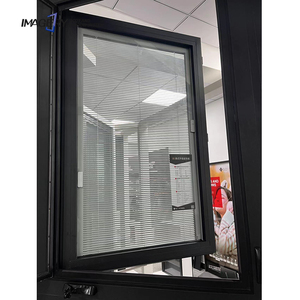
- Profile Depth: 70mm / 85mm
- Wind Load: Class 9 (≥ 5.0 kPa)
- Hardware: Roto / Siegenia
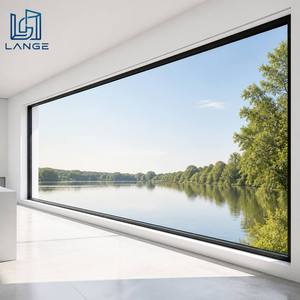
- Thermal Rating: U-factor ≤ 0.85 W/m²K
- Glazing: Triple Low-E + Argon
- Application: Passive Villa / Penthouse
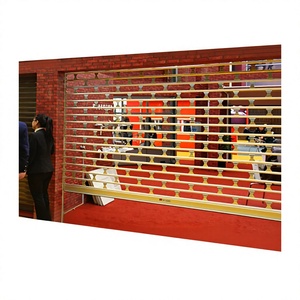
- Slat Structure: Extruded Polycarbonate/Alloy
- Motorization: Somfy Tubular Drive
- Protection: Anti-Intrusion Class RC3
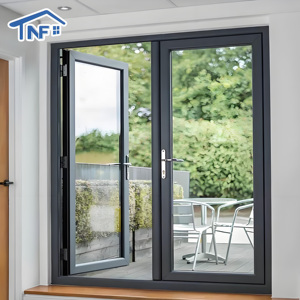
- Air Tightness: Class 4 (EN 12207)
- Water Resistance: Class 9A (600 Pa)
- Locking System: Multi-Point Perimeter
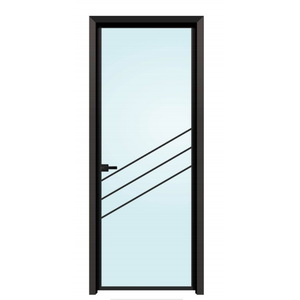
- Sightline Width: 16mm Ultra-Narrow
- Acoustics: Rw 42 dB Sound Isolation
- Glass Option: Laminated Low-Iron Float
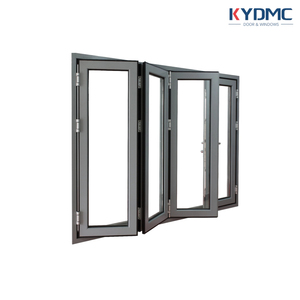
- Threshold: Zero-Clearance Track
- Hinges: Stainless Steel 316 Heavy
- Max Opening: Up to 12-Meter Spans
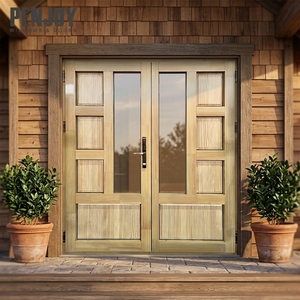
- Wood Core: Multi-Laminated Solid Larch/Oak
- Exterior Clad: Seamless Welded Aluminum
- Thermal Break: Technoform PA66GF25
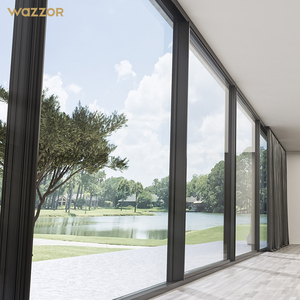
- Roller System: Heavy Tandem 300kg Bearing
- Drainage: Concealed Cascading Chute
- Compliance: AS2047 / AS1288 Certified
Emerging Procurement Trends in Architectural Clad Fenestration
Strategic B2B procurement in the exterior envelope sector is undergoing a profound structural shift driven by carbon emissions legislation, rigorous thermal mandates, and digitalized supply integration.
Stringent Whole-Life Carbon & EPD Auditing
Tier-1 architectural procurement teams across North America and Western Europe now mandate Environmental Product Declarations (EPDs). Specifiers are transitioning from thermally broken raw aluminum to aluminum-clad wood systems because sustainably farmed structural timbers serve as carbon sinks. By pairing certified forestry (FSC/PEFC) with recycled aluminum billets produced via hydroelectric smelters, overall product embodied carbon is slashed by up to 48% compared with conventional all-metal assemblies.
Passivhaus U-Factor Hyper-Insulation
Building codes such as ASHRAE 90.1 (2022) in the US and the EU Energy Performance of Buildings Directive (EPBD) have compressed fenestration U-factor ceilings below 0.90 W/m²K. Procurement guidelines now favor composite aluminum-clad profiles engineered with multi-cavity Technoform PA66 polyamide insulating strips, aerogel cavity interspersions, and warm-edge TPA spacers filled with 90%+ Argon gas, mitigating building heat loss while entirely preventing condensation dew point formation.
Turnkey Offsite Pre-Glazing & Unitized Logistics
Escalating on-site labor overhead in destinations such as Australia, Singapore, and the United States has accelerated demand for fully pre-glazed, factory-tested unitized window assemblies. Sourcing managers increasingly avoid knocked-down (KD) configurations in favor of crated, factory-assembled clad units equipped with pre-drilled structural anchoring brackets, integrated sub-sills, and factory-calibrated perimeter EPDM weatherstripping that ensure zero-tolerance on-site envelope fitment.
Structural & Thermal Performance Engineering Matrix
Comparing high-end fenestration systems: Aluminum Clad Wood versus Standard Thermal Break Aluminum and UPVC Vinyl Windows.
| Evaluation Parameter | Aluminum-Clad Wood System | Standard Thermal Break Aluminum | High-End UPVC / Vinyl System |
|---|---|---|---|
| Overall U-Factor (W/m²K) | 0.75 - 1.10 (Superior) | 1.30 - 1.80 (Moderate) | 1.10 - 1.40 (Good) |
| Structural Wind Load Resistance | Class 9 (≥ 5000 Pa / DP70+) | Class 9 (≥ 5000 Pa / DP80+) | Class 5-6 (2500 - 3000 Pa) |
| Acoustic Attenuation (STC / OITC) | Rw 42 - 48 dB (Mass Dampening) | Rw 35 - 38 dB | Rw 32 - 36 dB |
| Exterior Weather Resistance | Fluorocarbon / Anodized (50+ yrs) | Powder Coating / PVDF (30+ yrs) | Prone to UV embrittlement / Yellowing |
| Linear Thermal Expansion (α) | Compensated via Nylon Expansion Clips | High (~24 × 10⁻⁶ / K) | Extreme (~60 × 10⁻⁶ / K - Sash Sag) |
| Interior Tactile Luxury | Architectural Grade Natural Timber | Cold Metallic (Coated Aluminum) | Plastic / Synthetic Texture |
| Embodied Carbon Index | Lowest (Carbon Sequestering Wood) | Medium-High (Energy Intensive Billets) | High Petrochemical Footprint |
Technological Evolution: The Next Generation of Clad Systems
The historical challenge of aluminum-clad wood fenestration lies in the radically divergent thermal expansion rates between exterior aluminum profiles and interior solid wood frames. Aluminum expands and contracts under extreme climatic swings at more than triple the rate of seasoned timber. Early industry iterations that bonded aluminum directly onto timber using rigid adhesives inevitably suffered adhesive shear, moisture condensation trapping, and subsequent internal wood rot.
Our factory solves this through patented independent floating nylon clip junctions. The exterior aluminum shell is affixed via high-density DuPont polyamide 66 clips with fiberglass reinforcement. This allows the aluminum sheath to expand and contract longitudinally along an integrated expansion gap while preserving a 5mm ventilated drainage chamber between the wood core and the metal shield. Any atmospheric humidity or vapor penetrating the outer gasket is immediately evacuated via subterranean sill weep holes, ensuring the interior timber core remains perpetually dry, dimensional-stable, and decay-free.
Furthermore, modern high-end manufacturing combines automated 5-axis CNC double-head milling with corner-joint injection of two-component polyurethane (PU) structural adhesives and stainless-steel corner brackets. This guarantees that frame corner joints achieve an absolute pull-apart strength exceeding 4,500 N, delivering typhoon-grade structural rigidity capable of withstanding category-5 coastal hurricane forces.
Why Tier-1 Contractors & Developers Partner With Us
Combining 25+ years of specialized fenestration manufacturing with an advanced 180,000 m² intelligent industrial base in Foshan, China.
Patented Four-Side Six-Point Locking
Security is engineered into our product DNA. We hold over 100 national invention and utility patents, headlined by our proprietary Four-Side Six-Point interlocking perimeter transmission system. Unlike standard sash latches that lock on a single vertical jamb, our mechanism drives mushroom-head cams into hardened steel keeps across all four edges simultaneously, resisting hydraulic pry attacks and providing uniform gasket compression for ultimate air tightness.
Automated German Finishing & Timber Kiln Rigor
All timber species (including North American Red Oak, White Pine, and Siberian Larch) undergo computerized vacuum frequency drying to achieve an optimal equilibrium moisture content between 8% and 12%. Our components are treated via fully automated four-coat electrostatic spray lines using eco-friendly German Remmers waterborne micro-porous wood coatings, guarding against mold, UV bleaching, and insect infestation without hazardous off-gassing.
Disciplined 8-Step Engineering Workflow
From conceptual architectural CAD/BIM drawing audits, structural wind-load calculation, and thermal break finite element modeling to on-site precision laser surveying, prototype approval, robotic manufacturing, and overseas installation guidance, our team eliminates job-site coordination errors. Our track record spans 18,000+ landmark hotels, commercial developments, and bespoke residential villas across 60+ countries.
Frequently Asked Questions for Window & Door Importers
Authoritative technical answers to common queries raised by general contractors, facade consultants, and fenestration distributors.
How do aluminum-clad wood windows prevent rot and internal moisture condensation?
Rot occurs when moisture is trapped within unventilated timber cavities. Our systems engineer an active continuous air cavity between the outer extruded aluminum cladding and the interior solid timber profiles. The aluminum is mounted utilizing high-resilience nylon mounting clips rather than direct mechanical screw anchors or solid glue bonding.
This physical separation ensures an unbroken chimney-effect ventilation channel. Any condensate or incidental wind-driven driving rain is channelled downwards across a sloped sill gutter and expelled through concealed weep valves. In addition, the timber substrate is triple-impregnated with anti-fungal preservatives and breathable microporous topcoats that allow internal wood fibers to breathe naturally.
What hardware certifications and cycling durability benchmarks are applied?
We partner with premier hardware engineering houses including German Roto Frank, Siegenia-Aubi, and GU, alongside our patented proprietary high-load assemblies. All operating mechanisms undergo mechanical cycle testing exceeding 25,000 opening/closing operations in accordance with EN 13126 and AAMA 910 standards, simulating over 30 years of continuous daily operation.
Corrosion resistance for all lockcases, roller carts, friction hinges, and corner drives complies with EN 1670 Grade 5 (480 hours neutral salt spray testing), ensuring reliable operation even in aggressive marine and coastal resort environments.
How does your factory manage export logistics and zero-damage sea transport?
International fenestration logistics requires specialized packaging protocols. Every window sash and frame is protected with static electrostatic film, edge-wrapped in 10mm high-density polyethylene foam protectors, shrink-wrapped in moisture-barrier plastic, and placed within custom-built, ISPM-15 compliant fumigated plywood crates with internal desiccants.
For oversized patio sliders and bifold walls, our factory utilizes heavy-duty A-frame steel shipping racks that are directly craned into 40ft High Cube containers. This eliminates flex stress, prevents glass thermal shocks during maritime voyage across equatorial routes, and allows rapid job-site forklift unloading.
Can your profiles meet North American NFRC / Canadian CSA and Australian AS2047 standards?
Yes. Our product families hold physical laboratory test reports and third-party certifications from Intertek, NATA-accredited test laboratories, and European notified bodies. For North America, our assemblies satisfy NFRC 100/200/500 thermal benchmarks and ASTM E1886/E1996 hurricane missile impact ratings (large missile Level D, up to DP80 design pressure).
For Australian commercial projects, our window suites satisfy AS2047 structural deflection, air infiltration, and water penetration resistance up to 450 Pa / 600 Pa, complete with AS1288 safety glass compliance documentation.
What are the MOQ parameters, sample policies, and production lead times?
We accommodate both bespoke estate villas (low MOQ from 50 square meters) and high-density commercial developments spanning tens of thousands of square meters. Full-scale corner mockup samples and working hardware prototypes can be precision-machined, packed, and air-freighted within 10 to 14 business days for architect approval.
Standard containerized production lead times range between 25 and 35 days post shop-drawing signoff and deposit verification, supported by our intelligent production base output of over 1,000,000 square meters annually.