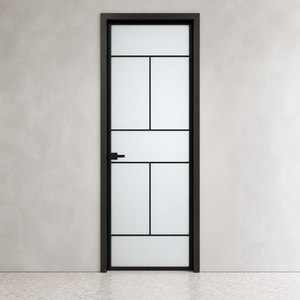
Engineered Product Portfolio
High-Precision Aluminum Casement Windows & Architectural Enclosures
Direct supply from our Foshan intelligent manufacturing base. Engineered to exceed CE, NFRC, and AS2047 international benchmarks with rigorous quality assurance.
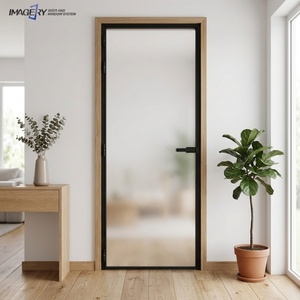
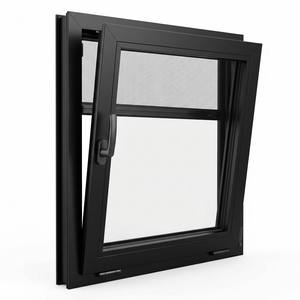
Tilt-Turn / Inward Casement
High Strength Invert Inside Casement Window with Screen
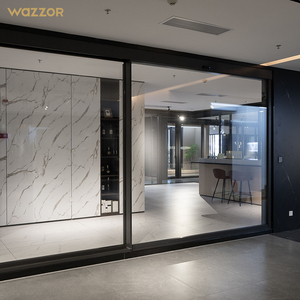
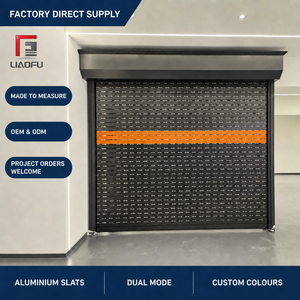
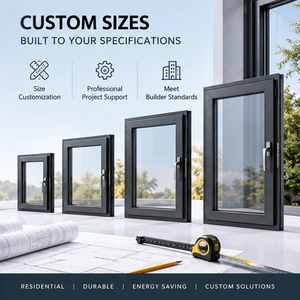
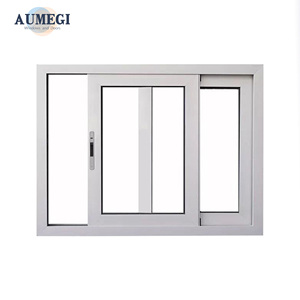
Heavy-Duty Sliding & Fixed
Custom Aluminum Large-Span Sliding Patio Balcony Doors
25+
Years Industry Experience
180,000m²
Intelligent Production Hub
100+
Patented Technologies
18,000+
Global Projects Completed
Procurement Intelligence Whitepaper
Engineering Evolution: Next-Gen Aluminum Casement Window Trends
A data-backed technical perspective for facade engineers, developers, and international procurement executives.
1. Polyamide 66 Thermal Breaks
The global shift toward Net-Zero carbon buildings requires window assemblies with overall U-factors under 1.4 W/(m²·K). Modern multi-cavity PA66 GF25 thermal break strips isolate indoor climates from exterior thermal conduction, mitigating building envelope HVAC loads.
2. Tropical Monsoon Water Management
Standard weep holes regularly fail under sustained wind pressures exceeding 2000 Pa. Emerging procurement criteria mandate independent pressure-equalized drainage systems with anti-backflow gravity valves that discharge tropical storm deluge without frame infiltration.
3. Multi-Point Perimeter Security
Traditional single-handle latches leave the sash vulnerable to leverage displacement. Next-generation casement configurations specify 4-side 6-point perimeter locking hardware, distributing clamping force evenly across continuous automotive-grade EPDM seals.
Comparative Engineering Matrix: Casement Specification Grades
| Performance Parameter | Standard Commercial Grade | DERCHI High-Performance Casement | Testing & Compliance Protocol |
|---|---|---|---|
| Alloy Composition & Temper | Recycled / Mixed Billet 6063-T5 | Primary Ingot 6063-T6 / 6060 Architectural | GB/T 5237, ASTM B221 |
| Wall Thickness (Structural Sash) | 1.2 mm - 1.4 mm | 1.8 mm - 2.5 mm Heavy Duty | AS2047 High-Rise Rating |
| Glazing Cavity & Spacer | Single 5mm / Double 5+9A+5 Normal | 5+12A+5 Low-E / 6+1.52PVB+6 Laminated Warm Edge | NFRC / CE EN 1279 |
| Water-Tightness Resistance | 250 Pa - 350 Pa | 700 Pa - 1000 Pa (No Leakage) | ASTM E331, BS EN 12208 (Class 9A) |
| Wind Pressure Capacity | 2.5 kPa - 3.5 kPa | Up to 5.0 kPa (Typhoon Grade) | Miami-Dade TAS 201/202/203, AS4055 |
| Air Infiltration Rate | 0.5 m³/(m·h) | ≤ 0.05 m³/(m·h) (Hermetic Seal) | EN 12207 Class 4 |
Global Market Outlook
Key Sourcing Trends Transforming the Casement Market (2025–2030)
Understanding shifting regulatory demands and architectural trends ensures project resilience and asset value longevity.
Circular Low-Carbon Billet
Global developers face stricter Scope 3 emissions reporting. Procurement shifts toward aluminum extrusions verified via Environmental Product Declarations (EPD) utilizing hydroelectric smelting to cut embodied carbon by up to 60%.
Ultra-Narrow Visual Sightlines
Architects demand broader natural lighting ratios. Next-gen profiles incorporate structurally bonded glass edges and concealed flush hardware, reducing visible frame margins below 45mm without degrading load-bearing capacity.
Smart Facade Automation
Integration with automated Building Management Systems (BMS). Casement actuators hidden within frame cavities respond dynamically to indoor CO₂ thresholds, wind speed sensors, and driving rainfall alerts.
Stringent Regional Testing
Off-the-shelf catalog configurations are declining. Tier-1 developers require factory-direct customized engineering supported by structural finite element analysis (FEA) and physical mock-up chamber testing prior to container dispatch.
Why Choose Guangdong Dejiyoupin (DERCHI)
Industrial Mastery: 180,000 m² Intelligent Fabrication Hub
Combining 25+ years of craft legacy with German automated machining lines to guarantee zero-error window assemblies.
Zero-Error Tolerances
Every profile is routed on automated German CNC multi-axis milling centers. Sash-to-frame gap tolerance is controlled within ±0.5mm, preventing localized gasket compression failure and air leakage.
Full Certification Arsenal
Our products carry CE (EU), NFRC (US), AS2047 (Australia), CSA (Canada), Energy Star, and ISO 9001 compliance. We supply complete structural calculation sheets and third-party test reports for project approval.
Rigorous Corner Pin Injection
Instead of basic screw fastening, our sash frames utilize aluminum alloy corner cleats with dual-component expanding adhesive injection, creating an impermeable structural joint that resists twisting under cyclonic loads.
1,000,000 m² Annual Scale
With an annual manufacturing capacity exceeding one million square meters and over 600 skilled technicians, we maintain delivery schedules for massive multi-tower residential and hospitality developments without mid-project bottlenecks.
End-to-End 8-Step Engineering
From CAD drawing optimization and climatic wind load assessments to custom extrusion dies, pre-assembly dry fitting, and global container logistics, we provide complete engineering traceability.
Short Sea Route Advantages
Situated in Foshan, Guangdong, our factory accesses Shenzhen and Guangzhou deep-water container terminals, guaranteeing short sea transit schedules across Southeast Asia, Oceania, the Middle East, Europe, and the Americas.
Procurement Direct Answers
Frequently Asked Questions: Casement Windows Procurement
Crucial commercial, technical, and logistics considerations when sourcing custom aluminum windows from China.
What is the standard production lead time for customized casement windows?
For custom architectural orders requiring bespoke powder-coat colors (such as AkzoNobel or PPG architectural finishes), standard production lead time ranges between 25 to 35 business days following shop-drawing sign-off. High-volume container runs utilize phased production to synchronize with your site crane schedules.
How do you guarantee glass safety and prevent transit damage?
All glass units are fully tempered with heat-soak testing options to eliminate spontaneous NiS breakage. Finished window units are wrapped with multi-layer protective PE films, fitted with corner edge buffers, and packed in fully enclosed fumigated plywood crates designed with internal steel sling anchor points for zero-motion sea transit.
Can you manufacture outward-opening casements with integrated security screens?
Yes. Our patented integrated dual-sash series pairs an outward-opening glass casement with an independently hinged inward-opening 304 marine-grade diamond stainless steel mesh screen. This design delivers uncompromised airflow, insect protection, and anti-fall safety without cluttering exterior facade lines.
What surface coatings are recommended for high-salinity coastal environments?
For installations within 5 kilometers of the shoreline, we specify PVDF (Fluorocarbon) 3-coat architectural finishes or Qualicoat Class 2 certified marine powder coatings with a minimum dry film thickness of 60–80 microns, engineered to withstand over 3,000 hours of neutral salt spray testing without pitting or peeling.
How does DERCHI assist international general contractors with installation?
We supply comprehensive technical submittal packages including 3D CAD anchor detail elevations, sub-sill flashing profiles, and step-by-step video installation manuals. For large commercial or multi-family projects, our senior site engineers can be deployed on-site for pre-installation dry runs and installer certification.
What hardware brands are integrated into DERCHI casement systems?
We partner with premier hardware manufacturers including German Siegenia, Roto, Hoppe, and Sobinco, alongside our own proprietary heavy-duty multi-point friction stay systems. All hinges are manufactured from 304 or 316 stainless steel to ensure zero sash sagging over 50,000 operational cycles.
Ready to Source Architectural Grade Casement Windows?
Send us your project elevations, opening schedules, or tender drawings. Our engineering team will deliver a structural calculation review and itemized factory-direct quotation within 24 hours.