Burglar & Impact Proof
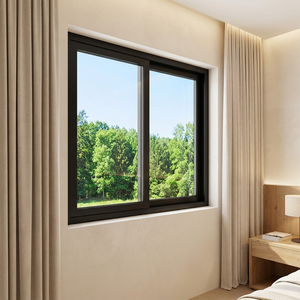
CHANGYI Xiamen Burglar Proof Hurricane Impact Aluminum Sliding Window & Doors
- High-tensile impact resistant mullions
- Integrated structural barrier mesh track
Modern architectural fenestration demands an uncompromising synthesis of natural airflow, unobstructed optical clarity, hurricane impact resilience, and high-tensile forced-entry defense. As global construction codes transition toward bioclimatic ventilation and energy-efficient building envelopes, procurement managers, facade consultants, and master distributors turn to China's leading fenestration ecosystem. Headquartered in Foshan, Guangdong Dejiyoupin Doors and Windows Co., Ltd. (DERCHI) represents the apex of zero-error intelligent manufacturing—combining 25+ years of metallurgical mastery, proprietary multi-point lock patents, and exhaustive international certifications across 180,000 square meters of automated production.
Explore our certified thermal-break, hurricane-impact, and security-mesh integrated doors and windows built for high-exposure residential, hospitality, and commercial infrastructure.
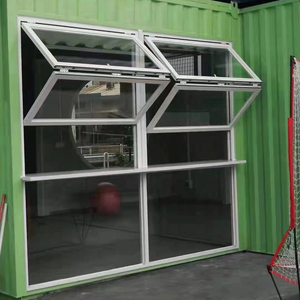
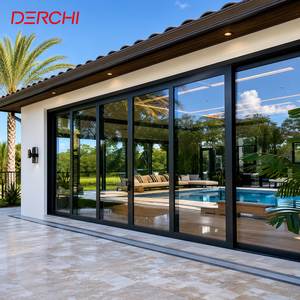
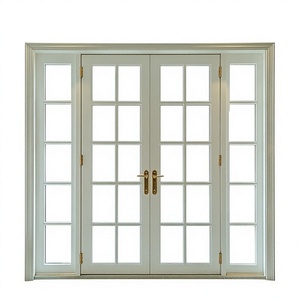
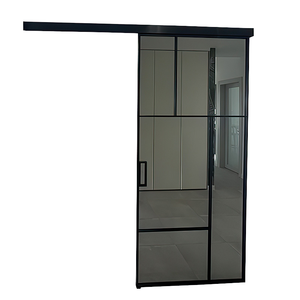
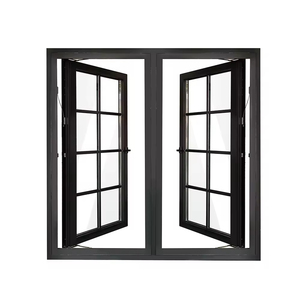
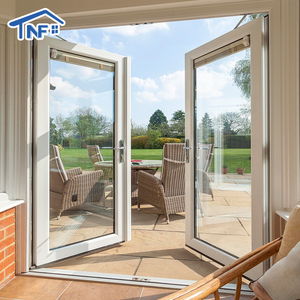
In high-end architectural procurement, an aluminium mesh door is not merely a fly screen; it is an engineered protective envelope designed to withstand dynamic human impact, shear attacks with bladed instruments, hurricane windborne debris, and corrosive coastal microclimates.
Our aluminium profiles are fabricated exclusively from virgin A00 aluminium ingots. Through precise solution heat treatment and artificial aging to T6 temper, our profiles achieve tensile yield strengths exceeding 215 MPa and Brinell hardness levels above 12 HW.
This structural rigidity prevents frame deflection during aggressive prying attempts, ensuring that the 1.4 mm to 2.2 mm profile walls maintain absolute geometric stability across spans reaching up to 3.5 meters in height.
The core barrier utilizes high-tensile 316 marine-grade austenitic stainless steel wire (0.80 mm to 1.00 mm diameter) woven in a precise 11x11 or 12x12 mesh per square inch. Unlike conventional mild steel or 304 screens, 316 contains 2% to 3% molybdenum.
This chemical addition drastically suppresses pitting and crevice corrosion in chloride-heavy coastal environments, comfortably exceeding 1,000 hours in Neutral Salt Spray (NSS) and cyclic CASS testing.
A security door is only as strong as its mesh-to-frame perimeter fixing. Rather than relying on simple adhesive beads or plastic wedges, DERCHI implements a heavy-duty mechanical screw-clamp retention channel lined with continuous EPDM dielectric isolators.
This completely eliminates galvanic corrosion between the dissimilar metals (stainless mesh and aluminium frame) while distributing dynamic impact forces across the entire structural perimeter.
Direct quantitative comparison of China high-spec manufacturing vs. generic commercial screen door offerings.
| Performance Dimension | DERCHI Architectural Aluminium Mesh | Standard Commercial Grade Doors | Compliance Standards Verified |
|---|---|---|---|
| Mesh Wire Material & Tensile | 0.8 mm - 1.0 mm 316 Marine Stainless (>900 MPa Tensile) | 0.5 mm - 0.6 mm 304 or Carbon Steel (Low Tensile) | AS5039 / AS5041 / ASTM E2268 |
| Knife Shear Resistance | Exceeds 3 consecutive 350N continuous bladed slice cycles | Fails blade puncture and tear within 1st cycle | Australian Standard AS5041.2 knife shear |
| Dynamic Impact Resistance | Resists 5 consecutive 100J sandbag pendulum impacts | Deforms or tears out of retention bead below 60J | AS5041.3 dynamic impact test |
| Locking Mechanism | Proprietary Four-Side Six-Point Interlocking System | Single-point latch or generic dual deadbolt | National Invention Patent / CE Certified |
| Surface Pre-Treatment & Coating | Chromate-free conversion + AkzoNobel powder (80-120 μm) | Standard domestic powder coat (<50 μm), no primer | AAMA 2604 / AAMA 2605 / Qualicoat Class 2 |
| Galvanic Isolation | Continuous EPDM compression insulator / zero metal contact | Direct screw or pop-rivet contact (Rapid oxidation) | ASTM B117 1,000-hr Salt Spray Verification |
Global fenestration procurement is undergoing a paradigm shift driven by stringent energy efficiency directives, rising property security standards, and supply chain digitalization. International developers and institutional contractors must align their purchasing strategies with key structural trends reshaping supplier evaluation in China.
Tier-1 general contractors are rapidly phasing out the fractured workflow of procuring aluminium door carcasses from one vendor, glass from another, and security screens from third-party retrotesters. Fragmented sourcing introduces tolerance stacking errors and voided warranty liabilities.
The clear procurement trend is toward integrated factory-glazed assemblies, where sliding or bifold doors feature precision engineered triple tracks housing matching insulated glass units (IGUs) alongside structural security mesh panels calibrated under single factory accountability.
Specifiers in the United States, Australia, Europe, and ASEAN regions no longer accept self-declared factory test certificates. Procurement contracts now demand rigorous third-party auditing with comprehensive credentials including NFRC thermal metrics, CE performance markers, Australian AS2047 fenestration and AS5039 security certifications.
Chinese suppliers without verifiable raw-material test reports (MTCs), batch mill certificates, and hurricane impact test dossiers are being swiftly disqualified from commercial institutional bids.
Cross-border procurement is adopting end-to-end digital coordination. Architects and developers demand complete Building Information Modeling (BIM) families and Revit objects directly from the extrusion fabricator. Design for Manufacturability (DFM) reviews happen concurrently with structural frame calculations.
By leveraging digital shop drawings and CNC-automated machining coordinates, project leaders cut submittal approval lead times from weeks down to hours, eliminating costly on-site frame re-cutting.
The convergence of biophilic architecture, energy decarbonization, and smart home automation is catalyzing unprecedented technological advancements across modern fenestration engineering.
Modern security mesh doors are evolving from purely mechanical barricades into networked access control points. Leading R&D pipelines now integrate concealed motorized multipoint locks, facial recognition sensors, and low-energy Bluetooth/Zigbee protocols directly into the hollow chambers of the aluminium stile.
This allows automated hands-free entry while preserving the physical barrier integrity of high-tensile 316 mesh, maintaining seamless aesthetic sightlines without bulky external retrofit hardware.
Minimalist luxury architecture dictates maximum glass-and-mesh surface area paired with negligible frame profiles. Next-generation mesh doors feature structural interlockers as narrow as 25 mm to 38 mm without sacrificing wind-load resistance.
Simultaneously, flush-floor embedded threshold systems equipped with integrated drainage tracks provide continuous zero-barrier transitions between interior spaces and exterior lanais, preventing water pooling while stopping insects and vermin.
Historically, screen doors were isolated from thermal calculations. Today, strict global building codes (such as California Title 24, Australian NCC, and EU EPBD) necessitate continuous thermal insulation barriers. New designs incorporate structural Polyamide (PA66 GF25) fiberglass-reinforced thermal breaks within the aluminium mesh door profile.
This thermal interruption prevents exterior heat from bridging into conditioned living spaces during hot summers, lowering overall solar heat gain coefficients (SHGC) and preventing winter surface condensation.
Traditional black powder-coated security screens frequently created an undesirable moiré effect, degrading optical clarity and dulling natural light. Advanced electrostatic powder coating lines now apply ultra-thin, nano-modified thermosetting fluoropolymer films.
These coatings provide anti-static, dust-repellent surfaces that resist fine airborne particulate matter (PM2.5) accumulation, offering up to 88% visual transparency while resisting UV degradation and chemical pollutants.
Located in the heart of China’s premier industrial aluminium cluster in Nanhai District, Foshan, DERCHI leverages deep local supply chain integration, world-class intelligent robotics, and institutional engineering rigor to provide factory-direct certainty for global projects.
Our expansive smart manufacturing complex houses fully automated CNC profile cutting, corner crimping, and precision milling centers. With an annual capacity surpassing 1,000,000 square meters of high-end fenestration products, we guarantee lead-time reliability even for multi-tower developments and extensive resort communities.
Security is deeply embedded in our engineering DNA. We hold over 100 national invention and utility model patents, including our proprietary Four-Side Six-Point Anti-Theft Lock mechanism. When closed, solid stainless-steel shoot-bolts engage simultaneously on all four sides of the door frame, making unauthorized prying physically impossible.
DERCHI systems are pre-tested and fully certified against the globe's most demanding fenestration benchmarks: European CE conformity, United States NFRC energy performance, Australian AS2047 & AS5039 certifications, Canadian CSA, Energy Star, ISO 9001, and dynamic Hurricane Impact test criteria.
Every commercial and residential consignment moves through an unbroken chain of custody to prevent dimensional discrepancies and structural mismatch.
In-depth structural audit of CAD/Revit opening schedules, wind-load exposure, and elevation plans.
Engineers calculate extrusion wall thicknesses, thermal configurations, and mesh retention specs.
Clear, unbundled component-level bill of quantities (BOQ) with transparent FOB/CIF pricing.
Approval of shop drawings, custom color matching (RAL/Pantone), and architectural hardware samples.
Allocation of master extrusion billets and slotting into CNC automated fabrication line.
Laser-verified dimensional tolerances checking corner diagonals, mesh tension, and squareness.
100% pre-assembly of frames, screens, and multi-point locks before seaworthy wooden crating.
Complete installation manuals, video guides, and direct engineering support until site handover.
Clear, direct engineering answers to eliminate procurement ambiguity and streamline import clearance.
The fundamental distinction lies in alloy metallurgy and chloride corrosion resistance. Standard 304 stainless steel contains 18% chromium and 8% nickel, which provides adequate protection against corrosion in mild inland regions. However, within 10 to 15 kilometers of ocean coastlines, airborne salt spray causes pitting and severe tea-staining on 304 surfaces within months.
In contrast, 316 marine-grade stainless steel incorporates 2% to 3% molybdenum. Molybdenum significantly elevates the material's Pitting Resistance Equivalent Number (PREN), defending against chloride attack, industrial acid rain, and persistent humidity. For tropical coastal residences, island villas, and high-exposure resorts across Southeast Asia, Australia, Florida, and the Caribbean, specifying 316 marine stainless steel mesh with dielectric EPDM isolation channels is essential to preserve structural integrity and visual clarity for decades.
Galvanic corrosion is the primary failure mode in poorly engineered security doors. When stainless steel (a nobler cathode) contacts aluminium (a less noble anode) in the presence of moisture or salt spray (electrolyte), the aluminium rapidly oxidizes, pit-corrodes, and crumbles, leading to mesh breakout.
DERCHI prevents galvanic corrosion through a three-tier isolation system: First, our 316 mesh receives an electrostatic thermoset fluoropolymer powder coat, forming an initial non-conductive barrier. Second, our profiles utilize a proprietary mechanical clamping channel lined with continuous EPDM (Ethylene Propylene Diene Monomer) insulating gaskets that completely isolate the mesh perimeter from the extrusion wall. Third, all fastening screws are manufactured from coated 316 stainless steel and seated with non-conductive polymer washers, achieving zero direct metal-to-metal contact.
Yes. Over 65% of our international commercial shipments comprise integrated multi-track architectural assemblies. For sliding configurations, we utilize dedicated triple-track extrusions: the outer two tracks house heavy-duty double or triple-glazed Low-E sliding glass panels, while the third dedicated track houses the sliding high-tensile security mesh screen.
This design allows occupants to slide open the glass panels to enjoy 100% natural, bug-free cross ventilation while the locked stainless security mesh maintains complete forced-entry defense. For bifold systems, we engineer matching secondary hinge sets or provide synchronized exterior bifold barrier panels configured to fold flat against the perimeter masonry.
Our systems are tested and certified in strict accordance with the primary building standards of our major destination markets:
Because we operate an agile 180,000 m² automated production facility, we cater to both high-end private architectural residences and large-scale commercial developments. For fully custom dimensions, powder colors, and configurations, our project MOQ starts at just 30 square meters or 1 complete residential villa package.
Standard fabrication lead times run between 20 to 30 business days following final shop drawing sign-off and color chip approval. For multi-container commercial tenders (condominiums, hotel chains), staggered production schedules and sea-freight dispatch are calibrated directly to your general contractor's project installation milestones.
Transoceanic shipping subjects architectural fenestration to container vibration, humidity cycling, and rough handling. Every DERCHI aluminium mesh door is wrapped in protective PE film, shielded with 20 mm high-density EPS foam corner guards, and sealed within fumigated, export-grade plywood crates lined with waterproof vapor barriers.
For large-span knocked-down (KD) configurations, precision match-marked frame members are secured in custom internal cradles alongside all required stainless assembly fasteners and CNC-machined corner cleats, guaranteeing uncompromised, scratch-free arrival at project sites worldwide.
Whether you require custom hurricane-rated patio systems for coastal villas, containerized distributor supply chains, or project tender quotations based on architectural drawings, our Foshan fenestration engineers are ready to assist with full technical submittals.