Engineered Aluminum Interior & Transition Systems
Tested for European CE standards, acoustic attenuation, multi-cycle mechanical endurance, and high-tensile resistance across commercial, residential, and multi-family applications.
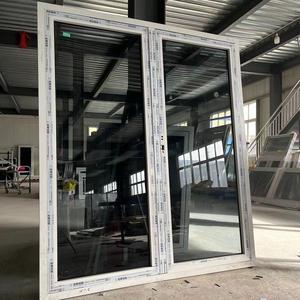
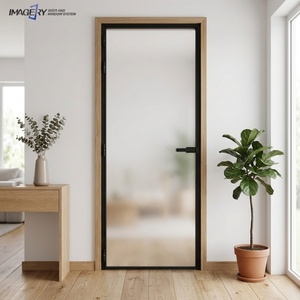
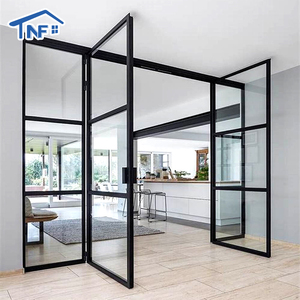
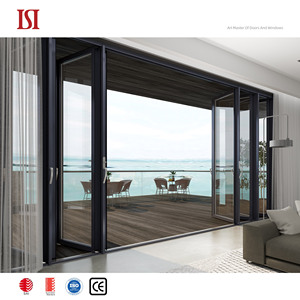
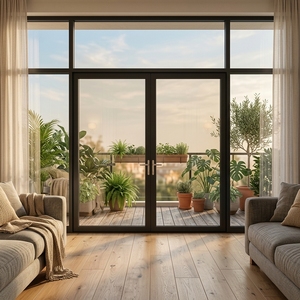
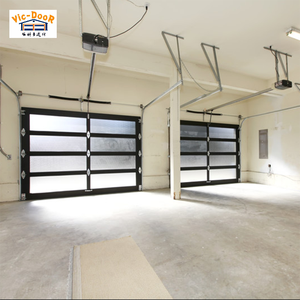
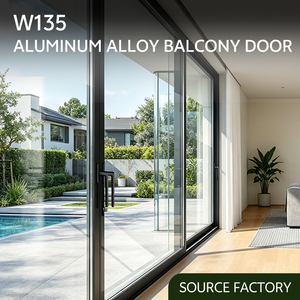
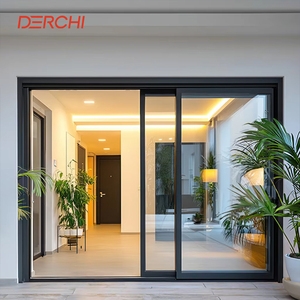
Technical Whitepaper: CE Compliance & Structural Architecture of Internal Doors
In contemporary architectural design, internal doors are no longer secondary interior partitions; they represent essential building envelope modules responsible for acoustic isolation, interior microclimate preservation, fire protection ratings, and lifetime structural integrity. For international project specifiers, commercial contractors, and distributor networks across Europe, North America, and Australasia, verifying true CE Certification under EN 14351-1 / EN 14351-2 is mandatory. As a direct-tier manufacturer operating out of Foshan, Guangdong Dejiyoupin Doors and Windows Co., Ltd. (DERCHI) combines primary alloy metallurgy with strict factory production control (FPC) to fulfill the European Construction Products Regulation (CPR 305/2011).
Unlike timber doors that are vulnerable to hygroscopic warping or hollow-core PVC doors lacking cyclic fatigue resistance, structural aluminum doors engineered with 6063-T5 / 6063-T6 architectural grade extrusions maintain planar tolerances within ±0.5 mm over decades of service. When integrated with multi-cavity chambers, continuous EPDM synthetic rubber gaskets, and automated mechanical drop-down seals, CE certified aluminum internal doors deliver an air tightness performance rating that complies with Class 4 (EN 12207) and acoustic attenuation ratings of Rw 32 dB to 42 dB according to ISO 10140 testing methods.
6063-T5 Structural Profiles
Extruded from primary aluminum billets with calibrated wall thicknesses (1.4 mm to 2.2 mm). Superior tensile strength and yield performance prevent deflection during rapid indoor pressure transitions.
Multi-Cavity Acoustic Barriers
Engineered hollow chambers fitted with high-density polyurethane foams or polyamide thermal breaks dampen sound transmission, minimizing cross-room speech and mechanical equipment noise.
Four-Side Six-Point Locking
Patented multi-point locking technology provides complete mechanical perimeter engagement. Eliminates sash rattle, resists forced entry, and compresses perimeter EPDM seals evenly.
Anodized & AkzoNobel Finishes
Surface treatments exceeding 60-micron electrostatic powder coatings or 20-micron architectural anodizing ensure zero VOC emissions, scratch resistance, and immunity to high humidity environments.
100,000+ Mechanical Cycles
Hardware assemblies, heavy-duty stainless 304 pivot hinges, and top-hung concealed carriage tracks are rigorously load-tested to exceed EN 1191 Grade 5 repeated opening durability standards.
CE Declaration of Performance (DoP)
Every shipment is furnished with verified Factory Production Control documentation, raw material mill certificates, and EN 14351 compliant testing metrics for seamless customs clearance.
Engineering Benchmark: Internal Door Materials Compared
Sourcing teams must weigh total lifecycle costs, mechanical failure probabilities, and environmental compliance. The comparative engineering matrix below demonstrates why aluminum interior doors are rapidly replacing engineered wood, composite MDF, and hollow steel solutions across high-density developments.
| Performance Metrics | DERCHI Architectural Aluminum | Solid Wood / Engineered Timber | MDF / Hollow Wood Core | Galvanized Hollow Steel |
|---|---|---|---|---|
| Dimensional Stability | Permanent; zero expansion under 100% relative humidity. | Swelling / warping (3–8% volumetric expansion). | Prone to core delamination and water absorption. | High thermal expansion; frame binding risks. |
| Acoustic Rating (Rw / STC) | Rw 32 – 42 dB (with acoustic laminated glass). | Rw 28 – 35 dB (dependent on density and core). | Rw 20 – 26 dB (hollow cavity leakage). | Rw 30 – 38 dB (requires internal mineral wool). |
| Maintenance Cycle | Virtually zero; wipe clean with neutral agents. | Requires regular re-varnishing and painting. | Surface veneer peeling under moist conditions. | Corrosion at corners and weld seams over time. |
| Fire Reaction (EN 13501) | Class A1 / A2-s1,d0 (Non-combustible). | Class D / E (Requires chemical intumescent treatment). | Class E (Highly flammable core matrix). | Class A1 (Non-combustible). |
| Eco-Footprint & VOCs | 100% infinitely recyclable; Zero formaldehyde. | Sustainable if FSC-certified, but finishes off-gas. | High formaldehyde binders (Urea-formaldehyde). | High carbon footprint during initial smelting. |
Future Procurement & Technological Trends (2026–2030)
The commercial fenestration and interior door sector is experiencing structural transitions driven by stricter building energy codes, decarbonization pledges, and contemporary interior minimalism. Procurement professionals must anticipate several overarching industry vectors:
1. Ultra-Narrow Sightline Architecture
Architectural demand has transitioned rapidly from heavy 65 mm frame profiles to 16 mm to 20 mm minimalist narrow frames. Achieving structural rigidity on sashes exceeding 3,000 mm in height requires specialized cold-rolled corner keys, reinforced aluminum-magnesium alloys, and structural silicone glazing bonding techniques.
2. Smart Access & IoT Building Automation
Commercial hospitality and luxury multi-residential developments now require internal aluminum doors pre-channeled for concealed 24V wiring, biometric magnetic mortises, integrated door position sensors, and automated motor drives compatible with BACnet and KNX building automation systems.
3. Circular Economy & Low-Carbon Aluminum
With European CBAM (Carbon Border Adjustment Mechanism) implementation expanding, global tier-1 contractors demand certified low-carbon recycled scrap billets (exceeding 75% recycled content) and third-party verified Environmental Product Declarations (EPD) to qualify for LEED Gold and BREEAM Outstanding credits.
Why Enterprise Sourcing Direct from DERCHI Minimizes Procurement Risk
Guangdong Dejiyoupin Doors and Windows Co., Ltd. (DERCHI) is an internationally acknowledged manufacturer operating a centralized 180,000 m² modern intelligent production base in Shishan Town, Nanhai District, Foshan—China's industrial nucleus for precision aluminum extrusion. Employing over 600 specialized production technicians and an elite in-house engineering team of 30+ R&D specialists, our production lines maintain a continuous annual output exceeding 1,000,000 m² of high-performance doors and windows.
Zero-Error Tolerance Protocol
Our digital manufacturing workflow enforces automated CNC 5-axis miter saws, electronic corner crimpers, and dynamic laser scanning. We control sash-to-frame clearance tolerances to ±0.2 mm, eliminating on-site adjustment expenses and installer rework.
Full Certification Grand Slam
In addition to strict European CE (EN 14351) testing, our systems hold complete certification compliance portfolios: North American NFRC and CSA, Australian AS2047 / AS1288, ISO 9001 quality management, Energy Star, and severe Florida Hurricane impact ratings.
Global Turnkey Engineering Support
From initial CAD review, shop-drawing submittals, and custom hardware engineering to full sea-container seaworthy crating (foam wrap + EPE cushion + non-fumigation plywood crates) and on-site guidance, our export division supports developers in over 60 countries.
Frequently Asked Questions on Sourcing Aluminum Internal Doors
Authoritative technical guidance compiled by DERCHI senior application engineers to address structural, regulatory, and logistics inquiries from international trade partners.
What specific EN standards govern CE marking for aluminum internal doors?
Internal doors without resistance-to-fire characteristics are verified under EN 14351-2, evaluating release of dangerous substances, impact resistance (EN 13049), operating forces (EN 12046), and acoustic insulation (EN ISO 10140). When installed in transitional corridors requiring smoke or fire partitioning, compliance shifts under EN 16034 / EN 14351-1 under Assessment and Verification of Constancy of Performance (AVCP) System 1.
How does DERCHI ensure acoustic privacy in glass internal doors?
Standard single monolithic glass offers poor noise attenuation (Rw 28 dB). DERCHI internal systems incorporate dual-glaze configurations (5mm + 9A/12A + 5mm) or acoustic laminated panels with specialized 0.76mm / 1.52mm Sound-PVB interlayers (Rw reaching 38–42 dB). In addition, our automated drop-down mechanical thresholds drop an EPDM sweep upon door closure, sealing the critical undercut gap.
What is the standard production lead time for bulk project customization?
Standard production runs for customized internal doors range from 25 to 35 calendar days following shop-drawing finalization and deposit receipt. For projects requiring custom profile die development or unique RAL color anodization, 10–14 days are added for initial metallurgical extrusion trials and sample approval.
Can you provide factory pre-hung assemblies to accelerate on-site installation?
Yes. We offer fully integrated pre-hung systems where sub-frames, adjustable architraves, multi-point locks, concealed 3D adjustable hinges, and perimeter gaskets are precision pre-milled and test-assembled at our factory prior to crating. This cuts on-site installation labor by up to 60%.
How do you safeguard ultra-narrow glass doors during ocean freight?
Our specialized export packaging involves a five-stage defense: (1) peelable protective film on all visual profile surfaces, (2) reinforced plastic corner shock absorbers, (3) heavy polyethylene moisture shrink wrapping, (4) closed-cell EPE perimeter cushioning, and (5) steel-banded, non-fumigation plywood crates with internal vertical bracing to prevent dynamic flex.
What minimum order quantity (MOQ) applies to custom internal door orders?
For standard profile configurations with stock architectural finishes (Matte Black, Metallic Grey, Brushed Champagne, White), our MOQ starts at 50 m² or 20 units. For fully bespoke custom extrusion dies or unique hardware finishes, our commercial team works flexibly with developers based on project schedules.