0%

An Aluminum Door is a door built with an aluminum frame, often paired with glass, solid panels, or both. The metal is lightweight, rigid, and resistant to rust, which makes it a practical choice for entrances, patios, and commercial spaces. Look closely at the frame: its profile, corner joints, seals, and finish all affect how the door feels and performs. A smooth handle is useful. So is a snug seal.

Aluminum doors come in hinged, sliding, folding, and other configurations. Their appearance can range from narrow, modern sightlines to heavier frames designed for larger panels. Performance varies, though. A frame with a thermal break can reduce heat transfer, while suitable glazing and careful installation also influence comfort and energy use. Ask about these details rather than judging a door by its finish alone.

The material generally needs less upkeep than many painted timber options, but it is not maintenance-free. Dust, worn weatherstripping, and misaligned rollers can still cause trouble. Small details matter. For a fair comparison, consider the opening size, local weather exposure, security hardware, and the manufacturer’s published specifications. An Aluminum Door may suit one home beautifully and feel less appropriate in another. That judgment deserves a second look.
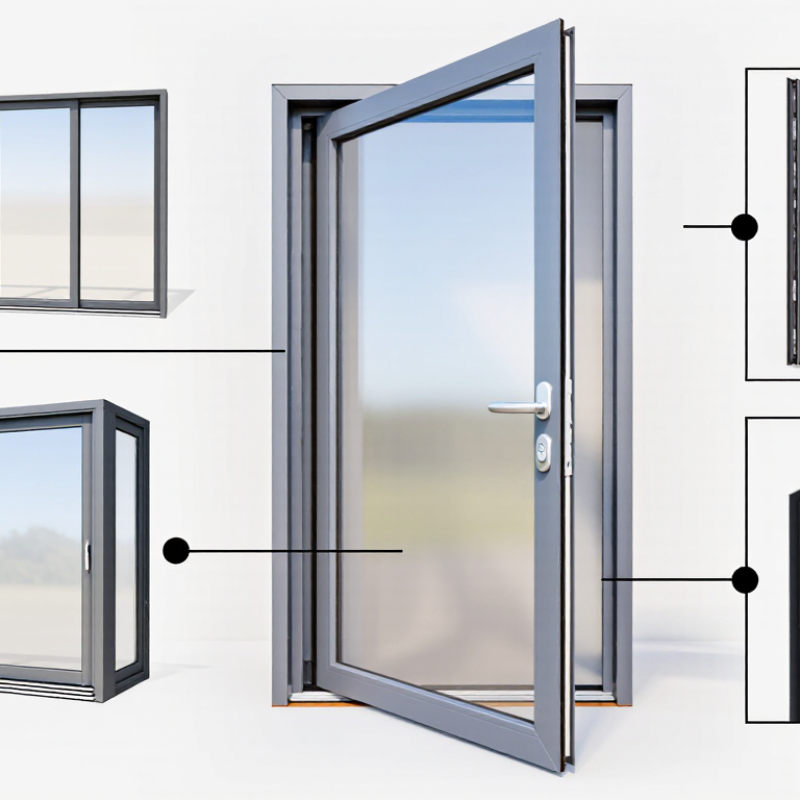
What Is an Aluminum Door?

Definition and Core Components of an Aluminum Door

What Is an Aluminum Door?

Definition and Core Components of an Aluminum Door

An aluminum door is a door assembly built around a lightweight metal frame and one or more infill panels. The frame includes vertical stiles, horizontal rails, and a threshold; together, these parts hold the panel square and transfer load to the hinges. Panels may be glazed or solid. Look closely at the edges: seals, corner joints, and drainage openings often reveal more about construction than the finish does.

Core components include the frame, infill, hinges, lockset, weatherstripping, and glazing system when fitted. Thermal breaks—insulating material between the frame’s inner and outer aluminum sections—can reduce heat transfer, while compression seals help limit drafts and water entry. The U.S. Department of Energy notes that windows are responsible for about 25–30% of residential heating and cooling energy use; that figure is not door-specific, but it shows why the surrounding envelope matters. The International Aluminium Institute reports that roughly 75% of all aluminum ever produced remains in use, reflecting the metal’s recyclability and long service life. Yet a door’s performance still depends on its design and installation. Aluminum alone is no guarantee.

Tips: Check the sill drainage, corner seams, and gasket contact. A small gap can matter.

Aluminum Door Materials and Manufacturing

An aluminum door starts with profiles made by pushing heated aluminum alloy through a shaped die. The resulting sections form the stiles, rails, and frame. Alloy choice affects strength, weight, and how easily the profile can be machined. A hollow section keeps the door relatively light, but its shape and wall thickness still matter.

Thermal performance depends on more than the metal itself. Many exterior frames use a thermal break, a nonmetal strip separating the inner and outer aluminum sections. It slows heat transfer, though it does not eliminate it. That matters. Profiles may be anodized or coated to resist weathering and create a chosen finish; careful surface preparation helps that layer adhere evenly.

In manufacturing, profiles are cut to length, drilled or milled, then joined at their corners. Workers fit seals, hinges, hardware, and glazing, checking alignment so the panel opens without rubbing. Small gaps can cause drafts or water entry, so measurements deserve close attention. Not every frame is perfectly uniform. Fabrication tolerances, installation conditions, and the quality of the seals can all affect the finished door. A robust coating cannot compensate for a poorly sealed joint.

What Is an Aluminum Door? - Aluminum Door Materials and Manufacturing

Aspect Materials and Construction Purpose and Key Considerations
Definition A door whose frame and often its sash or door leaf are made primarily from aluminum profiles. Aluminum doors are used in homes and commercial buildings. Their properties depend on the profile design, glazing, seals, hardware, and installation.
Main frame material Aluminum alloy profiles, commonly produced by extrusion. 6063 is widely used for architectural extrusions; other alloys may be selected for particular design or strength requirements. Extruded profiles can be shaped with cavities and channels for glazing, seals, drainage, and hardware. Alloy and temper affect properties and should be specified for the intended application.
Thermal design A non-thermally broken profile is a continuous metal section. A thermally broken profile uses a less conductive separator, often a polyamide strip, between interior and exterior aluminum sections. A thermal break reduces heat transfer through the frame compared with a similar unbroken aluminum profile. Whole-door thermal performance also depends on glazing, seals, frame geometry, and installation.
Surface finish Common finishes include anodizing and applied coatings such as powder coating. Preparation and coating processes vary by finish specification. Finishes provide color and help protect the surface. Suitability and durability depend on the coating system, exposure conditions, maintenance, and compliance with the relevant specification.
Glazing and infill Depending on the design, a door may use single or insulating glass units, laminated glass, or an opaque infill panel, retained with compatible beads and gaskets. The selected glazing or panel affects daylight, insulation, privacy, and safety. The glass type and thickness should suit the door system and applicable building requirements.
Seals and drainage Weather seals, gaskets, and designed drainage paths are integrated around the frame, sash, and glazing as appropriate to the system. These components help manage air and water infiltration. Their effectiveness depends on correct assembly, adjustment, maintenance, and installation.
Hardware Components may include hinges, locks, handles, rollers, and closers, selected to suit the door type, weight, and intended use. Compatible hardware supports smooth operation and secure latching. Regular inspection and adjustment can help maintain performance.
Typical manufacturing process Profiles are extruded, cut to length, and machined for joints and hardware. The frame and sash are assembled; finishes, glazing, seals, and hardware are then applied or installed. Exact steps differ by system and manufacturer. Dimensional checks, corner-joint quality, glazing fit, and hardware operation are important quality-control points.
Common configurations Available designs include hinged, sliding, folding, and pivot doors, subject to the profile system and project requirements. The opening layout, traffic level, available space, accessibility needs, and exposure to weather help determine the suitable configuration.
Care and service life Routine care generally includes cleaning with suitable products and checking seals, drainage paths, fasteners, and moving hardware. Service life varies with materials, finish, workmanship, climate, use, and maintenance. Follow the system supplier’s care instructions and avoid abrasive cleaners unless approved.

Common Types and Configurations

An aluminum door uses a metal frame to support glass, panels, or both. Its slim profiles can leave more room for glazing, while powder-coated finishes offer a range of colors. Many exterior models include a thermal break, a barrier within the frame that helps reduce heat transfer. Details vary by design.

Hinged doors are a familiar choice for entrances and interior passages. They may open inward or outward, and can be configured as a single leaf or a pair.

Sliding doors travel along a track, making them useful where a swinging panel would take up floor space. Track cleanliness matters; grit can make movement rough.

Folding doors use several connected panels that stack to one side, creating a wider opening for patios or shared indoor-outdoor spaces.

Configurations often include fixed sidelights beside the door, a glazed panel above it, or a combination of moving and fixed sections. These layouts affect daylight, ventilation, and clear passage width. A wide opening may need careful support and precise installation. Measure the finished opening, not just the rough frame; small differences can complicate fitting. A drawing can look tidy. A real wall may not. Consider drainage, threshold height, and handle clearance before choosing a configuration.

Performance Characteristics and Typical Applications

What Is an Aluminum Door?
Performance Characteristics and Typical Applications

An aluminum door uses extruded metal profiles around glass, panels, or both. Its slim frame can create wide openings and a clean sightline. Aluminum resists corrosion, holds its shape, and needs little routine maintenance. Still, aluminum alone does not guarantee good energy performance. Thermal breaks separate interior and exterior frame surfaces, reducing heat transfer; glazing, seals, and installation matter too. A poorly sealed frame can still feel cold beside a winter draft.

Performance Characteristics and Typical Applications

For ratings, check tested U-factor, solar heat gain coefficient, and air and water resistance—not appearance alone. The U.S. Department of Energy’s Energy Saver guidance estimates that heat gain and loss through windows account for about 25–30% of residential heating and cooling energy use. That figure is for windows, not doors, but it shows why the whole opening deserves attention. Aluminum doors suit offices, storefronts, patios, and modern homes where durability and broad glass areas are valued. In coastal or rainy settings, specify suitable finishes and verify water-performance ratings. The details can be easy to miss.

Tips: Compare certified performance labels for the complete door assembly. Ask how the thermal break, glazing, weatherstripping, and installation method work together. A strong frame cannot fix a weak seal.

What Is an Aluminum Door? Performance Characteristics and Typical Applications

How to read this chart: Aluminum conducts heat much more readily than PVC or wood. These are representative values for the materials themselves—not whole-door insulation ratings. A thermally broken frame uses a low-conductivity barrier to reduce heat transfer.

Typical applications: Aluminum doors are commonly used for commercial entrances, storefronts, patio and sliding doors, and glazed building entrances, where strength, durability, slim frames, and design flexibility are useful.

Installation, Care, and Service Life

A reliable aluminum door begins with a square, plumb opening and support beneath the threshold. Follow the product’s installation instructions and relevant Fenestration and Glazing Industry Alliance guidance. Check that the frame is level before fastening; small twists can cause sticking, uneven gaps, or a lock that needs extra force. Seal the perimeter without blocking drainage paths. Water finds gaps. Use compatible fasteners, and avoid trapping moisture where aluminum meets other metals.

Care is simple, but easy to postpone. Wash frames with mild soap and water, then rinse away grit that can scratch the finish. Inspect weatherstripping, sealant, hinges, and drainage openings at least once a year, especially after wet or windy seasons. Replace cracked seals early. It is a small repair, though one people often miss. Avoid harsh abrasives and keep weep holes clear so water can escape.

Service life depends on installation, exposure, finish, and maintenance, so no single lifespan fits every door. The National Association of Home Builders’ 2007 Life Expectancy of Home Components study estimates aluminum windows at about 15–20 years. That figure concerns windows, not doors, and should be treated only as a cautious comparison. A door’s actual performance is better judged by smooth operation, intact seals, and a sound finish than by age alone.

FAQS

What is an aluminum door made of?

It has a metal frame, infill panel, hinges, lockset, seals, and sometimes glazing. The frame’s stiles and rails help hold the panel square.

Do aluminum doors help reduce heat transfer?

A thermal break separates inner and outer frame sections, slowing heat transfer. It does not stop it completely.

What details should I inspect on an exterior door?

Check the sill drainage, corner joints, and gasket contact. Small gaps matter.

How are aluminum door frames made?

Heated alloy is pushed through a shaped die to create profiles. Workers cut, machine, and join these sections before adding hardware and seals.

What can affect an aluminum door’s performance?

Profile shape, wall thickness, seals, and installation all matter. Aluminum alone is no guarantee.

When might a sliding door be useful?

It can suit a space where a swinging panel would use valuable floor area. Keep grit out of the track; movement can become rough.

What should I consider when choosing a door configuration?

Sidelights and upper glazed panels can change daylight, ventilation, and passage width. Check handle clearance and threshold height, too.

How should I measure for a new door?

Measure the finished opening, not only the rough frame. A drawing can mislead; real walls are not always square.

Conclusion

An Aluminum Door is a door made primarily from aluminum framing, often paired with glass or insulated panels. Its main components include the frame, door panel, hinges or sliding hardware, seals, and locking mechanism. Aluminum is shaped and finished through manufacturing processes that help create a lightweight yet sturdy structure, while surface treatments can improve its resistance to everyday wear and weather exposure.

Aluminum Doors are available in hinged, sliding, folding, and other configurations to suit different openings. They are commonly used in homes, offices, and commercial spaces because they can offer strength, a clean appearance, and relatively low maintenance. Performance depends on the door’s design, glazing, seals, and installation quality. Proper fitting helps reduce drafts and ensures smooth operation; routine cleaning and hardware checks can support a long service life.

Evelyn

Evelyn

Evelyn is a professional marketing specialist with a strong understanding of the company’s products and the needs they are designed to meet. Through ongoing research and close attention to product details, Evelyn turns complex information into clear, practical guidance for customers and business......